Columbus's Last Voyage Sets Sail
On May 9, 1502, an aging Columbus left Cádiz on his fourth and final voyage — a storm-battered quest for Asia that stranded him in Jamaica for a year.
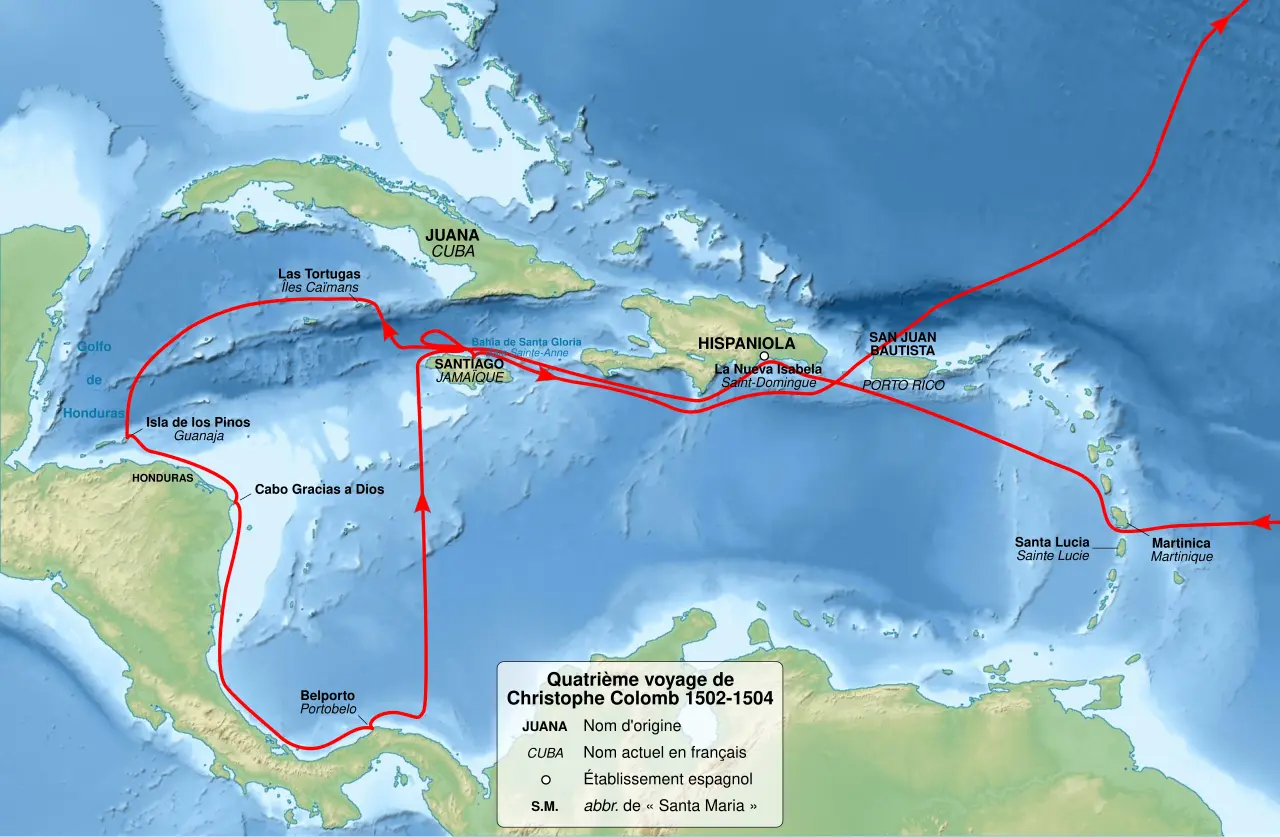
On May 9, 1502, four small caravels slipped out of Cádiz, Spain, bound for the unknown. Their commander was Christopher Columbus, about fifty years old, his health failing, his reputation in tatters after being arrested and shipped home in chains from his own colony two years before. This was his fourth voyage — and his last chance.
Columbus had a single obsession: find a strait through the lands he had found, a passage west to the riches of Asia. King Ferdinand and Queen Isabella funded the expedition, but with a humiliating condition — Columbus was forbidden to set foot on Hispaniola, the colony he had founded, where his enemies now governed. He sailed with about 140 men aboard four small caravels, the largest barely seventy tons, including his brother Bartholomew as second-in-command and his thirteen-year-old son Ferdinand.
The crossing was the fastest of his career — just 21 days to Martinique. But trouble came quickly. Nearing Santo Domingo in late June, Columbus spotted the signs of a hurricane and begged Governor Ovando for shelter in the harbor. Ovando refused. Columbus rode out the storm in a sheltered cove nearby. The great hurricane that followed smashed a homebound Spanish treasure fleet — including the ships carrying the very officials who had arrested him — while his own little squadron survived.
Turning west, Columbus explored coasts no European had ever mapped: Honduras, Nicaragua, Costa Rica, and Panama, searching in vain for his strait and finding instead gold-rich lands he named Veragua. But the tropical waters were eating his ships alive — shipworm bored through the hulls until they leaked like sieves. One by one the caravels were abandoned, until only two leaking hulks remained. In June 1503, Columbus deliberately beached them in St. Ann's Bay, Jamaica.
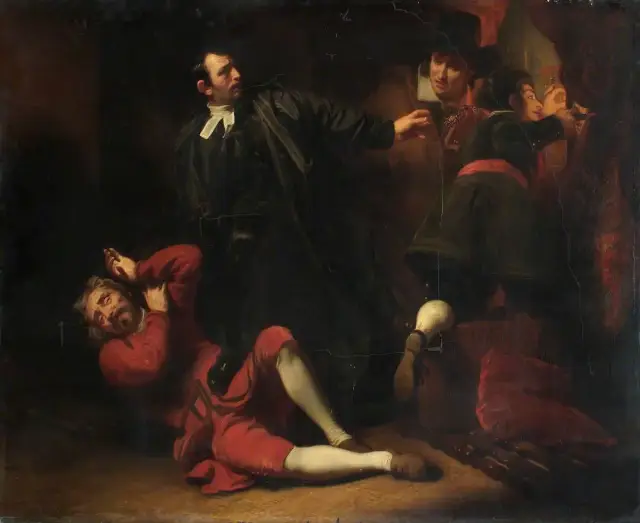
For a year, he and his men were marooned. Supplies ran low; some crew mutinied. Columbus famously won back the local Taíno people's support by correctly predicting a lunar eclipse on February 29, 1504, using an astronomer's almanac. Rescue finally came that June, and the survivors reached Spain that November. Columbus died in 1506, still insisting he had reached Asia.
He never found his strait. But his fourth voyage gave Europe its first real map of the Central American mainland — the closing chapter of the age's most famous, and most controversial, explorer, who changed the world he sailed to find.
Photo: Sémhur, CC BY-SA 4.0 (via Wikimedia Commons).