The Rock Opens for Business: First Prisoners Reach Alcatraz, August 11, 1934
On August 11, 1934, 137 of America's most troublesome federal inmates rode a guarded train to San Francisco Bay — and into the country's most famous prison.
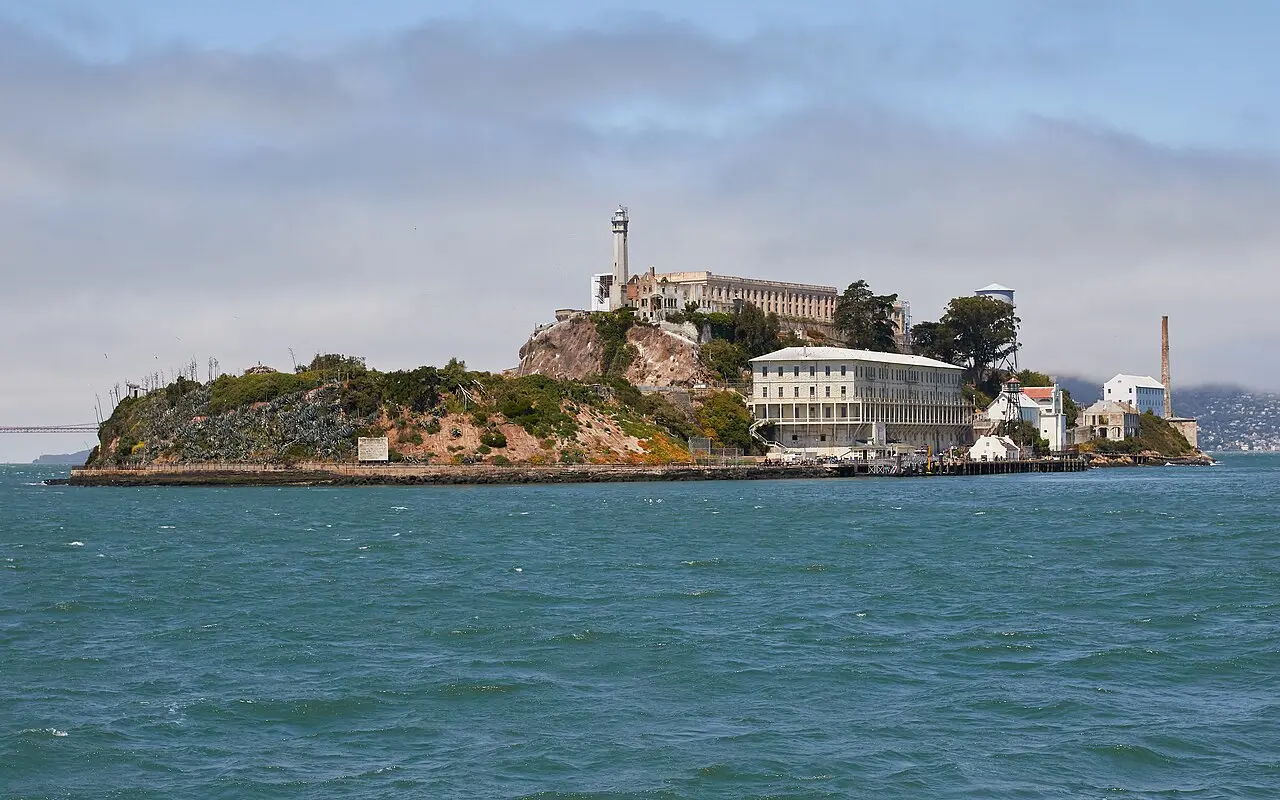
At 9:40 on the morning of August 11, 1934, a train rolled into Santa Venetia, California, carrying the most dangerous cargo the railroads had ever hauled: 137 federal prisoners, handcuffed in high-security coaches, watched by some 60 FBI agents, U.S. Marshals, and railway guards. From there they were ferried across San Francisco Bay to a 22-acre rock. Alcatraz — the federal government's answer to the gangster era — was open for business.
The island had served as a military prison since the 1850s, but the Justice Department had bigger plans. In October 1933 it took the island over from the Army, and through the winter and spring of 1934 workers modernized it: steel cell fronts, new locking systems, metal detectors at the entrances. The timing was no accident. America was living through the crime wave of the early 1930s — bank robbers and kidnappers dominating the headlines — and Washington wanted a prison with a simple message: this is the end of the line.
The first arrivals came from the federal penitentiary at Leavenworth, Kansas — men classified as the system's worst troublemakers, most of them bank robbers, counterfeiters, and murderers. That same day, 14 more arrived from McNeil Island in Washington. They were met by Warden James A. Johnston and his associate warden, J. E. Shuttleworth, two strict disciplinarians the press called "iron men." Their 155-man staff had been trained for security, not rehabilitation.
Life on the Rock was designed to be monotonous. Inmates lived alone in cells just 9 feet by 5 feet. Talking was forbidden at meals. Privileges — a book, a letter, a slightly better job — had to be earned through good behavior and could vanish in a day. The theory was that men who had run wild in softer prisons would, with nothing left to manipulate, finally sit still.
Within weeks, the island got its most famous resident: Al Capone, transferred from the Atlanta penitentiary. Over its 29 years, Alcatraz held more than 1,500 men, including the bank robber George "Machine Gun" Kelly, the kidnapper Alvin "Creepy" Karpis — who served more time there than any other inmate — and Robert Stroud, the "Birdman of Alcatraz." Prisoners tried to escape, some in spectacular fashion. None was ever confirmed to have made it.
Alcatraz closed in 1963, done in not by escapes but by money — it simply cost too much to run a prison on an island. Today it is one of America's most visited landmarks, and the cells that once held the country's most feared criminals hold only tourists. The Rock's real legacy isn't the men it locked up. It's the era that built it: a moment when the federal government decided that some criminals needed a prison surrounded by cold water and colder routine.
Photo: Frank Schulenburg, CC BY-SA 4.0 (via Wikimedia Commons).