The Party That Invented Hip-Hop: Bronx, August 11, 1973
On August 11, 1973, a back-to-school party in a Bronx rec room launched hip-hop — thanks to a Jamaican-born DJ, two turntables, and the humble break.
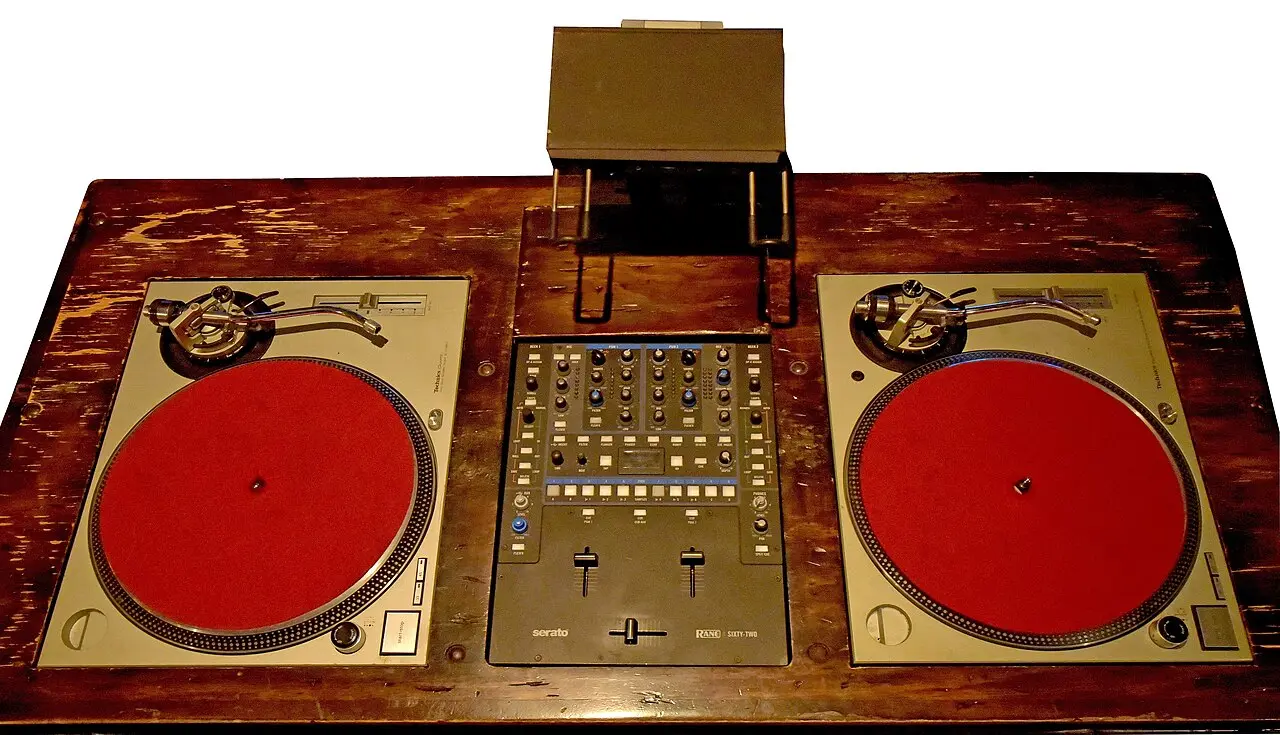
The most influential party in music history cost a quarter to get into. On August 11, 1973, in the recreation room of an apartment building at 1520 Sedgwick Avenue in the Bronx, a teenager named Cindy Campbell threw a back-to-school jam and hired her older brother to DJ. The brother was 18-year-old Clive Campbell — better known as DJ Kool Herc. Music historians now mark that night as the birth of hip-hop.
Herc, born in Jamaica and raised in the Bronx, had grown up on the island's sound-system culture, where DJs with towering speakers ruled the dance. He had noticed something at his parties: dancers waited for the "break" — the short percussive stretch in a funk song where the melody drops out and the drums take over. They lived for those twenty seconds. So Herc asked himself: what if the break never ended?
His answer was the "merry-go-round." Using two turntables and a mixer, Herc played two copies of the same record, switching back and forth to loop the break over and over, keeping dancers moving in one continuous flow. His favorite raw material was heavy funk: James Brown's "Give It Up or Turnit a Loose," the Incredible Bongo Band's "Bongo Rock," the Isley Brothers' "Get into Something." He grabbed the microphone to call out dancers by name — the ones who shone during the breaks he dubbed "break-boys" and "break-girls," the B-boys and B-girls.
The party was a hit — admission was 25 cents for girls and 50 cents for guys, and Herc later said they made about $300 — and word traveled fast through the Bronx. His friend Coke La Rock, who talked over the music on the microphone, is often credited as one of hip-hop's first MCs. Other young DJs took up Herc's innovations, among them Afrika Bambaataa and Grandmaster Flash. Around the music grew the rest of the culture — breakdancing in schoolyards, graffiti blooming across subway cars.
Nobody at 1520 Sedgwick that night was trying to invent anything. A sister wanted new school clothes; a brother wanted to keep the dance floor moving. But by isolating the break, Herc isolated the heartbeat of a new art form — one built on turning scraps of old records into something the world had never heard. Half a century later, hip-hop is a global culture, and it all traces back to a rec room, two turntables, and a kid who noticed when people danced.
Photo: Toglenn, CC BY-SA 4.0 (via Wikimedia Commons).