The Reluctant Nation: Singapore Becomes Independent, August 9, 1965
On August 9, 1965, Singapore was expelled from Malaysia and became a sovereign nation — an independence its own leader greeted with tears, not celebration.
On the morning of August 9, 1965, Singapore's prime minister went on live television and wept. Lee Kuan Yew had spent two years trying to make his country's union with Malaysia work. That morning, Malaysia voted Singapore out.
The union had lasted less than 23 months. On September 16, 1963, Singapore had joined the new Federation of Malaysia alongside Malaya, Sarawak, and North Borneo. But the partnership soured fast. Deep political and economic differences between Singapore's ruling People's Action Party and Malaysia's ruling UMNO fed communal tensions, and deadly racial riots shook Singapore in July and September 1964. For Kuala Lumpur, Singapore's assertive politics and its large Chinese population upset the federation's delicate ethnic balance, and Malaysia's prime minister, Tunku Abdul Rahman, concluded that the federation could only survive if Singapore left it.
The end was arranged in secret. On August 7, the two governments signed a separation agreement so quietly that most of Singapore's own ministers learned of it only when the announcement came. On August 9, Malaysia's parliament passed the constitutional amendment expelling Singapore — 126 votes in favor, one abstention — and the king gave his royal assent the same day.
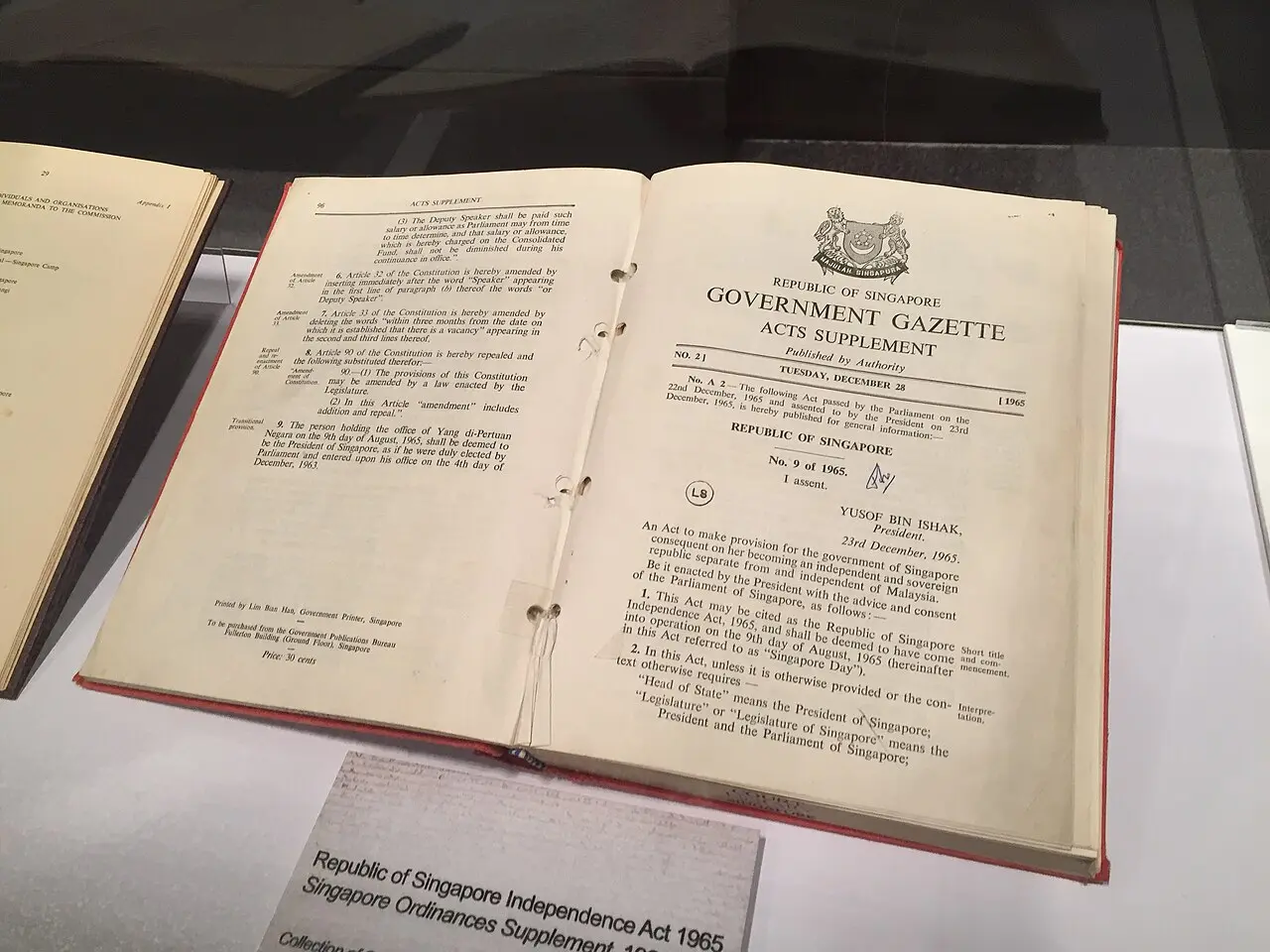
That same morning, Lee signed the Proclamation of Singapore, a document drafted by his law minister, E. W. Barker, declaring the island a sovereign and independent nation. It was read over Radio Singapore at 10:00 that morning. The next day's Straits Times put it bluntly on page one: "Singapore is out."
At his press conference, the usually steely Lee broke down, calling the separation "a moment of anguish." Singapore is often described as the only country in modern history to gain its independence unwillingly — not won on a battlefield or at a negotiating table, but imposed as a divorce neither side could avoid. The new nation had no army, almost no natural resources, and barely two million people on an island smaller than many cities.
What happened next is why the story is still told. Singapore joined the United Nations on September 20, 1965, and its leaders set about turning a reluctant city-state into one of the world's great trading ports and financial centers. Every August 9 since, Singapore has celebrated the day as its National Day, with parades and flyovers — a birthday party for a nation that never asked to be born, and made independence work anyway. Few founding days in history began with the founder in tears; fewer still ended with a story this unlikely turning out this well.
Photo: Smuconlaw, CC BY-SA 4.0 (via Wikimedia Commons).