
The People's Palace: The Louvre Opens Its Doors, August 10, 1793
On August 10, 1793 — a year to the day after the French monarchy fell — the Louvre opened as a public museum, declaring that art belonged to the nation.
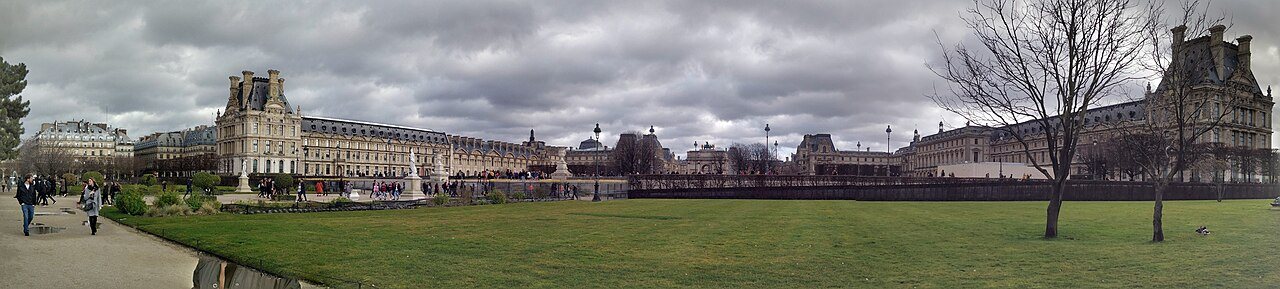
August 10, 1793, was no ordinary day in revolutionary France. Exactly one year earlier, the Paris mob had stormed the Tuileries Palace, the king had been imprisoned, and the monarchy had fallen. To mark the anniversary, the revolutionary government threw open the doors of the Louvre — the grandest royal palace in Paris — and invited the public inside. The king's private art collection had become the nation's museum.
The idea had been brewing for decades. Enlightenment thinkers, including the writer Denis Diderot, had argued that a nation's artistic treasures should be seen by its citizens, not hidden behind palace walls. In 1791, the National Assembly declared the Louvre a place for "bringing together monuments of all the sciences and arts." When Louis XVI was imprisoned on August 10, 1792, the royal collection was seized as national property, and a committee was set to work turning the palace into a museum.
The museum's early years were turbulent: in May 1796 it closed over structural troubles and stayed dark for five years, reopening on July 14, 1801, reorganized chronologically with new lighting and columns.
On opening day, the public found 537 paintings and 184 objects of art on display — three-quarters from the royal collections, the rest seized from émigré nobles and church property. Admission was free three days a week, and the Republic set aside 100,000 livres a year to grow the collection. For the first time, ordinary Parisians could stand before masterpieces by Titian, Raphael, and Veronese — works that had once been the private pleasure of kings.
One royal painting would become the museum's greatest star — though not yet. Leonardo da Vinci had brought the Mona Lisa to France in 1516; after his 1519 death, Francis I acquired it, and it passed from Fontainebleau to Versailles. Napoleon had it hung in his bedroom at the Tuileries Palace; it returned to the Louvre in 1804. In the early 1900s it was still admired mainly by connoisseurs.
The collection kept growing. Revolutionary and Napoleonic armies hauled art home from conquered lands, and though much of that loot was returned after Napoleon's defeat in 1815, the Louvre never stopped expanding. Two centuries later came the steel-and-glass pyramid of architect I. M. Pei in the museum's courtyard — first called an outrage, now beloved. Today the Louvre holds hundreds of thousands of works and draws millions of visitors each year, the most-visited museum on Earth.
The man who shaped the Napoleonic museum was Dominique Vivant Denon, appointed its first director on November 19, 1802. An artist, diplomat, and scholar who had joined Napoleon's Egyptian campaign, Denon oversaw the systematic acquisition of masterpieces — much of it war loot, including the Horses of Saint Mark from Venice. On his suggestion the museum was renamed the Musée Napoléon in July 1803. He resigned after Napoleon's fall in 1815, when many of the plundered works were returned.
The Mona Lisa became the world's most famous painting because of a crime. On August 21, 1911, the Italian handyman Vincenzo Peruggia, a Louvre employee, hid inside the museum overnight, lifted the painting from its hooks in the Salon Carré, slipped it under his coat, and walked out the next morning. For two years the empty wall drew crowds; sixty police agents chased false leads. Peruggia was caught in 1913 when he tried to sell the portrait in Florence, claiming he had liberated it for Italy. After a triumphant tour of Italian museums it returned to Paris — and the media storm had made it an icon.
It all began with a revolutionary idea on August 10, 1793: that great art is not the property of a crown, but the inheritance of a people.
Photo: Kamarulla N, CC BY-SA 4.0 (via Wikimedia Commons).