The Penstroke That Opened the Ballot Box
On August 6, 1965, President Lyndon Johnson signed the Voting Rights Act into law, outlawing the literacy tests and poll taxes used to keep Black Americans from voting.
In the summer of 1965, in Selma, Alabama, only 335 of the city's 15,000 Black citizens of voting age were registered to vote. It was not apathy. It was design — literacy tests, poll taxes, intimidation, and outright violence, all deployed to keep Black Southerners away from the ballot box nearly a century after the Fifteenth Amendment promised them the vote.
Seven months earlier, Martin Luther King Jr. and the Southern Christian Leadership Conference had brought their campaign to Selma to force the issue. On March 7, 1965 — Bloody Sunday — about 600 peaceful marchers set out across the Edmund Pettus Bridge toward Montgomery and were met by state troopers with tear gas, whips, and nightsticks. The nation watched the beatings on television. Eight days later, President Lyndon Johnson went before a joint session of Congress and declared: "We shall overcome."
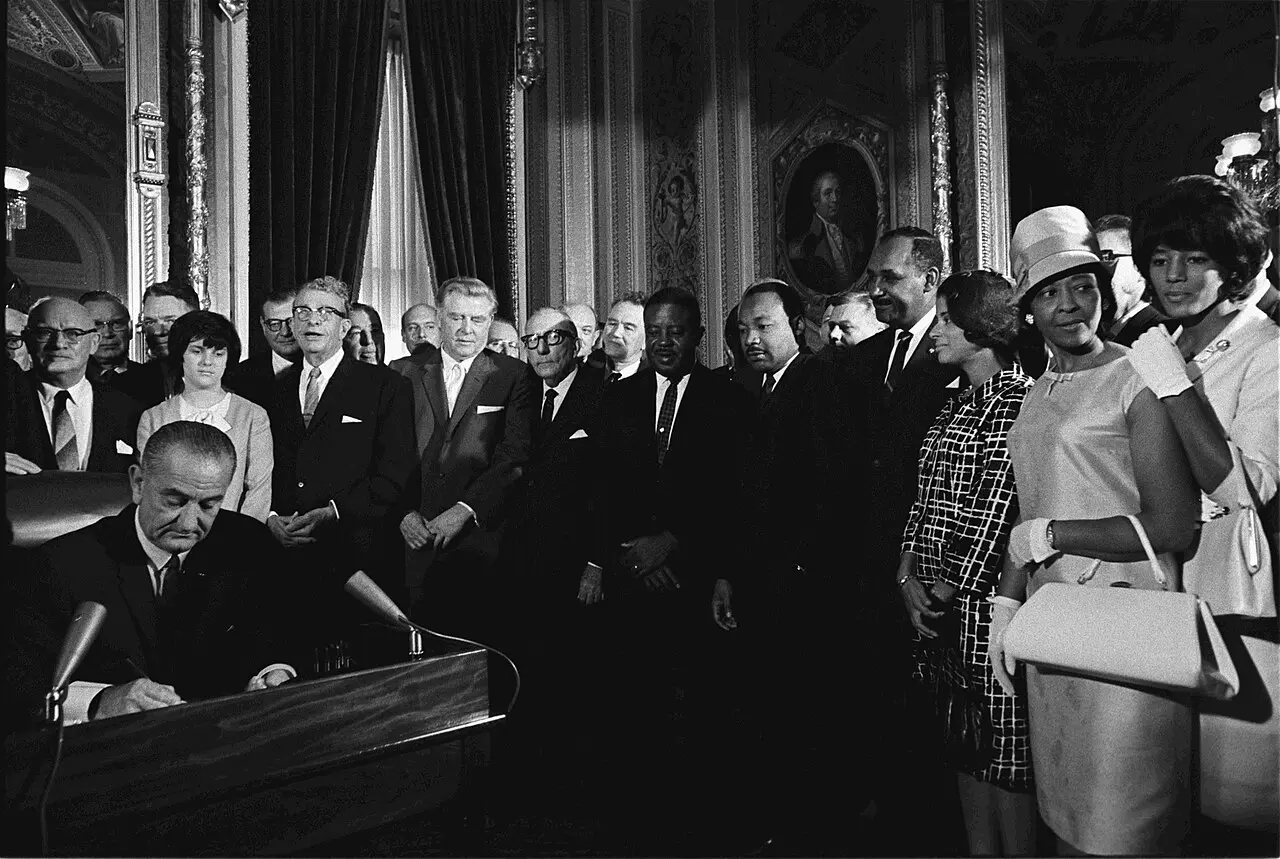
That same month, Johnson introduced the Voting Rights Act. On August 6, 1965, with King and other civil rights leaders looking on at the U.S. Capitol, he signed it into law — calling the day "a triumph for freedom as huge as any victory that has ever been won on any battlefield."
The law's heart was plain, as Johnson put it: wherever states and counties used "regulations, or laws, or tests to deny the right to vote," those would be struck down. Literacy tests and poll taxes were abolished, and in places with a documented history of discrimination, the federal government could step in and run voter registration itself.
The change was swift and staggering. In Mississippi, Black voter turnout leapt from 6 percent in 1964 to 59 percent in 1969. Across the South, Black citizens voted — and were elected to office — in numbers unimaginable a decade earlier.
The fight did not end there. Congress reauthorized the Act repeatedly, most recently extending its protections through 2031. But in 2013, the Supreme Court struck down the formula that decided which jurisdictions needed federal approval before changing their voting laws, ruling that "our country has changed." The core protections remain — and so does the debate over what they require.
The Voting Rights Act is often called the crown jewel of the civil rights era because it converted a constitutional promise into an enforceable reality. On August 6, 1965, the ballot box finally started to open for millions of Americans — because 600 marchers had crossed a bridge in Selma and refused to turn back.
Photo: Yoichi Okamoto, public domain (via Wikimedia Commons).