The One-Minute War: Key West Secedes from America
On April 23, 1982, Key West seceded as the Conch Republic over a Border Patrol roadblock, fought America for one minute, surrendered, and billed Washington $1 billion in foreign aid.
Every war should be this short. At noon on April 23, 1982, in Mallory Square at the tip of Key West, Mayor Dennis Wardlow read a proclamation of secession, declared the Florida Keys an independent nation — the Conch Republic — broke a loaf of stale Cuban bread over the head of a man in a U.S. Navy uniform, fought the United States for one full minute, surrendered, and demanded $1 billion in foreign aid. It remains the most successful military defeat in American history.
The grievance was real. Five days earlier, on April 18, the U.S. Border Patrol had set up a roadblock and inspection station on U.S. Highway 1 just south of Florida City — the only road connecting the Keys to the mainland. Every car was stopped and searched for drugs and illegal immigrants. Traffic backed up for 17 miles. Tourists, the lifeblood of Key West, started canceling hotel reservations. The city council complained to Washington, then sued for an injunction. The federal court said no.
So the council reached for satire. If Washington was going to treat the Keys like a foreign country — a border station, searches, the works — then the Keys would simply become one. Wardlow, borrowing the plot of Leonard Wibberley's comic novel The Mouse That Roared, had the perfect plan: declare independence, immediately declare war on the United States, immediately surrender, and then apply for foreign aid as a conquered nation.
It worked better than anyone dreamed. The secession made national news, sympathy poured in from across the country, and — the actual objective all along — the federal government quietly removed the roadblock. Key West had won its one-minute war.
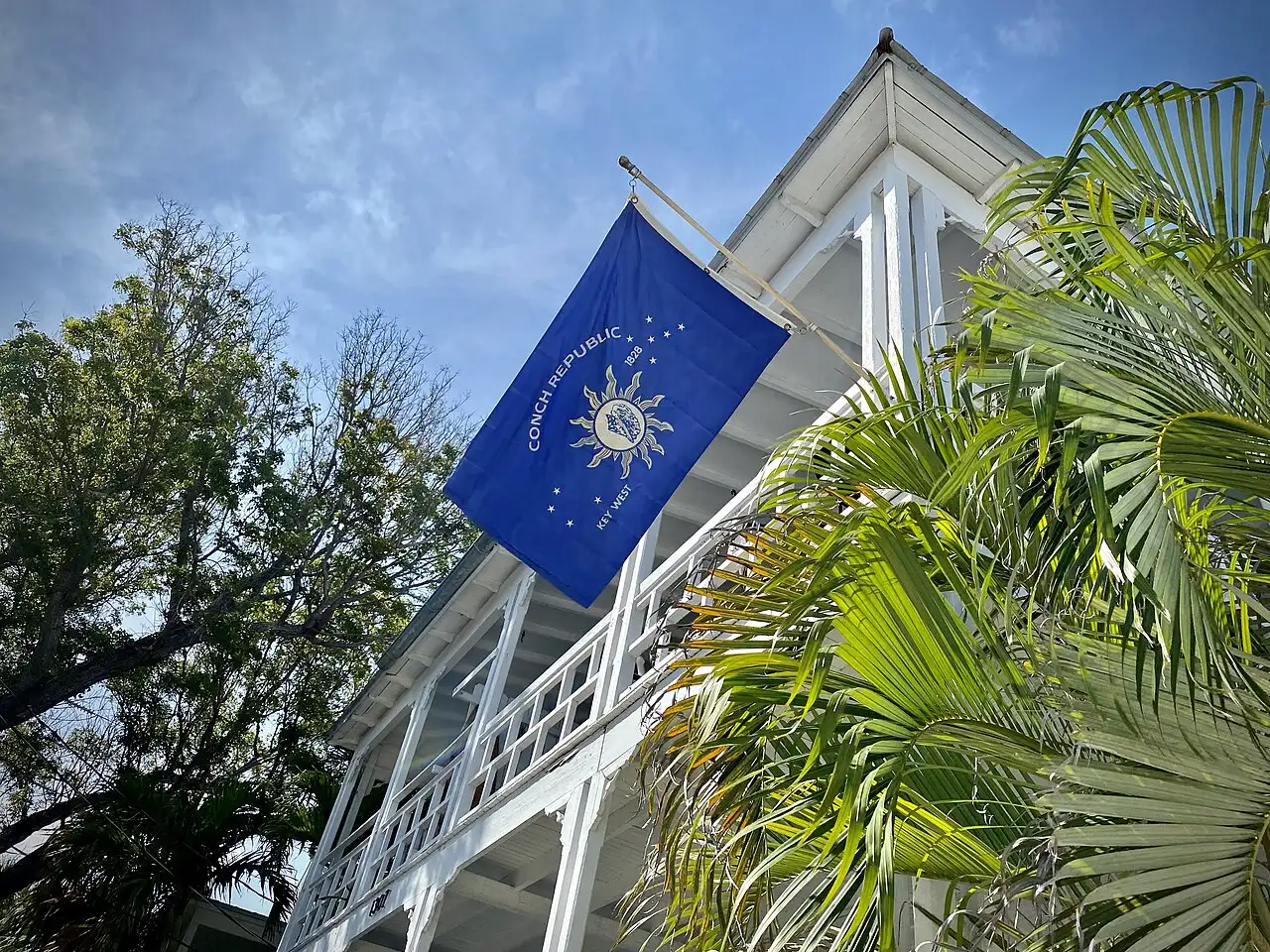
The republic never went away. It issues passports, keeps a Secretary General, and every April 23 the island throws a week-long Independence Day festival. Its late Secretary General, Peter Anderson, described it as a "Sovereign State of Mind," seeking only to bring more "humor, warmth and respect" to the world. The Conch Republic flag still flies all over the island to this day.
The Conch Republic is the gold standard of the protest stunt: a genuine grievance, answered not with rage but with theater so joyful the whole country laughed along — and the roadblock came down anyway. When the system won't hear your lawsuit, sometimes the smartest move is to secede, surrender, and send an invoice.
Photo: Sharon Hahn Darlin, CC BY 2.0 (via Wikimedia Commons).