Born and Died on April 23: Shakespeare's Perfect Circle
Tradition says William Shakespeare was born on April 23, 1564, and the record proves he died on April 23, 1616 — the most poetic coincidence in the life of the most quoted writer who ever lived.
He entered and exited on the same date. According to a tradition four centuries old, William Shakespeare was born on April 23, 1564, in Stratford-upon-Avon — and his funeral monument in Holy Trinity Church states as fact that he died on April 23, 1616, aged 52. Nobody planned the symmetry, which is exactly why it feels like something he would have written.
The honest version first: we don't actually know his birthday. The parish register of Holy Trinity records his baptism on April 26, 1564 — "Guilielmus filius Johannes Shakspere," William son of John Shakespeare. In Elizabethan England, newborns were commonly baptized about three days after birth, which points to April 23, though the Folger Shakespeare Library notes some scholars argue for the 21st or 22nd. The death date, though, is carved in stone — literally: "obiit anno domini 1616, aetatis 53, die 23 Aprilis" — he died April 23, 1616, in his 53rd year.
The life between those two April 23rds is the strangest rags-to-riches story in literature. His father John was a glove maker who rose to become Stratford's bailiff — effectively its mayor — then fell on hard times. Young William likely attended the local grammar school, drilling Latin and rhetoric, but never went to university. At 18 he married 26-year-old Anne Hathaway; they had three children, Susanna and the twins Hamnet and Judith. Hamnet, his only son, died at eleven.
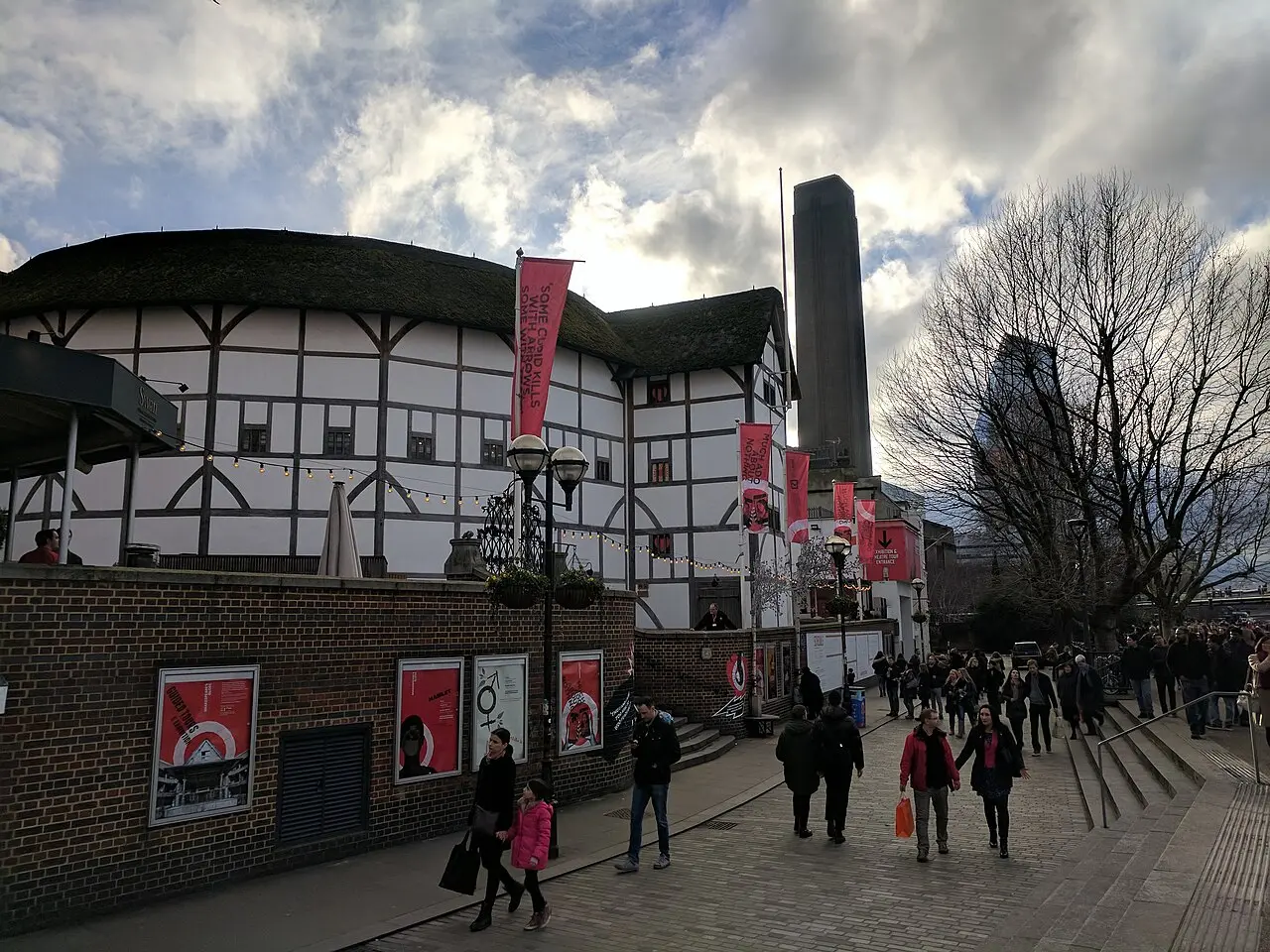
Then the "lost years" — and then, suddenly, London. By 1592 a jealous rival playwright was sneering at the upstart "Shake-scene" in print, which means Shakespeare was already making a name. He became actor, playwright, and shareholder in the Lord Chamberlain's Men, the leading company of the age. The profits bought New Place, the second-largest house in Stratford, in 1597. In 1599 his company built the Globe Theatre on the Thames; when James I took the throne in 1603, they became the King's Men. Some 38 plays, 154 sonnets, and a shelf of poems flowed from his pen in about twenty years — then he retired to Stratford around 1613 and died three years later.
He was famous in his lifetime, but immortality took teamwork. In 1623, seven years after his death, two actor friends, John Heminges and Henry Condell, gathered his plays into the First Folio — 36 plays, 18 of which had never been printed, including Macbeth, Julius Caesar, and The Tempest. Without that book, half of Shakespeare might have vanished.
Four centuries on, he is the most quoted, most performed, most studied writer in English — the man who gave us "break the ice," "wild-goose chase," and "love is blind." And April 23 is also St. George's Day, England's national day, which feels exactly right: the country's patron saint and its national poet, sharing a birthday.
Photo: Enchufla Con Clave, CC BY-SA 4.0 (via Wikimedia Commons).