The Night the World Agreed on Climate
On December 12, 2015, 195 nations adopted the Paris Agreement at COP21 — the first truly global pact to fight climate change.
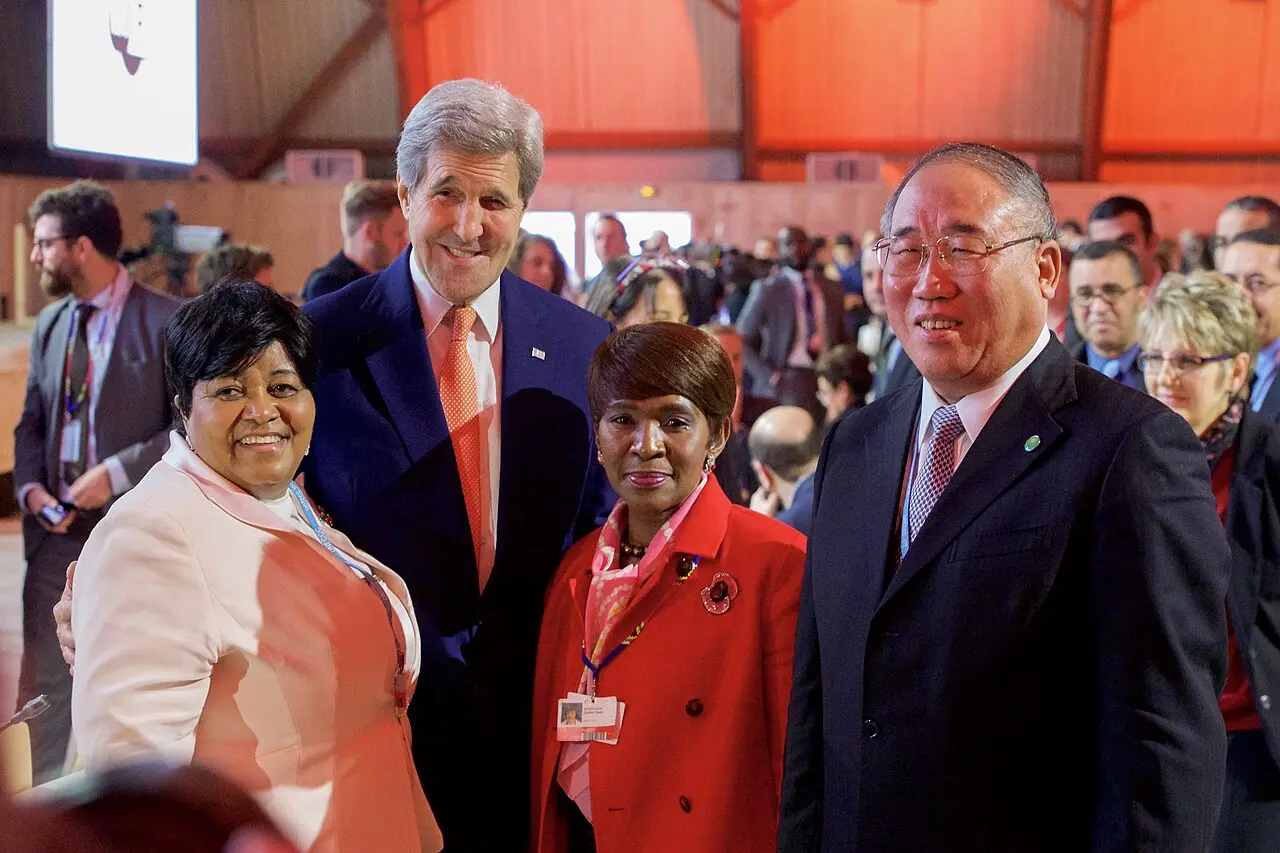
After two weeks of talks and three sleepless final nights, a French minister lifted a small green gavel. The room exploded in applause. On December 12, 2015, the world agreed — on climate.
The setting was COP21, the 21st United Nations climate conference, held at Le Bourget outside Paris from November 30 to December 12, 2015. Nearly 200 delegations had gathered just weeks after terrorist attacks shook Paris, under extraordinary security. The mission: succeed where twenty previous conferences had fallen short, and produce a universal climate deal. The French hosts had stacked the deck carefully — getting countries to submit their intended climate pledges before the talks began, and inviting world leaders only for the opening days, so negotiators could work without the cameras.
It nearly failed over a single word. At the final hour, American lawyers spotted "shall" in the draft where "should" had been agreed — one word that would have made emissions cuts legally binding on wealthy nations. The French presidency quietly corrected it as a "typographical error." Disaster averted.
On December 12, 2015, conference president Laurent Fabius brought down the gavel, and the Paris Agreement was adopted by consensus — 195 countries plus the European Union. (Nicaragua later said it had wanted to object, calling the deal too weak, but was not given the chance.) Delegates wept and embraced. U.S. Secretary of State John Kerry called it "a victory for all of the planet and for future generations."
The deal itself was historic in scope: hold global warming "well below" 2 degrees Celsius above pre-industrial levels, and "pursue efforts" to limit it to 1.5 degrees — that lower target had been a demand of low-lying island nations facing rising seas. Every country would set its own climate pledges — Nationally Determined Contributions — reviewed and tightened every five years, aiming for net-zero emissions in the second half of the century. Unlike the 1997 Kyoto Protocol, which bound only 37 industrialized nations, Paris covered everyone. The agreement entered into force on November 4, 2016, and 174 countries signed it in New York on Earth Day, April 22, 2016.
It matters because, for the first time, nearly every nation on Earth agreed on a common climate goal. The pact is voluntary and imperfect — but it gave the world a shared target, and every climate plan since has been measured against the night the gavel fell in Paris.
Photo: U.S. Department of State, public domain (via Wikimedia Commons).