Kenya's Midnight of Freedom
On December 12, 1963, Kenya became independent from Britain at a midnight ceremony in Nairobi, with Jomo Kenyatta as its first prime minister.
At midnight in Nairobi, soldiers lowered one flag and raised another. On December 12, 1963, after decades of struggle, Kenya finally became a free nation.
The road had been long and bloody. Britain had ruled Kenya since the late nineteenth century, and white settlers held the richest farmland. In the 1950s, the Kenya Land and Freedom Army — known as the Mau Mau — waged a guerrilla war against colonial rule. The British crushed the uprising by 1956, interning tens of thousands, but the revolt forced London to concede that change was coming. From 1957, Africans were elected to the Legislative Council; by 1960 they held a majority of the seats. Jomo Kenyatta — imprisoned from 1953 to 1961 on charges of directing the Mau Mau — emerged to lead the Kenya African National Union to victory in the pre-independence elections of May 1963.
June 1, 1963 — Madaraka Day — brought self-government, with Kenyatta as prime minister. But Queen Elizabeth II remained head of state; full independence would come at year's end.
December 12, 1963: at a midnight ceremony in Nairobi, British representatives formally transferred power. The Union Jack came down, and Kenya's new flag — black, red, and green — rose in its place. Jomo Kenyatta became the first prime minister of independent Kenya. Exactly one year later, on December 12, 1964, Kenya became a republic with Kenyatta as its first president — which is why December 12 is celebrated as Jamhuri Day. (Jamhuri means "republic" in Swahili.)
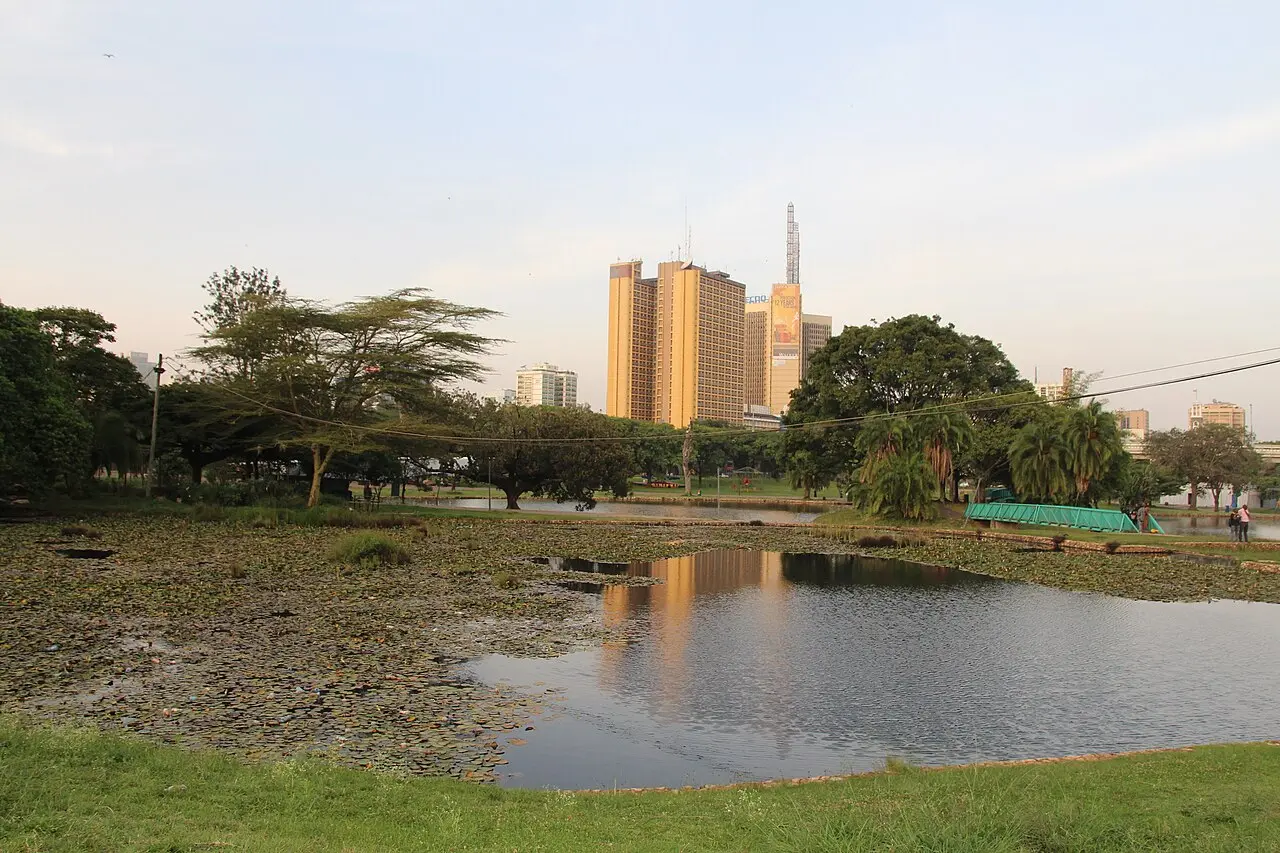
The Nairobi park where the flag first rose — Uhuru Park, uhuru meaning "freedom" — is still known as the birthplace of Kenya.
Kenyatta led the new nation until his death in 1978, encouraging racial cooperation, capitalist economic policies, and a pro-Western foreign policy that drew foreign investment. Affectionately known in his later years as mzee — "old man" in Swahili — he is celebrated as Kenya's founding father, and every December 12 the country still marks Jamhuri Day with parades, the Trooping of the Colour, and a national address from the president celebrating its hard-won freedom.
It matters because that midnight closed the colonial chapter and opened a story Kenyans have written for themselves ever since — today one of Africa's most vibrant democracies and economies, still celebrating its freedom every December 12. It remains the founding moment every Kenyan schoolchild learns.
Photo: AEira-WMF, CC BY 4.0 (via Wikimedia Commons).