The Night the Lights Went Out in Hanoi
On December 19, 1946, Viet Minh fighters attacked French forces in Hanoi, opening the First Indochina War.
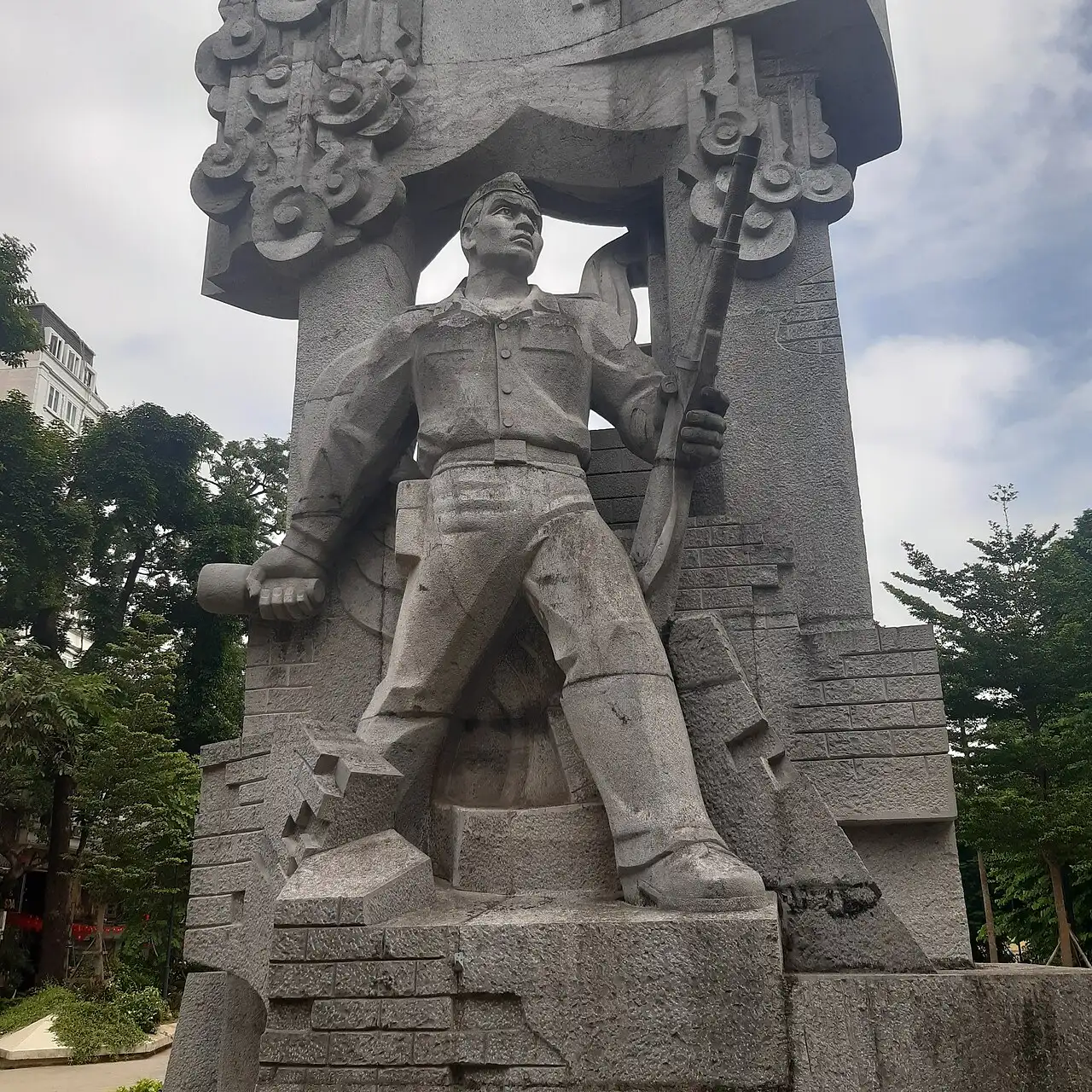
At about eight o'clock on a December evening, the lights of Hanoi went out — and a war began.
On December 19, 1946, Viet Minh fighters cut the electricity and water to the Vietnamese capital, detonated explosives across the city, and attacked French installations, including the power plant. It was the opening of the Battle of Hanoi, a two-month fight that historians mark as the start of the First Indochina War — the conflict that would end French colonial rule in Southeast Asia.
The explosion had been building for months. The previous year, Ho Chi Minh had proclaimed Vietnam's independence in Hanoi, but France — battered and humiliated by World War II — was determined to reclaim its empire as a symbol of national revival. Talks in Paris went nowhere. Then, on November 23, 1946, after a dispute over customs duties in the port of Haiphong, French warships bombarded the city's Vietnamese quarters, killing thousands of civilians. When the French then demanded that Vietnamese forces in Hanoi disarm and hand over control of the city, Ho Chi Minh and his colleagues faced a stark choice. They chose armed resistance over surrender.
The battle that followed was brutal and one-sided in the short term. Forewarned, the French seized the airfield and the city center, and over two months they rooted out the Vietnamese forces street by street. Ho and his government slipped away to the remote, forested hills of the Việt Bắc to organize a guerrilla resistance. France controlled the cities; the Viet Minh set about winning the countryside.
What neither side knew that December night was how long the road ahead would be: eight years of grinding war, ending in 1954 with France's shattering defeat — and setting the stage for the even longer conflict to come.
The war that began that night ended with France's collapse at Dien Bien Phu in the spring of 1954. The Geneva Accords that followed split Vietnam at the 17th parallel — a line meant to be temporary, but one that hardened into the border of the next war, the far longer conflict the world would come to know simply as Vietnam. For France, December 19, 1946, was the beginning of the end of its Indochinese empire: Laos and Cambodia would follow Vietnam to independence within the decade.
The lights came back on in Hanoi eventually. But the world that turned them off that night never really returned.
Photo: Ridiculopathy, CC0 (via Wikimedia Commons).