Six Thousand Copies by Christmas: Dickens's Carol Goes on Sale
On December 19, 1843, Charles Dickens's A Christmas Carol went on sale in London — and all 6,000 copies sold out within days.
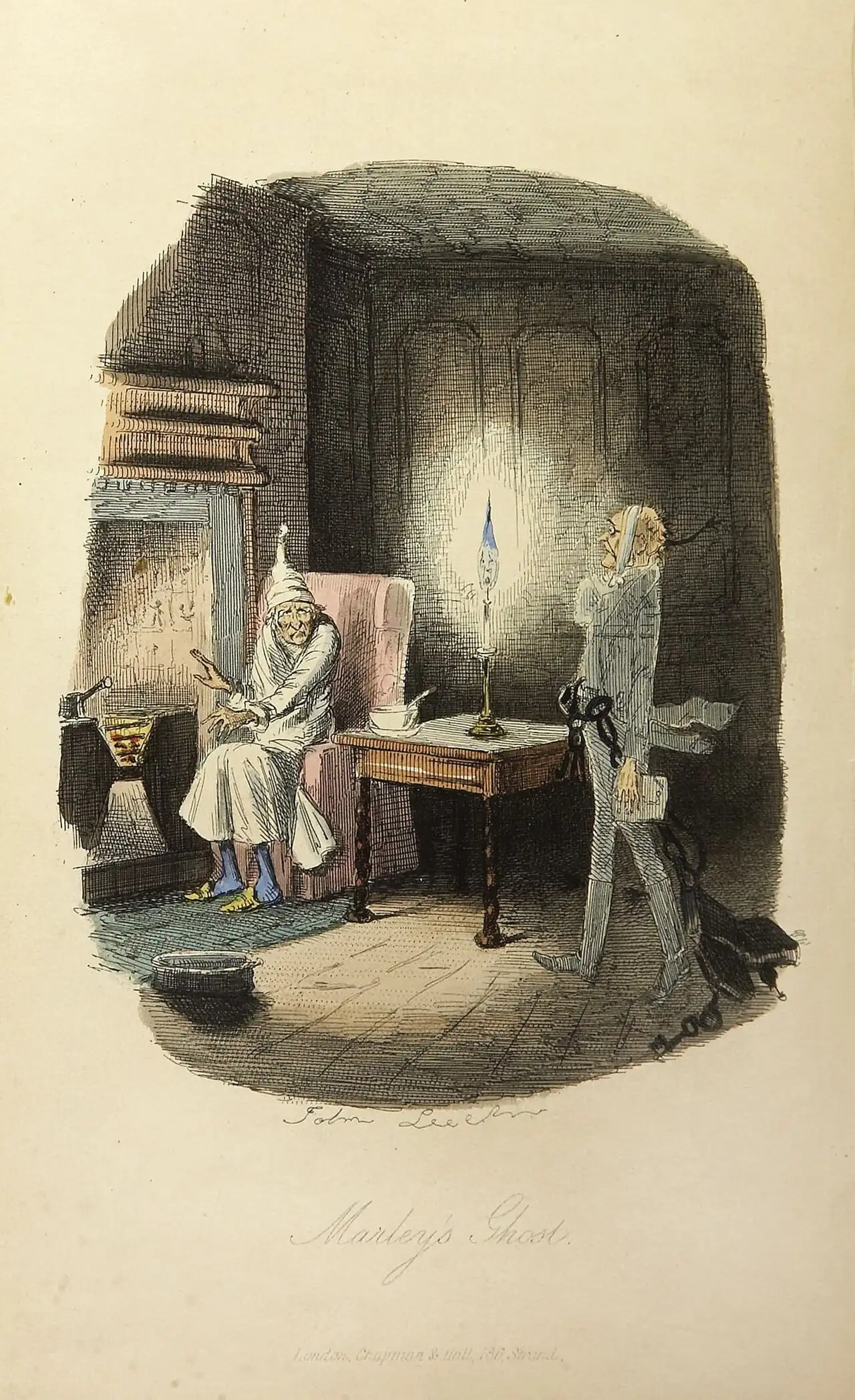
The most famous Christmas story ever written nearly bankrupted its author before a single copy sold.
On December 19, 1843, A Christmas Carol. In Prose. Being a Ghost Story of Christmas went on sale in London, published by Chapman & Hall. It was a beautiful little book: bound in red cloth with gilt-edged pages, priced at five shillings, and illustrated with hand-colored etchings and wood engravings by John Leech — including the unforgettable image of Jacob Marley's ghost, transparent and terrible, confronting a cowering Ebenezer Scrooge. The first printing of 6,000 copies sold out by Christmas Eve, just five days later.
Charles Dickens had written the novella in a furious burst that autumn. He was moved, in part, by a visit to the Field Lane Ragged School, one of the establishments caring for London's half-starved street children, and by the poverty he saw all around the city. Britain was in the middle of re-examining its Christmas traditions — carols, greeting cards, and Christmas trees were all being rediscovered or invented — and Dickens poured his outrage at the treatment of the poor into a ghost story about a miser who learns, in a single night, that a selfish man can still be redeemed.
Here is the twist Dickens never saw coming: the book was a triumph and a financial disaster at the same time. He had insisted on such lavish production — the colored plates, the fine binding, the gilt edges — that the costs devoured nearly all the profit. Instead of the £1,000 he had expected, the first edition brought him only about £230. When pirates copied the book in January 1844, Dickens sued them, and the publishers went bankrupt — which only shrank his earnings further. Chapman & Hall rushed out second and third editions before the new year, and by the end of 1844 thirteen editions had appeared, but Dickens's disappointment was real.
What he could not have known was that he had written something immortal. Beginning in 1849, Dickens gave public readings of the story that proved so popular he performed it 127 times, right up until the year of his death in 1870. The book has never been out of print since that December day in 1843. It has been translated into dozens of languages and adapted for stage, film, opera, and television more times than anyone can count — and it permanently shaped how the English-speaking world imagines Christmas itself: the goose, the goodwill, the ghostly warning that it is never too late to change.
So the next time someone says 'Bah, humbug,' remember the gamble behind it: a young writer who bet his own money on a Christmas ghost story, lost the bet, and won immortality instead.
Photo: John Leech, 1843, public domain (via Wikimedia Commons).