The Monster Born of the Bomb: Godzilla's 1954 Debut
On November 3, 1954, Japan released 'Gojira' — a giant monster born of atomic dread that became cinema's most enduring movie monster.
The fishing boat came home dusted with white ash, and its crew was dying of radiation. Nine years after Hiroshima, Japan was terrified of the atom again — and its movie studios turned that terror into a monster.
In March 1954, the American hydrogen bomb test at Bikini Atoll showered the Japanese fishing boat Lucky Dragon No. 5 with radioactive fallout, sickening all 23 crewmen and killing one. The incident horrified Japan and gave producer Tomoyuki Tanaka his idea: a giant creature, awakened and mutated by nuclear testing, lumbering ashore to trample Tokyo. Director Ishiro Honda, who had walked through the ruins of Hiroshima, understood exactly what the monster meant.
"Gojira" — released in Japan beginning November 3, 1954 — was not the campy creature feature its later sequels would become. The original is a grim, mournful film. Godzilla's skin was textured to resemble the keloid scars of bomb survivors. His radioactive breath set the city ablaze in scenes that deliberately recalled the firebombing of Tokyo. The score, by Akira Ifukube, gave the monster a ponderous, doom-laden tread. And the scientist who finally destroys Godzilla sacrifices his own life to do it, burning his notes so his weapon can never be used again.
Bringing the beast to life was itself an adventure. Special-effects pioneer Eiji Tsuburaya first considered stop-motion animation, but the schedule was too tight — so stuntman Haruo Nakajima climbed into a 200-pound rubber suit and stomped through miniature Tokyo sets, sweating so profusely that the crew could pour water out of the costume. It was the birth of "suitmation," and of the kaiju genre.
The film was a hit in Japan, and when it reached America in 1956 — re-edited with new scenes starring Raymond Burr — it became a global phenomenon. Godzilla went on to star in more films than any other movie monster in history, evolving from a symbol of nuclear horror into a pop-culture hero, a villain, a father figure, and back again.
The monster never left. Godzilla has starred in more films than any other screen monster — dozens of Japanese productions plus Hollywood blockbusters — earned a star on the Hollywood Walk of Fame in 2004, and in 2024 "Godzilla Minus One" won the Academy Award for visual effects, the franchise's first Oscar. Seventy years on, the roar Ifukube created still signals the same warning: the atom does not sleep.
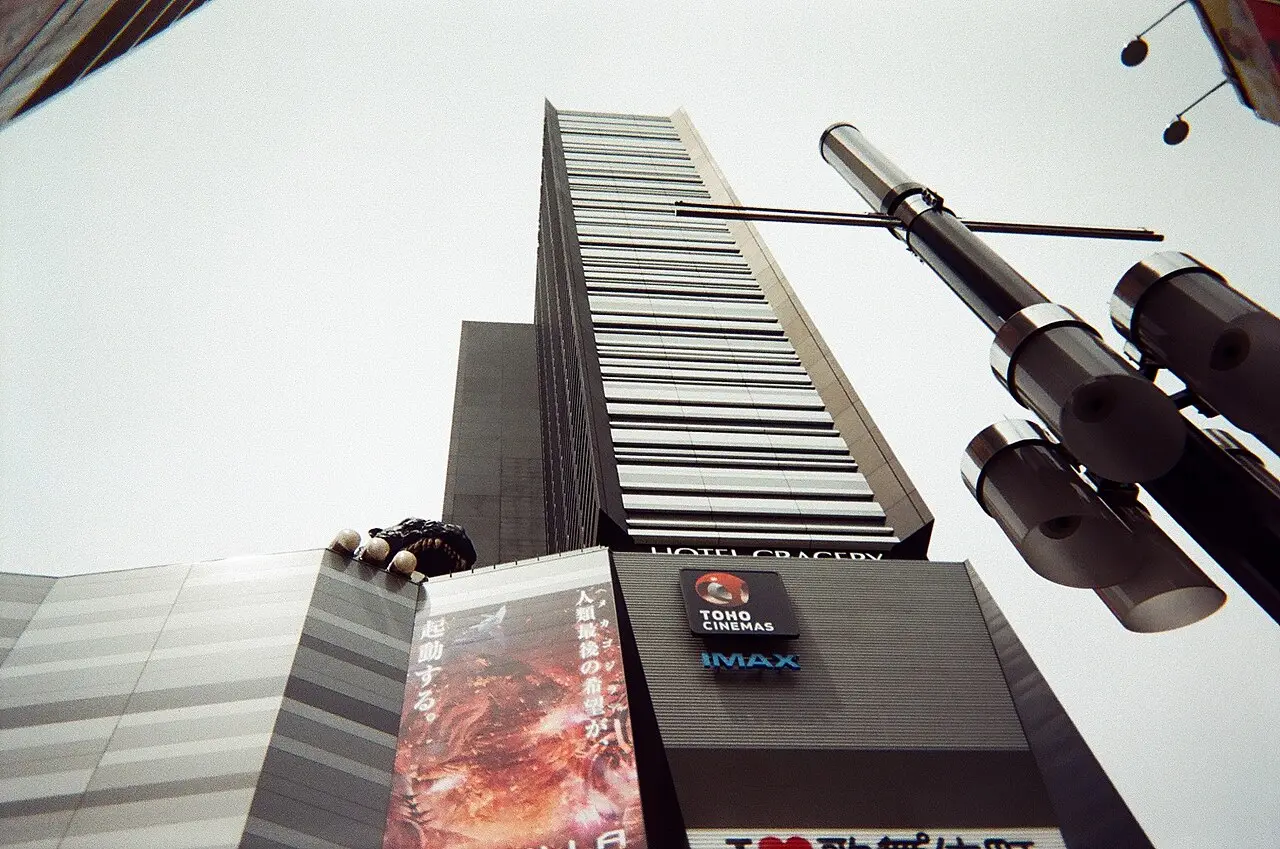
But the 1954 original remains something special: a nation processing its trauma in the dark, watching its own nightmare rise out of the sea. The statue above, glaring down over Tokyo from a Shinjuku rooftop, keeps watch over a city that never forgot.
Photo: Suginami, CC BY-SA 4.0 (via Wikimedia Commons).