The Day Hitler Declared War on America
On December 11, 1941 — four days after Pearl Harbor — Germany and Italy declared war on the United States, ending America's debate over joining the European war.
Hitler didn't have to do it. No treaty required it. Yet on December 11, 1941, he declared war on the United States — and solved Franklin Roosevelt's biggest problem for him.
Four days earlier, 353 Japanese aircraft had attacked Pearl Harbor. On December 8, the United States declared war on Japan — but pointedly not on Germany. President Roosevelt had long believed Nazi Germany was the greater long-term threat to America, but powerful isolationist feeling meant he could not ask Congress for a European war the country had not been attacked in. The two nations had already been fighting an undeclared naval war in the Atlantic: American destroyers escorting convoys had clashed with German U-boats for months, and in October the destroyer USS Reuben James had been torpedoed with the loss of more than 100 American sailors.
The Tripartite Pact of September 1940 bound Germany, Italy, and Japan to come to each other's aid — but only if one of them was attacked. Japan had done the attacking, so Germany owed Tokyo nothing. Hitler decided to declare war anyway, after two days of consultations with his military chiefs and Foreign Minister Joachim von Ribbentrop, in part to unleash his U-boats against American shipping in the Atlantic. Historians have called it his "most puzzling" decision of the war.
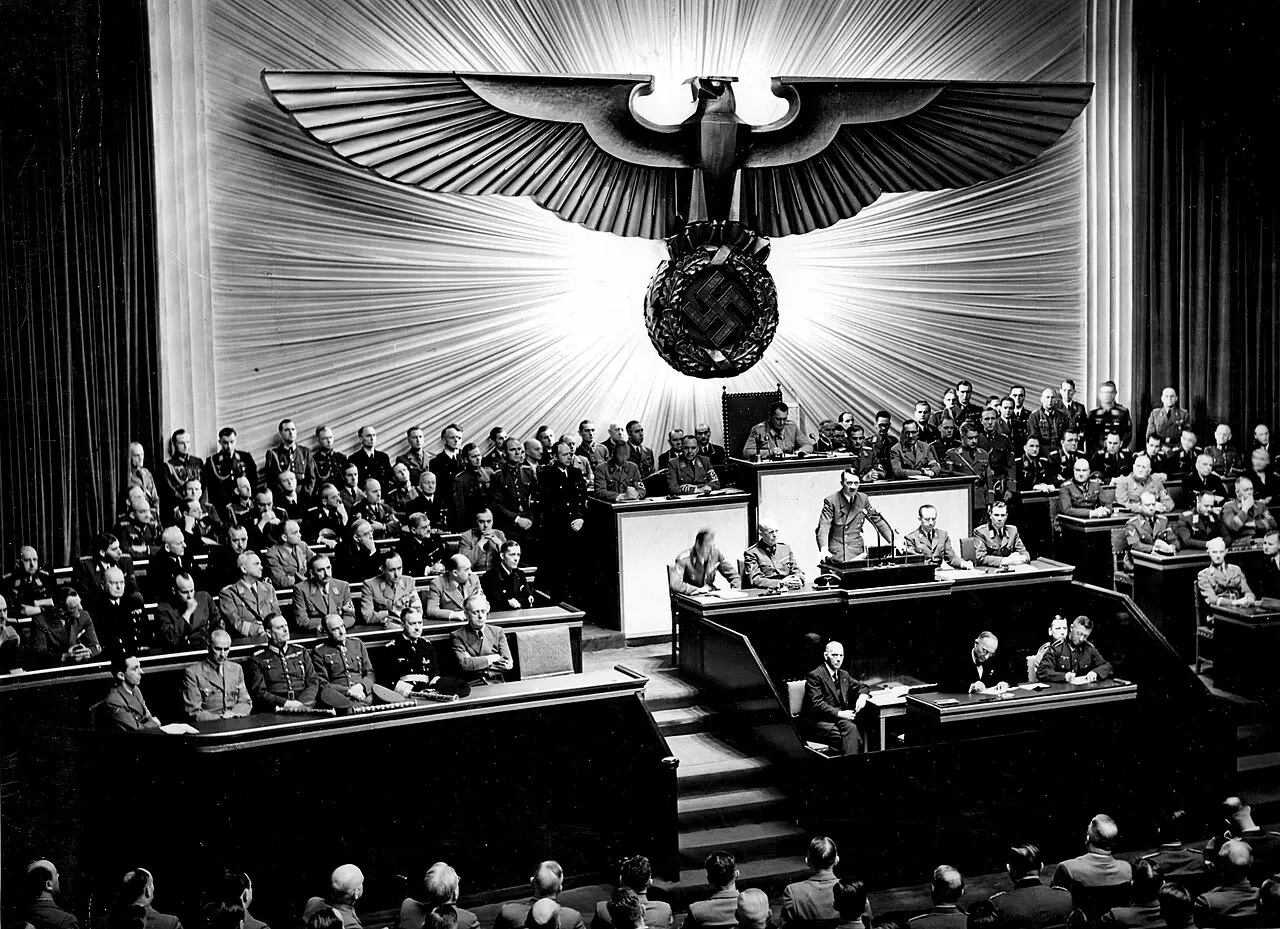
December 11, 1941, unfolded like a grim choreography. In Berlin, Ribbentrop handed Germany's formal declaration to the American chargé d'affaires, Leland B. Morris. In Rome that afternoon, Benito Mussolini stepped onto the balcony of the Palazzo Venezia and announced that Italy would stand with "heroic Japan" against the United States. And Hitler himself addressed the deputies of the Reichstag — meeting in Berlin's Kroll Opera House — in a long speech denouncing Roosevelt. The three Axis powers also signed an agreement pledging no separate peace with Britain or America.
Washington's answer came within hours. Roosevelt had sent Congress a brief note that morning asking for war against Germany and Italy; both chambers voted yes, and Roosevelt signed the declarations that afternoon. Overnight, the isolationist opposition to entering the European war simply collapsed.
It matters because a single reckless decision removed Roosevelt's political dilemma and locked in the "Germany first" strategy that would shape the entire war. Four days after Pearl Harbor, the conflict truly became a world war — and its outcome was decided, in part, by an enemy's blunder.
Photo: German Federal Archive (Bundesarchiv), CC BY-SA 3.0 (via Wikimedia Commons).