
The 49th Star: Alaska Becomes a State
On January 3, 1959, President Eisenhower signed the proclamation admitting Alaska to the Union as the 49th state, ending one of the longest statehood fights in American history.
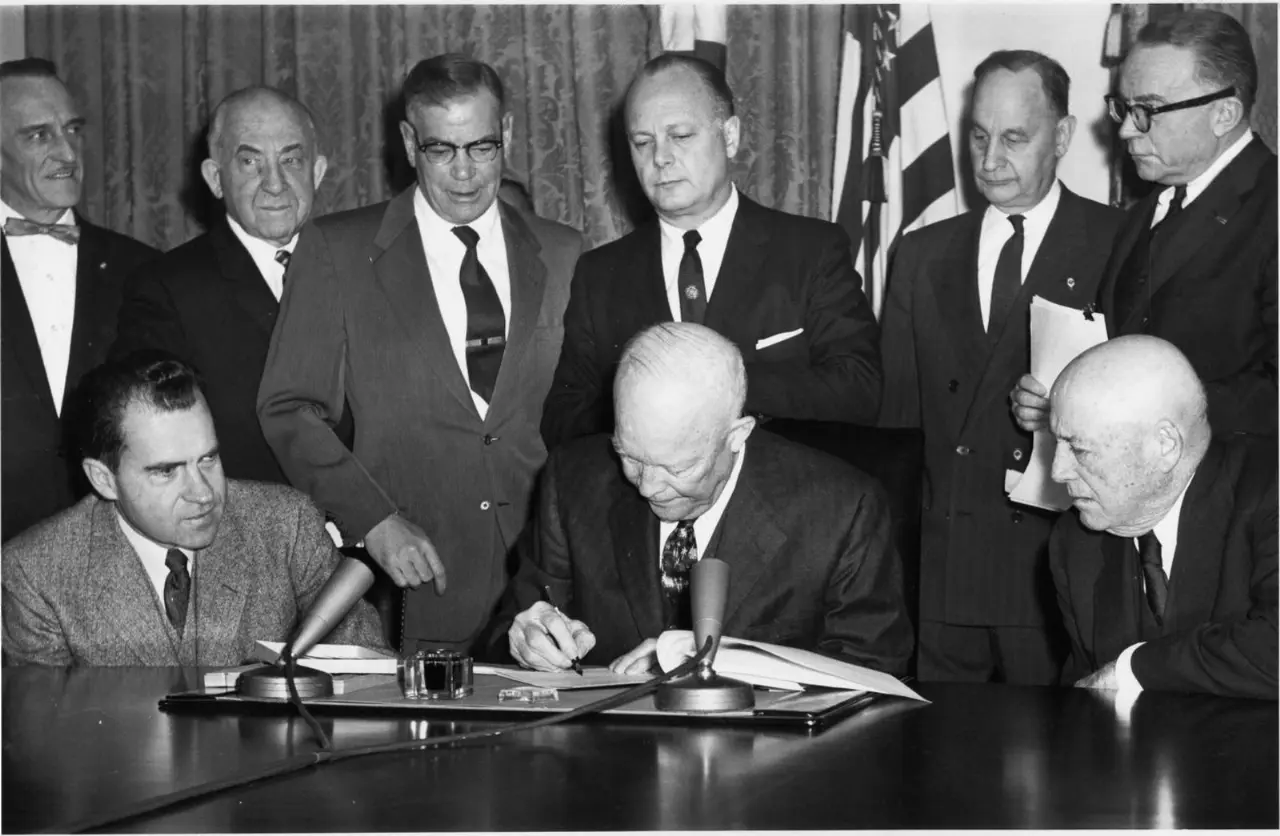
The pen came down on a Saturday morning, and just like that, the map of the United States changed. On January 3, 1959, President Dwight D. Eisenhower signed the proclamation admitting Alaska as the 49th state — the first addition to the Union since Arizona and New Mexico joined back in 1912. Minutes later, he unfurled the brand-new 49-star American flag, its seven staggered rows of seven stars designed for exactly this moment.
It had been a long road. The United States had bought Alaska from Russia in 1867 for $7.2 million — a purchase mocked at the time as "Seward's Folly" — and organized it as a territory in 1912. Statehood bills had been introduced and stalled for years, opposed by fishing interests, partisans who feared how its senators would vote, and skeptics who doubted a thinly populated frontier could support a state government. A House bill passed as early as 1950, only to die in the Senate.
The logjam finally broke in 1958. That May the House passed a statehood bill 210 to 166; in June the Senate followed 64 to 20, and on July 7 Eisenhower signed the Alaska Statehood Act into law. In August, Alaskans themselves voted on the question in the heaviest turnout in the territory's history — approving statehood by roughly five to one, 40,452 to 8,010. All that remained was the formal proclamation.
The celebrations stretched from Anchorage to Point Barrow, with bonfires, parades, and dancing in the streets. That same day, William A. Egan — born and raised in Valdez — was sworn in as Alaska's first governor. And the new flag, its design made official by executive order that very morning, would fly over Fort McHenry for the first time that July 4th.
Statehood transformed Alaska from a distant possession into a full partner — its vast oil, fish, timber, and wilderness now the resources of a state, its people full citizens with voting representation in Congress. Less than a year later, Hawaii would follow as the 50th, completing the flag most Americans know today. But on that January day, the 49th star was the whole story: proof that even the farthest frontier could find its place in the Union.
Photo: U.S. National Park Service, public domain (via Wikimedia Commons). The photograph shows President Eisenhower signing the Alaska Statehood Act on July 7, 1958, the law that paved the way for the January 3, 1959 proclamation.