Six Days That Redrew the Middle East
On June 10, 1967, a UN-brokered ceasefire ended the Six-Day War, leaving Israel holding lands more than double its size and redrawing the Middle East map for decades to come.
It took only 132 hours to redraw the map of the Middle East. When the last ceasefire took hold on June 10, 1967, Israel held territory more than double the size of the country that had gone to war less than a week earlier — and the disputes born in those six days are still unresolved today.
The war grew out of months of mounting tension. In the spring of 1967, border clashes between Israel and Syria escalated, and Egypt's president, Gamal Abdel Nasser, moved troops into the Sinai Peninsula and closed the Straits of Tiran to Israeli shipping. Israel's leaders concluded that an attack was coming — and decided to strike first.
On the morning of June 5, Israeli warplanes swept over Egyptian airfields in a surprise assault called Operation Focus, catching Egypt's air force on the ground. Jordan joined the fighting by shelling Israeli positions, but the response was swift and overwhelming: within two days Israeli forces had overrun the West Bank, and on June 7 they captured the Old City of East Jerusalem. At the Western Wall, the chief chaplain of the Israel Defense Forces blew a ram's horn to mark the moment.
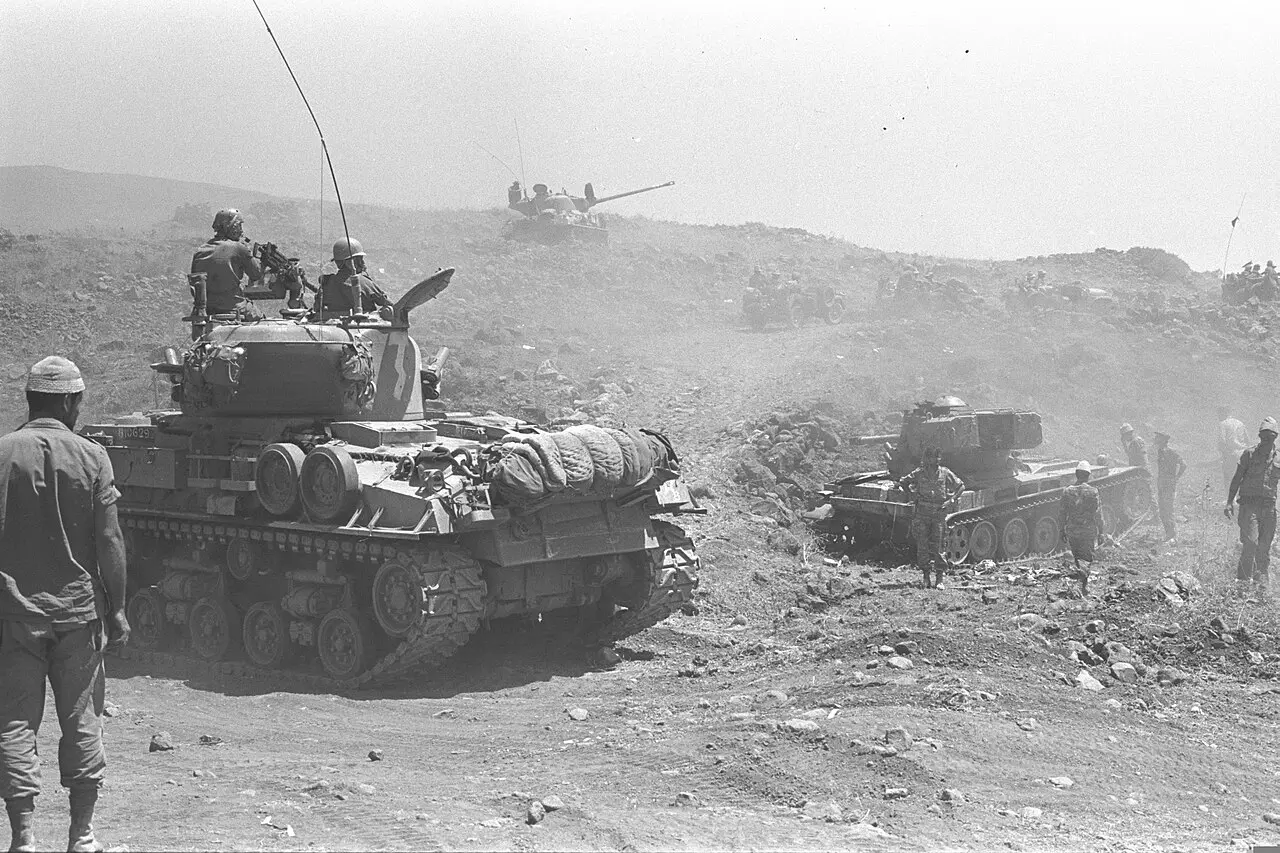
Egypt accepted a ceasefire on June 8, and Jordan's forces withdrew — but Syria remained in the fight. On June 9, after heavy aerial bombardment, Israeli tanks and infantry assaulted the heavily fortified Golan Heights. A day of fierce fighting ended with Syrian troops retreating, and Israel captured the strategic plateau, including the town of Quneitra and Mount Hermon.
On June 10, Israel and Syria agreed to a United Nations-brokered ceasefire, and the Six-Day War came to an abrupt end. The human cost was staggering for so brief a war: roughly 20,000 Arabs and 800 Israelis had died. In Egypt, Nasser announced his resignation in disgrace — then withdrew it a day later after massive street demonstrations demanded he stay.
In six days Israel had captured the Sinai Peninsula and the Gaza Strip from Egypt, the West Bank and East Jerusalem from Jordan, and the Golan Heights from Syria. The UN Security Council called for withdrawal from the occupied regions, but Israel declined, annexing East Jerusalem and placing the rest under military administration. Arab leaders, meeting that August, answered with a policy of no peace, no negotiations, and no recognition of Israel.
Why it matters: historian Michael Oren has called the Six-Day War the single most transformative event in the making of the modern Middle East. The ceasefire lines of June 10, 1967, became the borders at the heart of every peace negotiation since — from Camp David to the present day. A war that lasted less than a week shaped the region for more than half a century.
Photo: Assaf Kutin, CC BY-SA 4.0 (via Wikimedia Commons).