"As Innocent as the Child Unborn": Salem's First Hanging
On June 10, 1692, Bridget Bishop became the first person hanged in the Salem witch trials, the opening act of a panic that still warns against justice without evidence.
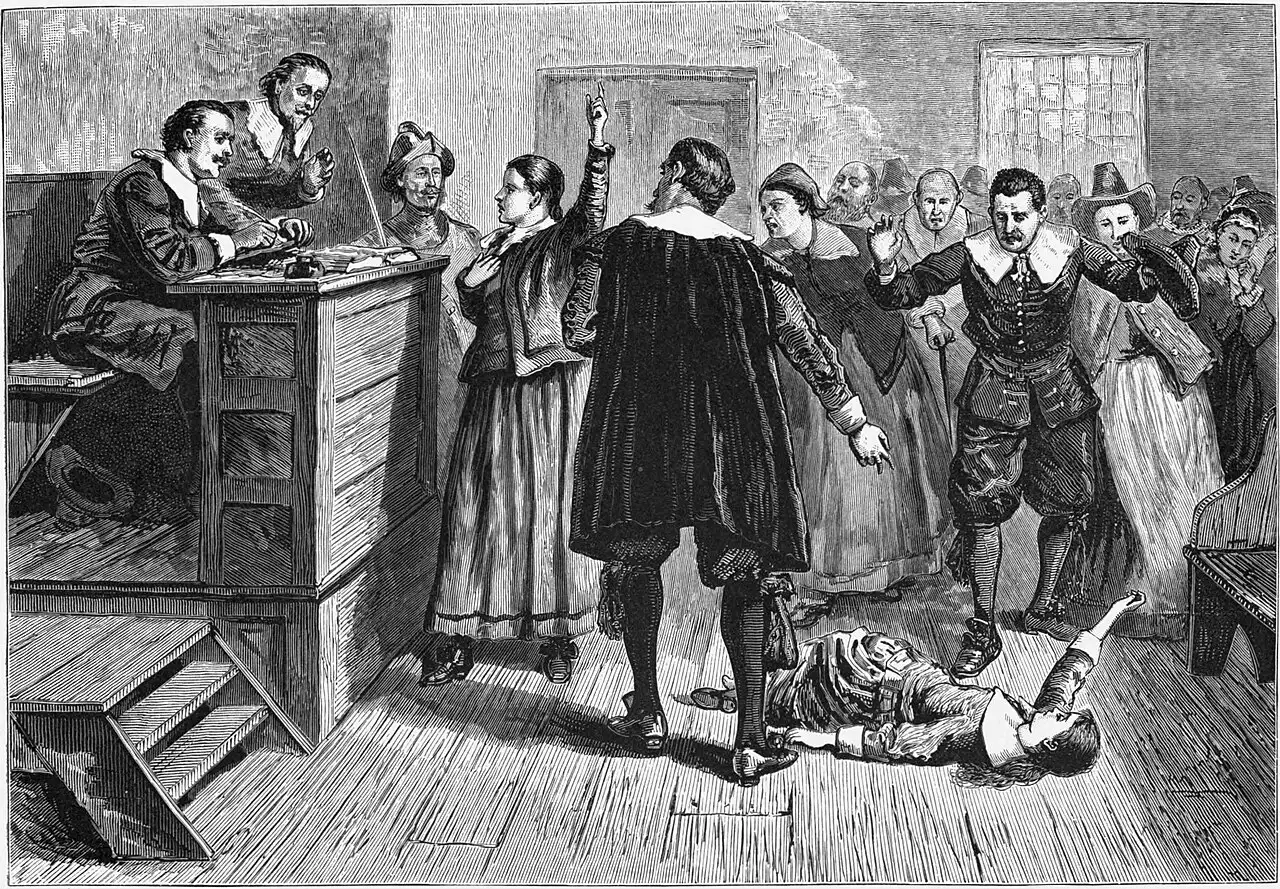
Her last recorded words were a plea of innocence. "I am as innocent as the child unborn," Bridget Bishop told the court — and on June 10, 1692, she became the first person hanged in the Salem witch trials, the opening act of one of America's darkest panics.
The trouble had begun months earlier in Salem Village, Massachusetts, when two girls — nine-year-old Elizabeth Parris and eleven-year-old Abigail Williams — suffered strange fits that the local doctor blamed on witchcraft. Encouraged by adults, the girls accused a widening circle of neighbors, and by spring 1692 dozens of people from Salem and the surrounding villages were under suspicion.
In May, Governor William Phips created a special Court of Oyer ("to hear") and Terminer ("to decide") under Chief Justice William Stoughton. Its first defendant was Bridget Bishop, an older Salem woman who stood out among her Puritan neighbors: she had been married three times, helped run a tavern with her husband, and wore clothing some considered extravagantly inappropriate. She had even been accused of witchcraft once before, back in 1680.
Bishop was tried on June 2. The case against her rested heavily on spectral evidence — testimony that the afflicted could see her spirit tormenting them, though no one else could. Neighbors also blamed her for long-ago misfortunes: spooked horses, a stolen egg, sick livestock. She denied everything, but the court found her guilty.
Eight days later, on June 10, she was carted from the Salem jail to the rocky rise that would become known as Gallows Hill, where Sheriff George Corwin carried out the sentence. She was the first to die — but not the last. On four execution days that summer, nineteen people were hanged, and one man, Giles Corey, was pressed to death under heavy stones for refusing to enter a plea.
By October the panic had burned itself out. Governor Phips dissolved the Court of Oyer and Terminer and replaced it with a court that barred the sensational testimony that had fueled the convictions. The remaining accused were released or pardoned. More than three centuries later, in 2001, Bridget Bishop and the other victims were formally exonerated.
Why it matters: the Salem trials remain America's most chilling lesson in what happens when fear replaces evidence. Spectral evidence — invisible, untestable, impossible to refute — was enough to hang nineteen people. Every time the phrase "witch hunt" is invoked in politics or public life, it reaches back to Gallows Hill and the summer when accusation alone could kill.
Photo: Engraving in the public domain, artist unattributed (via Wikimedia Commons).