Sgt. Pepper's Big Day: The Beatles Make Albums Into Art
On June 1, 1967, the Beatles released Sgt. Pepper's Lonely Hearts Club Band in Britain, the album that turned pop records into high art.
Fifty-nine years ago, four musicians from Liverpool made the boldest claim in the history of pop music: that a record album could be a work of art. June 1, 1967 is the date the history books give to Sgt. Pepper's Lonely Hearts Club Band — the official British release date of the Beatles' eighth studio album, and the day the LP stopped being a collection of songs and started being a statement.
The Beatles had earned the break. After their final concert at San Francisco's Candlestick Park in August 1966, exhausted by screaming crowds they could no longer hear themselves over, the band quit touring for good. "We were not boys, we were men," Paul McCartney later said of the moment they walked away from live performance and committed themselves entirely to the recording studio.
McCartney's big idea was a disguise. The band would pretend to be someone else entirely: a colorful Edwardian-era brass band, Sgt. Pepper's Lonely Hearts Club Band, and make the album as a concert by that imaginary group. When McCartney played the finished record for Bob Dylan in a London hotel room that spring, the American folk singer grasped it instantly. "Oh I get it," Dylan told him, "you don't want to be cute anymore."
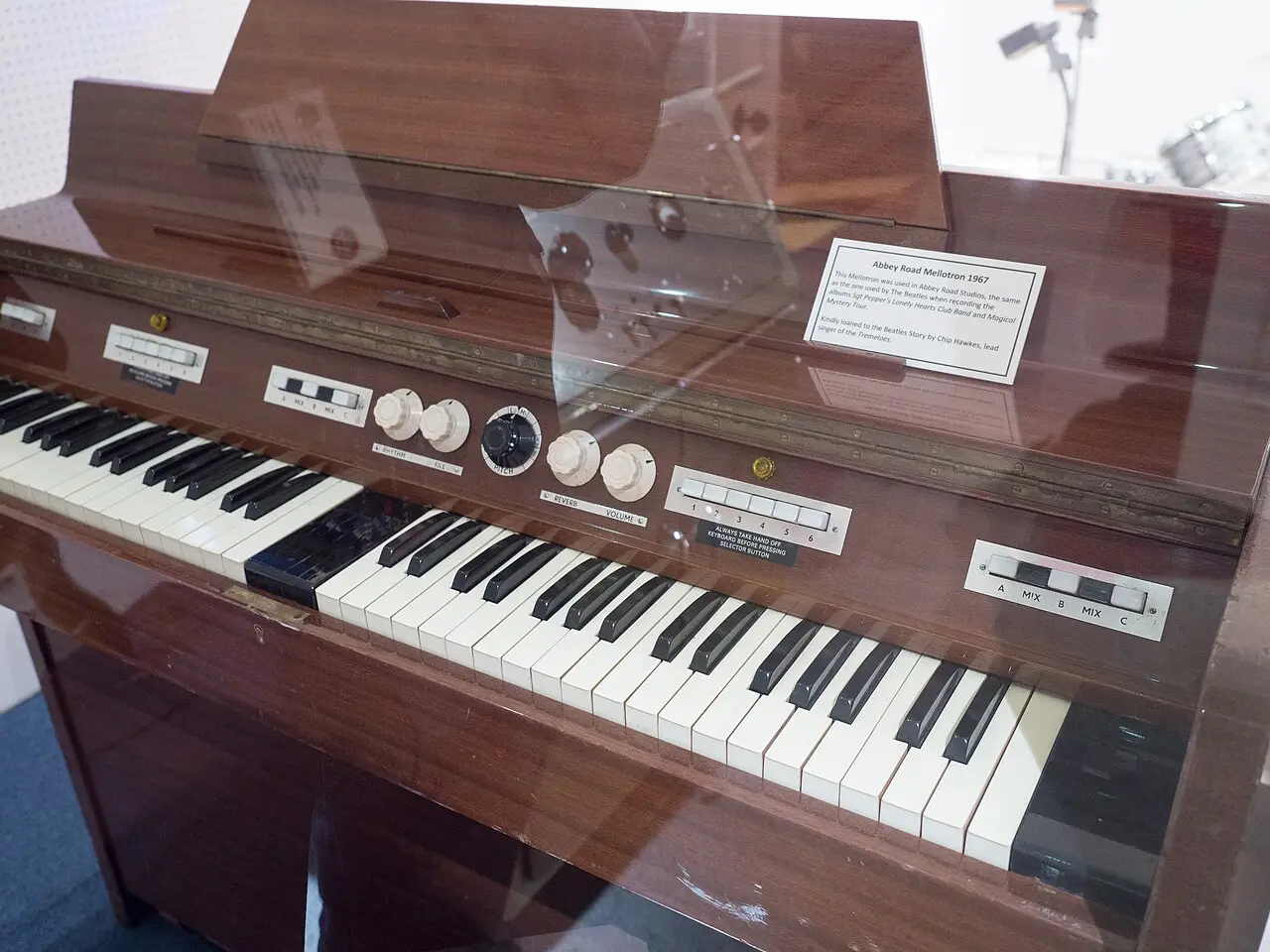
Inside London's Abbey Road studios, the Beatles and producer George Martin stretched the technology of the day to its limits. Recording on four-track tape machines, they layered sound upon sound — sitars, brass bands, animal noises, a full orchestra — on songs like "Lucy in the Sky with Diamonds" and the closing "A Day in the Life." They experimented with keyboards like the Mellotron, an early tape-based instrument whose flute-like tones helped give the record its dreamlike textures. The famous cover, a collage of cardboard celebrities designed by artists Peter Blake and Jann Haworth and photographed on March 30, 1967, was as carefully constructed as the music.
The public got it immediately. In Britain the album spent 148 weeks on the charts, including 27 weeks at number one; in America it held the top spot for 15 weeks. Critics reached for superlatives — Kenneth Tynan wrote in The Times of London that the release was "a decisive moment in the history of Western civilization." The record won four Grammy Awards, including Album of the Year, the first time a rock album had taken that honor.
Why does it still matter? Before Sgt. Pepper, albums were often afterthoughts — a hit single padded with filler. After it, the album became the central art form of rock music, and generations of musicians from Pink Floyd to hip-hop producers have cited it as proof of what a studio record can do. In 2003 the U.S. Library of Congress added it to the National Recording Registry as "culturally, historically, or aesthetically significant," and Rolling Stone magazine ranked it the greatest album of all time. A June day in 1967 really did change the sound of the century.
Photo: ocs.wing, CC BY 2.0 (via Wikimedia Commons). The Mellotron Mk II pictured here is the same model as the instrument the Beatles used at Abbey Road while recording Sgt. Pepper's Lonely Hearts Club Band and Magical Mystery Tour.