One June Speech That Gave America Its Bill of Rights
On June 8, 1789, James Madison rose in the First Congress to propose the amendments that became America's Bill of Rights.
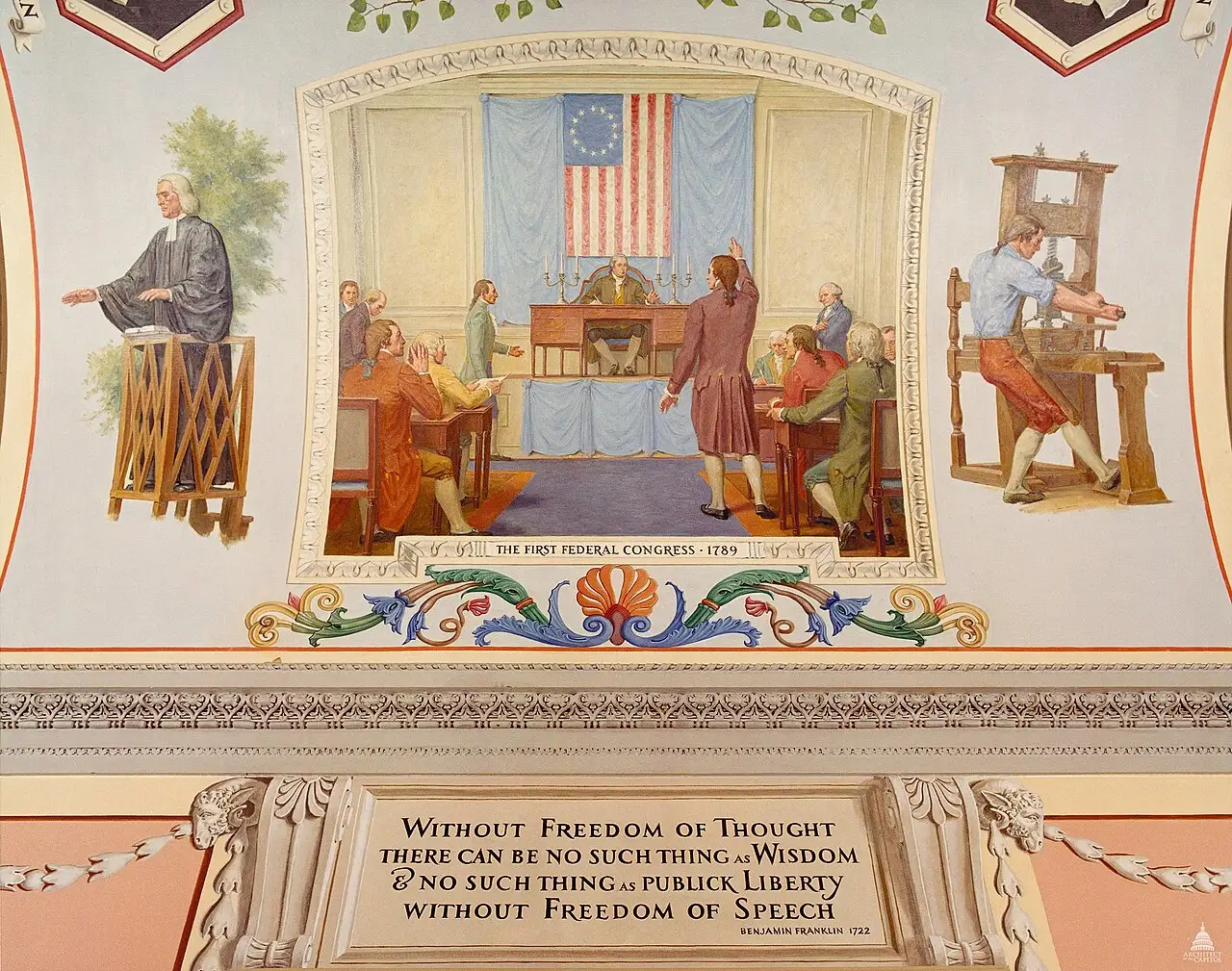
The most quoted words in American law almost didn't exist. When the Constitution was written in 1787, it contained no bill of rights at all — no guarantee of free speech, no protection for religion, no right to a fair trial. The omission nearly killed the whole project: Anti-Federalists across the states refused to ratify a Constitution that left individual liberties unprotected, and the document only survived because its supporters promised that amendments would follow.
James Madison, the Constitution's chief architect, had actually opposed early amendments. But politics has a way of converting skeptics. During the ratification fight in Virginia, Madison made a deal with the Baptist preacher John Leland, whose followers fiercely opposed any government-established religion: Leland would rally Baptist support for ratification, and Madison would present a bill of rights in the first Congress. President Washington, in his inaugural address on April 30, 1789, added his own nudge, suggesting Congress take up the matter. Madison intended to keep his word.
On June 8, 1789, he rose on the floor of the House of Representatives — the First Congress was then meeting at Federal Hall in New York — and delivered the speech that started it all. He proposed a series of amendments protecting the great liberties, and he wanted them woven directly into the body of the Constitution, placed where they naturally belonged in the text. His colleague Roger Sherman of Connecticut objected strenuously, arguing that the Constitution and the amendments should be kept separate — "we might as well endeavor to mix brass, iron and clay, as to incorporate such heterogeneous articles." After a stiff fight, the House sided with Sherman: the rights would be appended at the end as amendments.
Madison told his fellow congressmen the amendments would "expressly declare the great rights of mankind secured under this Constitution," and would satisfy the public mind that their liberties would be perpetual. It was not an easy sell — many members thought Congress had more urgent business, like setting up the new government and passing tax bills. But Madison persevered, shepherding the proposals through committee and debate. On August 24, the House approved seventeen amendments; the Senate trimmed the list to twelve; and on September 25, 1789, Congress sent twelve amendments to the states for ratification.
Two of the twelve failed to win enough states. But on December 15, 1791, Virginia's approval pushed the other ten over the threshold, and the Bill of Rights became law. The holdout states noticed: North Carolina and Rhode Island, which had withheld ratification of the Constitution itself until a bill of rights was promised, joined the Union.
Why it matters: those ten amendments — speech, religion, arms, due process, jury trials, and the rest — became the working machinery of American freedom. They were later extended against the states themselves, underpinned the end of segregated schools in Brown v. Board of Education, and are invoked in courtrooms and classrooms every single day. All of it traces back to one congressman's June speech in a borrowed hall in New York.
Photo: Architect of the Capitol (Allyn Cox mural), public domain (via Wikimedia Commons).