High Noon, April 22, 1889: The Race for Oklahoma
At noon on April 22, 1889, some 50,000 settlers charged into Oklahoma's Unassigned Lands at a cannon's boom, staking 160-acre claims in the wildest land rush in American history.
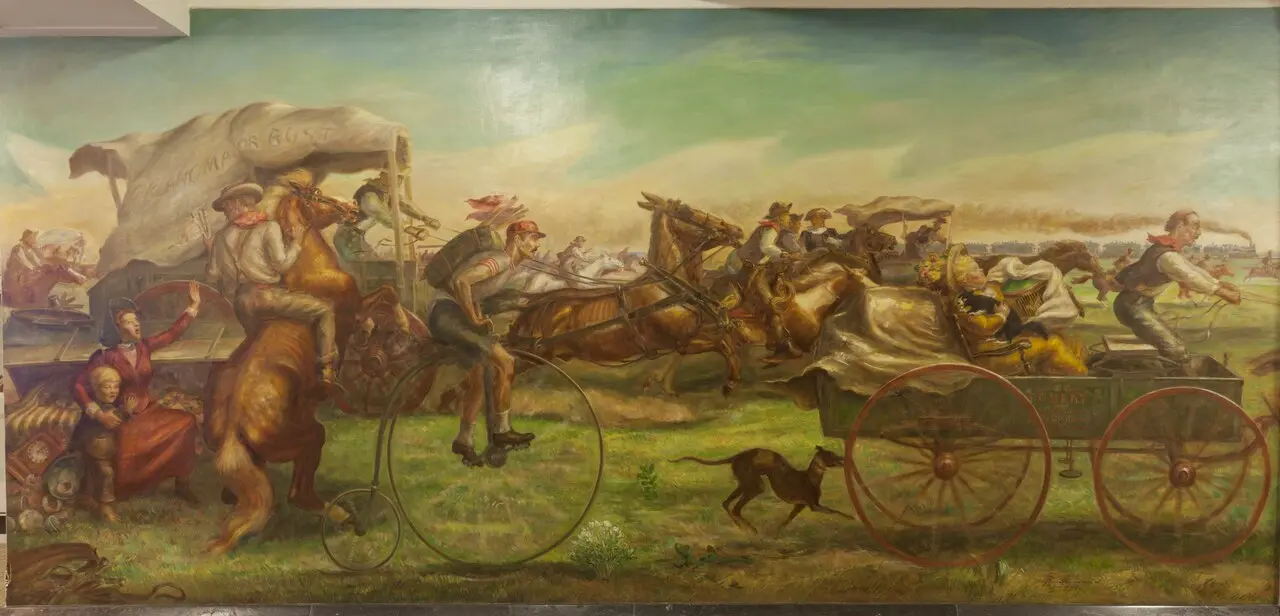
The cannon at Fort Reno fired at exactly noon. Fifty thousand people — on horseback, in wagons, on foot, even on bicycles and clinging to trains rolling in from Kansas and Texas — surged across an invisible line into the center of what is now Oklahoma. By sundown, an entire countryside had been claimed, and towns that had not existed that morning were full of people arguing over lots.
The prize was the Unassigned Lands: nearly two million acres in the middle of Indian Territory that the federal government had never allotted to any tribe. For years, land-hungry settlers called "Boomers" had campaigned to open it, and in the spring of 1889 President Benjamin Harrison agreed. His proclamation set the date — April 22 — and the hour: noon sharp. First come, first served, under the Homestead Act of 1862, which let a settler claim 160 acres and earn the title by living on and improving the land.
With seven weeks to prepare, tens of thousands gathered in tent cities along the borders — families from every state, immigrants from Ireland, England, France, and Scotland, nearly a thousand African Americans, and women, who could stake claims even though they could not yet vote. At 11:50 that morning, soldiers at Fort Reno called everyone into line. Then the cannon boomed, bugles blared, whips cracked, and the Run of '89 began.
Not everyone played fair. Some sneaked across the line early and hid until noon to grab the best claims — the cheaters earned the nickname "Sooners," and Oklahoma wears it proudly to this day. Disputes flared into fistfights, court battles, and the occasional gunshot. Most of the 50,000 went home empty-handed; there was never enough good land to go around.
But the transformation was instant and total. Oklahoma City, a quiet railroad stop with fewer than ten buildings that morning, held more than 12,000 people by nightfall. Guthrie — soon the territorial capital — Norman, Kingfisher, and Stillwater all sprang up the same day. "Unlike Rome, the city of Guthrie was built in a day," crowed Harper's Weekly. The Run of '89 was an international sensation: history made in an hour.
The celebration had a shadow the newspapers skipped. This had been Indian Territory, set aside for the Creek, Seminole, and dozens of other tribes forcibly removed from the Southeast in the 1830s. The 1887 Dawes Act had begun carving tribal lands into allotments, and the 1889 opening was the first of many that would strip most of the territory from Native control. The Sooners' triumph was built on someone else's loss, and any honest telling of April 22 has to say so.
The run opened the last great chapter of westward expansion. More land openings followed across the 1890s, Oklahoma Territory grew into the state of Oklahoma, and every spring the state still remembers '89er Day — while its university teams play as the Sooners, named for the cheaters who couldn't wait for noon.
Photo: Carol M. Highsmith, public domain (via Wikimedia Commons).