
'God Wills It': The Call for the First Crusade, 1095
On November 27, 1095, Pope Urban II addressed a crowd at Clermont and called Christendom to march for Jerusalem — a speech that set two centuries of crusades in motion.
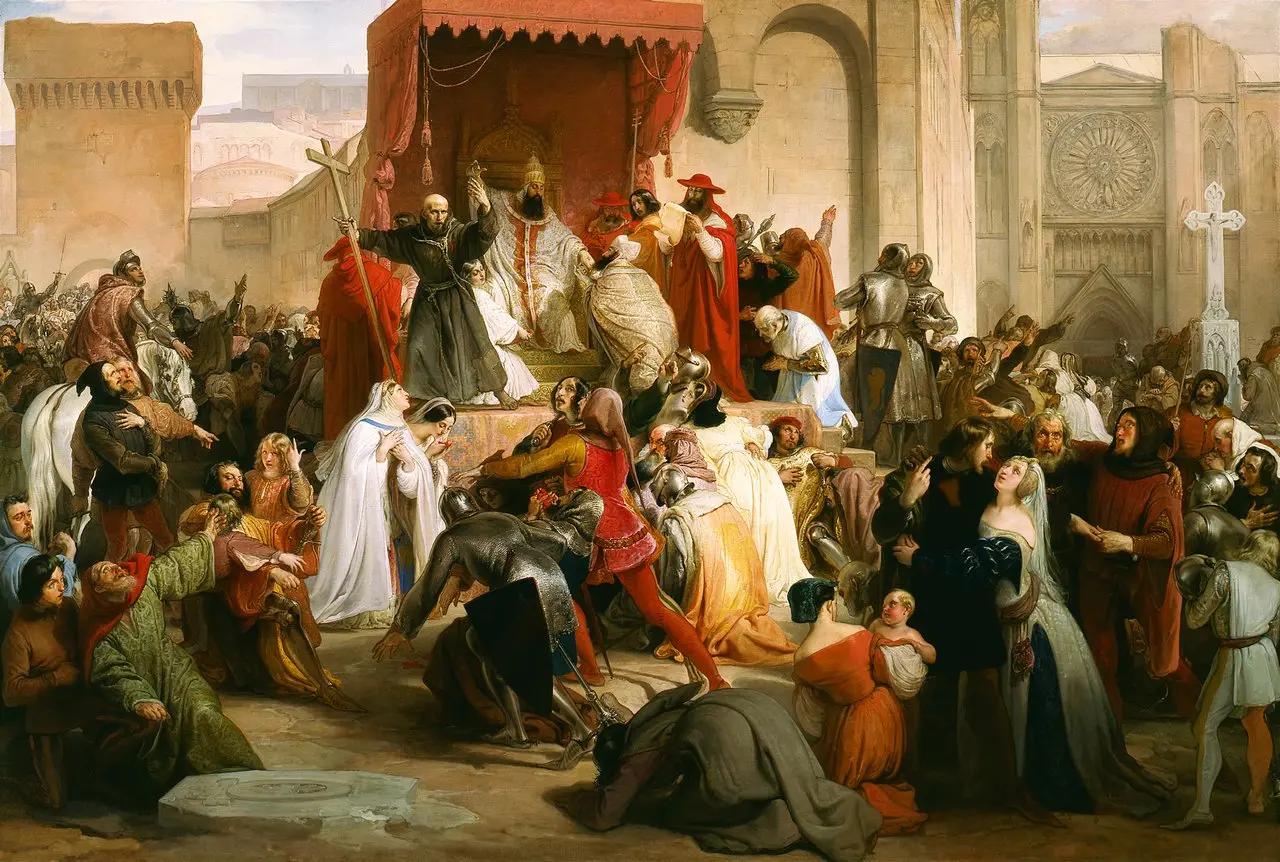
The man born Odo of Lagery had been elected pope in 1088 as Urban II, and his papacy was contested from the start — a rival antipope, Clement III, claimed the throne of St. Peter, and Urban spent years working to dislodge him. A protégé of the great reforming pope Gregory VII, Urban had made his name fighting simony, the buying and selling of church offices. In the spring of 1095, envoys from the Byzantine Emperor Alexius I arrived at a church council in Piacenza, Italy, with an urgent plea: the Seljuk Turks were overrunning his empire's eastern lands, and he needed Western soldiers to help hold them back.
Urban saw more than a military request. That summer he toured France, rallying support, and in November he convened a great council of clergy and nobles at Clermont. The council opened on November 18; on November 27, 1095, the pope addressed the assembled crowd in one of the most consequential speeches of the Middle Ages.
No reliable transcript survives — every account was written later, and they differ in the details. But tradition holds that Urban urged the quarreling knights of Europe to stop fighting one another and instead march east to aid their fellow Christians and free Jerusalem from Muslim rule, promising remission of sins to all who took up the cause. According to those accounts, the crowd answered with a thunderous cry: "Deus vult!" — "God wills it!" The bishop of Le Puy, Adhemar, stepped forward as the first to "take the cross," and Urban named him the expedition's papal legate. He set August 15, 1096 — two weeks after the harvest began — as the day of departure, and sent his bishops across France, Germany, and Italy to preach the cause in their own dioceses.
The response outran anything the pope had planned. Alongside the organized armies of nobles, a vast popular movement — the People's Crusade, led by the preacher Peter the Hermit — set out early and unraveled into disaster; and crusaders marching through the Rhineland turned their violence on Jewish communities along the way, a dark stain on the whole enterprise that no account of the crusades can honestly omit.
The armies that did reach the East fought their way across Anatolia and Syria, and on July 15, 1099, the crusaders captured Jerusalem. In Rome, Urban II died on July 29 — just fourteen days later, before the news of his triumph could reach him.
The crusader states the campaign created would last for generations, and the religious wars Urban unleashed would echo for centuries. Whatever his exact words on that November day, they moved tens of thousands of people to march three thousand miles — and changed the map of the medieval world.
Photo: Francesco Hayez, public domain (via Wikimedia Commons).