
Eighteen Minutes That Changed American Labor
On March 25, 1911, fire swept the Triangle Shirtwaist factory in New York City, killing 146 workers and transforming workplace safety law.
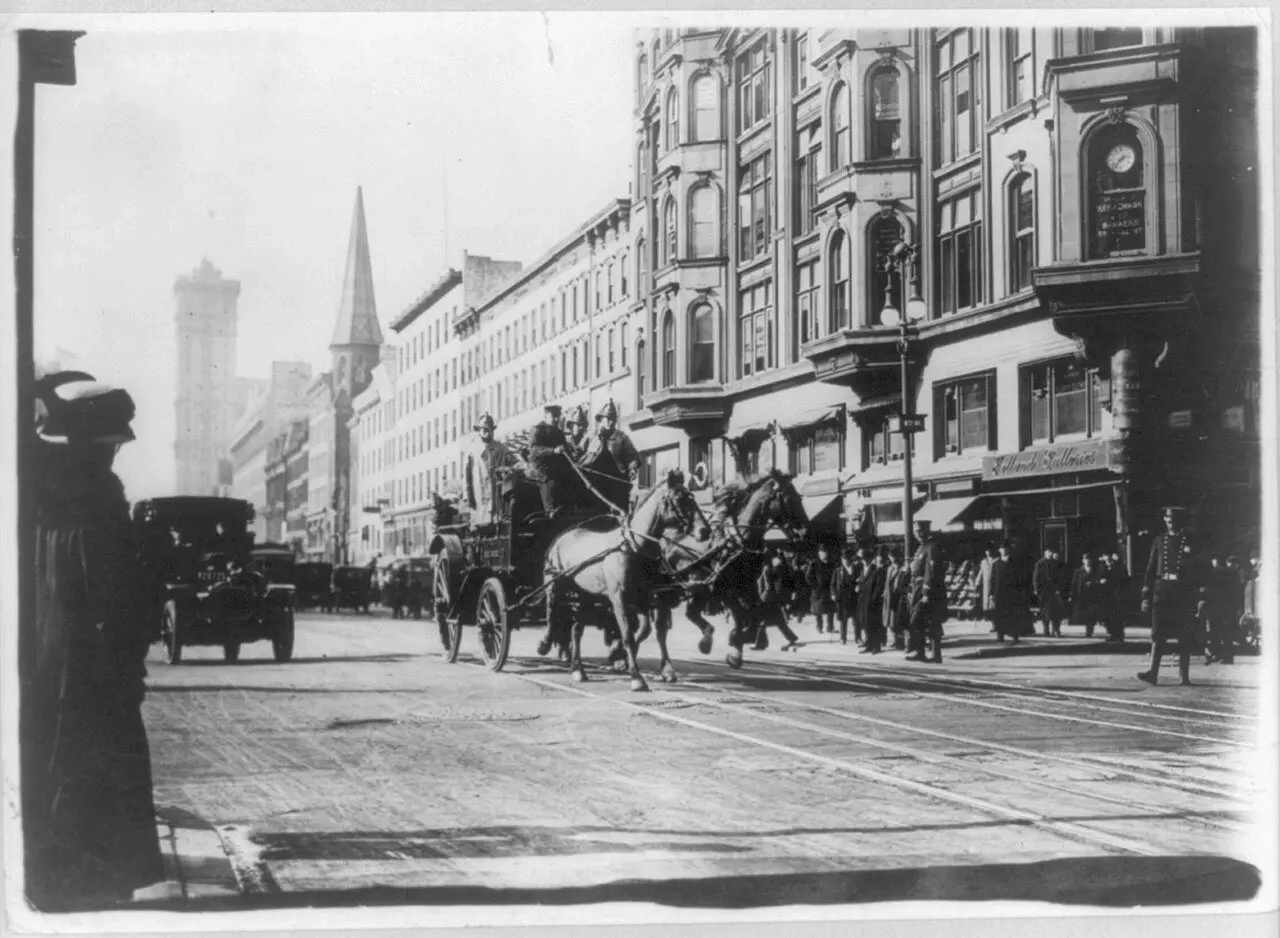
It was a Saturday, and payday, and the workday was ending. Around 4:40 p.m. on March 25, 1911, a fire broke out on the eighth floor of the Asch Building in Manhattan's Greenwich Village, where the Triangle Waist Company occupied the top three floors. Within minutes, flames were racing through cloth scraps and paper patterns toward the ninth and tenth floors, where hundreds of garment workers — mostly young immigrant women — were still at their machines.
What turned a fire into a catastrophe was how the factory had been run. Exit doors were locked to prevent theft and unauthorized breaks, a common practice at the time. The building had no sprinklers. Firefighters arrived within minutes, but their ladders reached only the sixth floor — three floors below the trapped workers. The single fire escape buckled and collapsed under the weight of fleeing people. Some workers jammed into elevators; others reached the roof and jumped to adjoining buildings. Dozens, with no other way out, fell or jumped from the windows onto the pavement below as crowds gathered, helpless, in the street. It was over in under half an hour. One hundred forty-six people were dead — 123 women and girls and 23 men, most of them Italian and Jewish immigrants between the ages of 14 and 23 — and 78 more were injured.
The owners, Max Blanck and Isaac Harris, were tried for manslaughter that December and acquitted; a later civil settlement paid victims' families just $75 each, while the owners' insurance paid them far more. But the public outrage could not be buried: a week after the fire, thousands packed a mass meeting at the Metropolitan Opera House demanding action, and days later more than 350,000 people joined a funeral march through the city. Three months after the fire, New York created the Factory Investigating Commission, which produced 36 new state safety laws by 1914 — on fire exits, sprinklers, occupancy limits, child labor, and working hours — and became the model for workplace regulation across the country.
The tragedy also energized the International Ladies' Garment Workers' Union and propelled reformer Frances Perkins, who had witnessed the fire from nearby, toward becoming New York's labor commissioner in 1929 and, in 1933, the first woman in a U.S. presidential cabinet. The Asch Building itself still stands on the NYU campus as a National Historic Landmark — a monument, in stone and brick, to the day that proved American workers needed the law on their side.
The Triangle fire was the deadliest industrial disaster in New York City's history, and its legacy is in every sprinkler, fire drill, and exit sign in every American workplace.
Photo: George Grantham Bain / Library of Congress, public domain (via Wikimedia Commons).