December 7, 1995: Galileo Reaches Jupiter
On December 7, 1995, NASA's Galileo spacecraft arrived at Jupiter, becoming the first craft to orbit an outer planet.
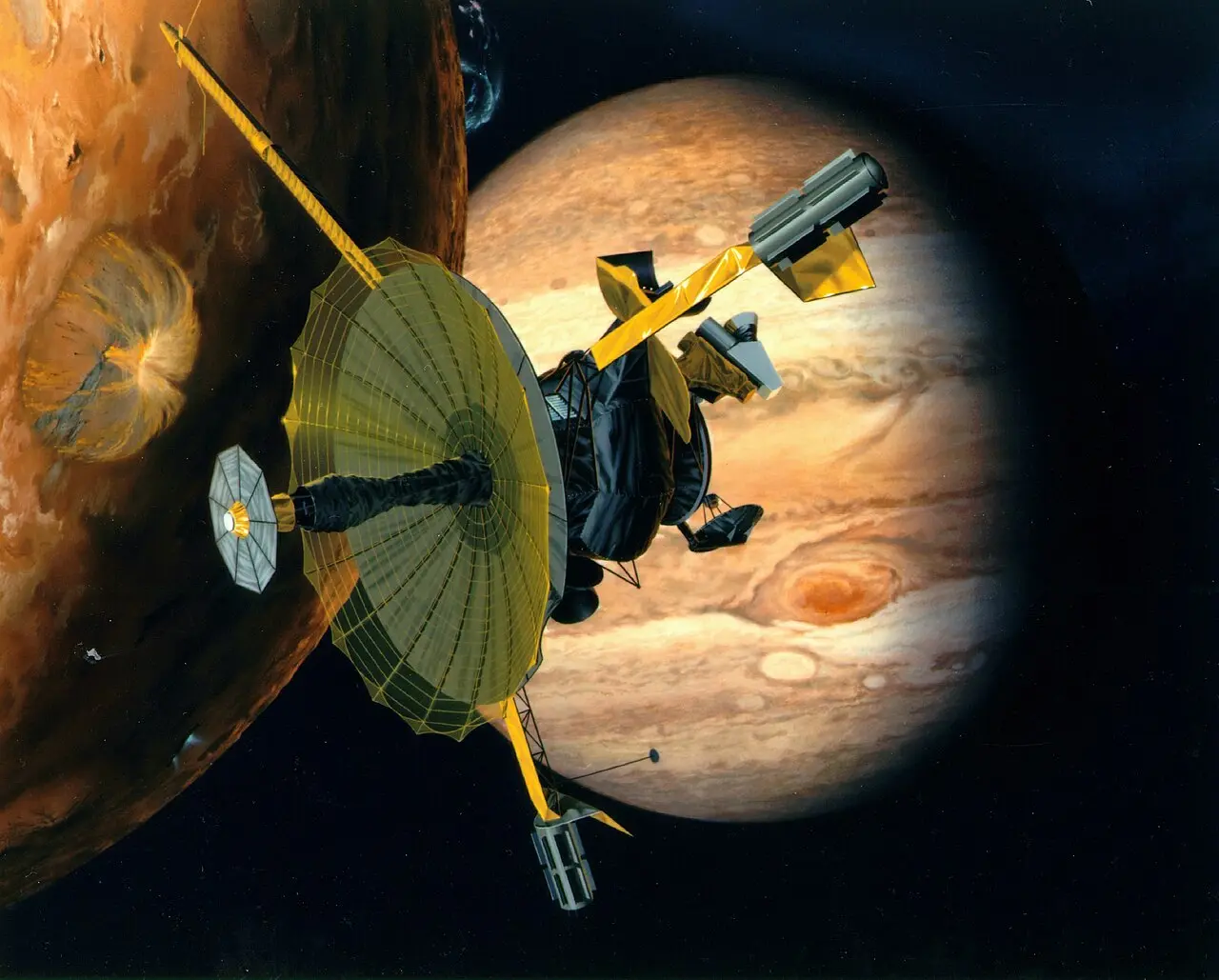
It took six years, two swings past Earth, one past Venus, and a broken antenna -- but on December 7, 1995, humanity's ambassador finally reached Jupiter.
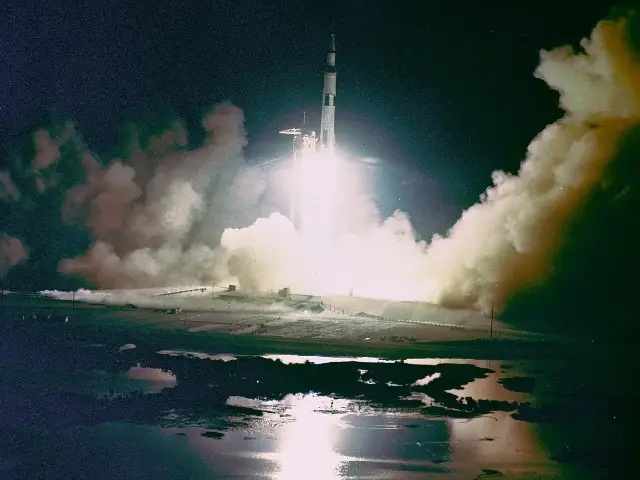
That day, NASA's Galileo spacecraft fired its engine and slipped into orbit around the giant planet, becoming the first spacecraft in history to orbit a world of the outer solar system. It had been a long road: launched in October 1989 aboard the space shuttle Atlantis, Galileo could not fly straight to Jupiter, so it stole speed from the planets themselves -- a Venus flyby in February 1990, then two Earth flybys, in December 1990 and December 1992, each one flinging it farther outward.
The cruise was a triumph in itself. In October 1991 Galileo flew past the asteroid Gaspra, sending back the first close-up images of an asteroid. In August 1993 it passed the asteroid Ida and discovered Dactyl, a tiny moon orbiting it -- the first asteroid moon ever found. In July 1994, Galileo was the only observer in the solar system positioned to watch directly as fragments of Comet Shoemaker-Levy 9 slammed into Jupiter's clouds.
And it did all of this half-crippled. Galileo's big umbrella antenna never unfolded, threatening to strangle the mission's data to a trickle. Engineers on Earth rewrote the spacecraft's software in flight, teaching it to squeeze its science through a small backup antenna -- one of the great rescues in spaceflight history.
Arrival day was a double event. Hours before the orbit insertion, Galileo released a small atmospheric probe that plunged into Jupiter's clouds at 47.6 kilometers per second -- 106,500 miles per hour -- then parachuted downward, radioing the first direct measurements of a giant planet's atmosphere to the orbiter above before the crushing depths silenced it.
What Galileo found rewrote the textbooks. Io, the innermost big moon, proved to be the most volcanic world known -- its eruptions outpacing Earth's a hundredfold. Europa's cracked icy shell hid a saltwater ocean, perhaps 100 kilometers deep, holding roughly twice the water of all Earth's oceans. Ganymede turned out to have its own magnetic field -- the only moon known with one. Over 34 orbits and 35 close moon flybys, Galileo turned four points of light into four worlds.
The mission ran until 2003. It was named for Galileo Galilei, who first spotted Jupiter's four great moons through a telescope in 1610 -- and nearly four centuries later, his namesake went to meet them.
Photo: NASA, public domain (via Wikimedia Commons).