December 7, 1972: Apollo 17 Leaves for the Moon -- the Last Time
On December 7, 1972, Apollo 17 lifted off for the Moon, the last crewed mission ever to leave Earth orbit.
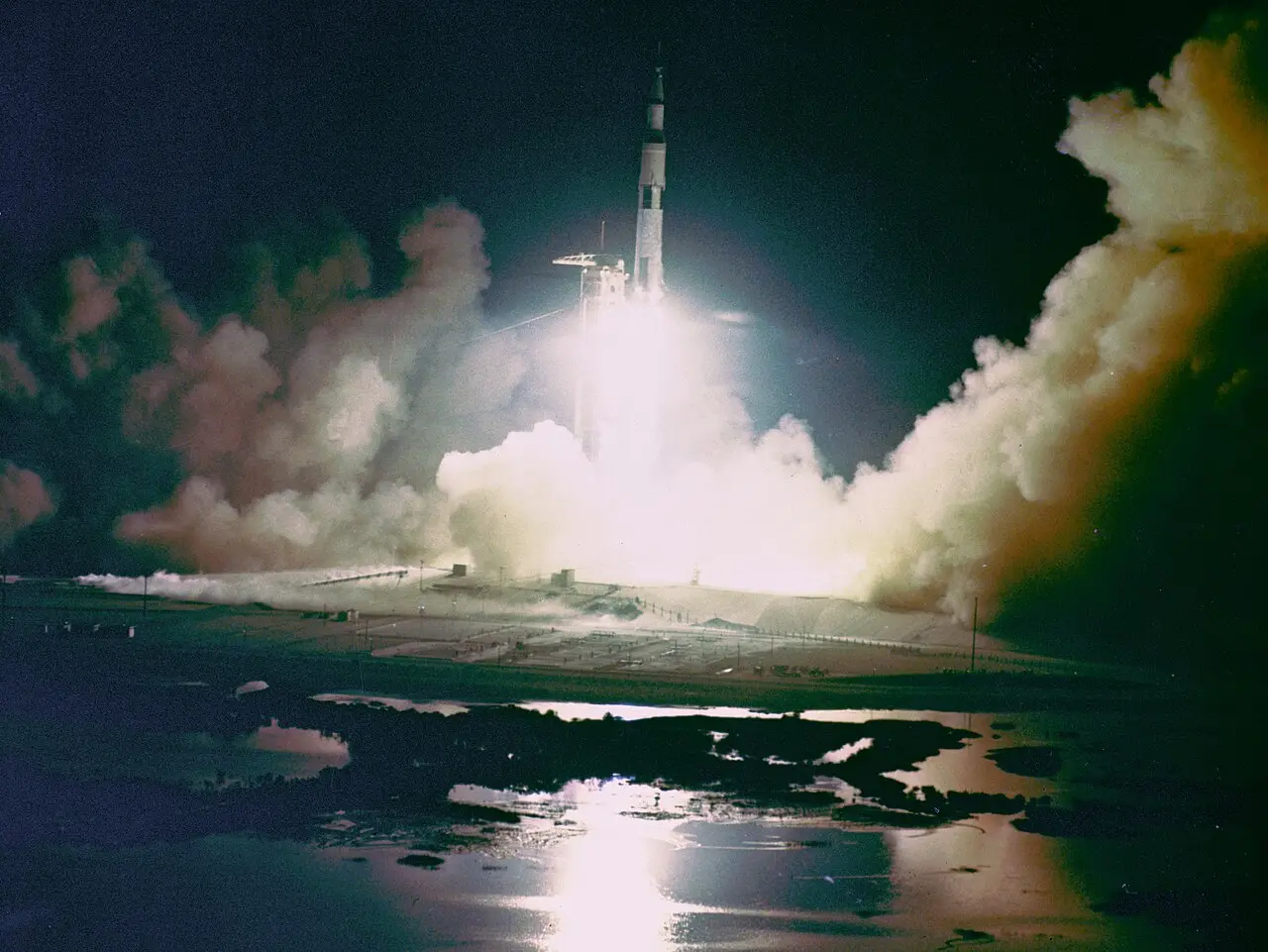
At 12:33 on a December morning, the night over Florida turned to day.
On December 7, 1972, at 12:33 a.m. Eastern time, Apollo 17 lifted off from Launch Complex 39's Pad A at the Kennedy Space Center. The 363-foot Saturn V -- the most powerful rocket ever flown -- rose on a pillar of flame so brilliant that onlookers said it turned night into day. It was the first nighttime liftoff of the Saturn V, and it would be the last time human beings left for the Moon.
The launch had almost not happened that night. A failed sequencer in the countdown held the rocket on the pad for two hours and forty minutes -- the only launchpad delay in the entire Apollo program caused by a hardware problem. When the engines finally lit, three men were aboard: mission commander Eugene Cernan, a veteran of two earlier spaceflights; command module pilot Ronald Evans, who would orbit the Moon alone in the command module America; and lunar module pilot Harrison Schmitt, who would fly the lander Challenger down to the surface. Schmitt, a geologist with a doctorate, was the only professional scientist ever to walk on the Moon -- NASA had replaced test pilot Joe Engle on the crew to make room for him.
Four days later, Cernan and Schmitt set Challenger down in the Taurus-Littrow valley, a site chosen for its promise of ancient highland rock and possible volcanic features. Over three moonwalks they spent more than 75 hours on the surface -- a record -- drove the lunar rover across the valley, and made the mission's most famous discovery at Shorty crater: soil the color of orange. The orange proved to be tiny beads of volcanic glass, billions of years old -- evidence of fire fountains from the Moon's youth. All told, they brought home 243 pounds of Moon rock and soil, the largest haul of the program.
Before climbing back into Challenger for the last time, Cernan spoke the words that closed the Apollo era: "we leave as we came and, God willing, as we shall return, with peace and hope for all mankind." A plaque left on the lander's descent stage reads: "Here man completed his first exploration of the moon, December 1972 A.D. May the spirit of peace in which we came be reflected in the lives of all mankind."
Apollo 17 splashed down in the Pacific on December 19, 1972. No human has traveled beyond low Earth orbit since. Cernan, the last man to stand on the Moon, died in 2017 -- and the footprints he and Schmitt left in the dust of Taurus-Littrow are still there, waiting in the airless dark for the day the plaque's promise comes true.
Photo: NASA, public domain (via Wikimedia Commons).