America's First Election Day: Washington Chosen Unanimously
From December 1788 through January 7, 1789, America's first presidential election picked George Washington — still the only unanimous choice in the nation's history.
Nobody voted for president in November. The winter of 1788–89 held America's first presidential election, and it stretched across weeks: ordinary voters cast ballots from December 15, 1788, until Wednesday, January 7, 1789 — the day Congress had set for each state's electors to gather and choose the new nation's first president.
There was almost no suspense about the winner. George Washington, the commander of the Continental Army, was the only man in America who could have united the new republic, and everyone knew it. The real contest, such as it was, played out in the fine print of the brand-new Constitution. Under Article II, each elector cast two votes without naming which was for president; the top vote-getter became president and the runner-up vice president.
The election was a patchwork, because each state ran it its own way. In Connecticut, the state legislature picked seven electors; in Delaware, voters in each county chose one elector each; in Pennsylvania, voters picked fifteen. Only ten of the thirteen states took part at all: North Carolina and Rhode Island had not yet ratified the Constitution, and New York's legislature deadlocked and sent no electors. Of 72 possible electors, only 69 actually cast ballots.
Washington's name appeared on all 69. It remains the only unanimous electoral victory in American history. The second-place finisher — and therefore the first vice president — was John Adams, with 34 votes. That margin was no accident: Alexander Hamilton had quietly urged some electors to withhold their second votes from Adams, afraid that too much enthusiasm might produce a tie and throw the decision to the House of Representatives, embarrassing the newborn government.
The electoral votes were formally counted and certified by Congress on April 6, 1789, and Washington — who had not campaigned and had never even attended the Constitutional Convention's debates on the presidency — accepted the job he never asked for.
It matters because it was the Constitution's first live test, and the machinery worked. The states chose electors, the electors chose a president, and a republic of three million people acquired a chief executive without bloodshed or crisis — something no large republic had managed in the modern age. Every November election since has followed in the footprints left on that cold January day in 1789.
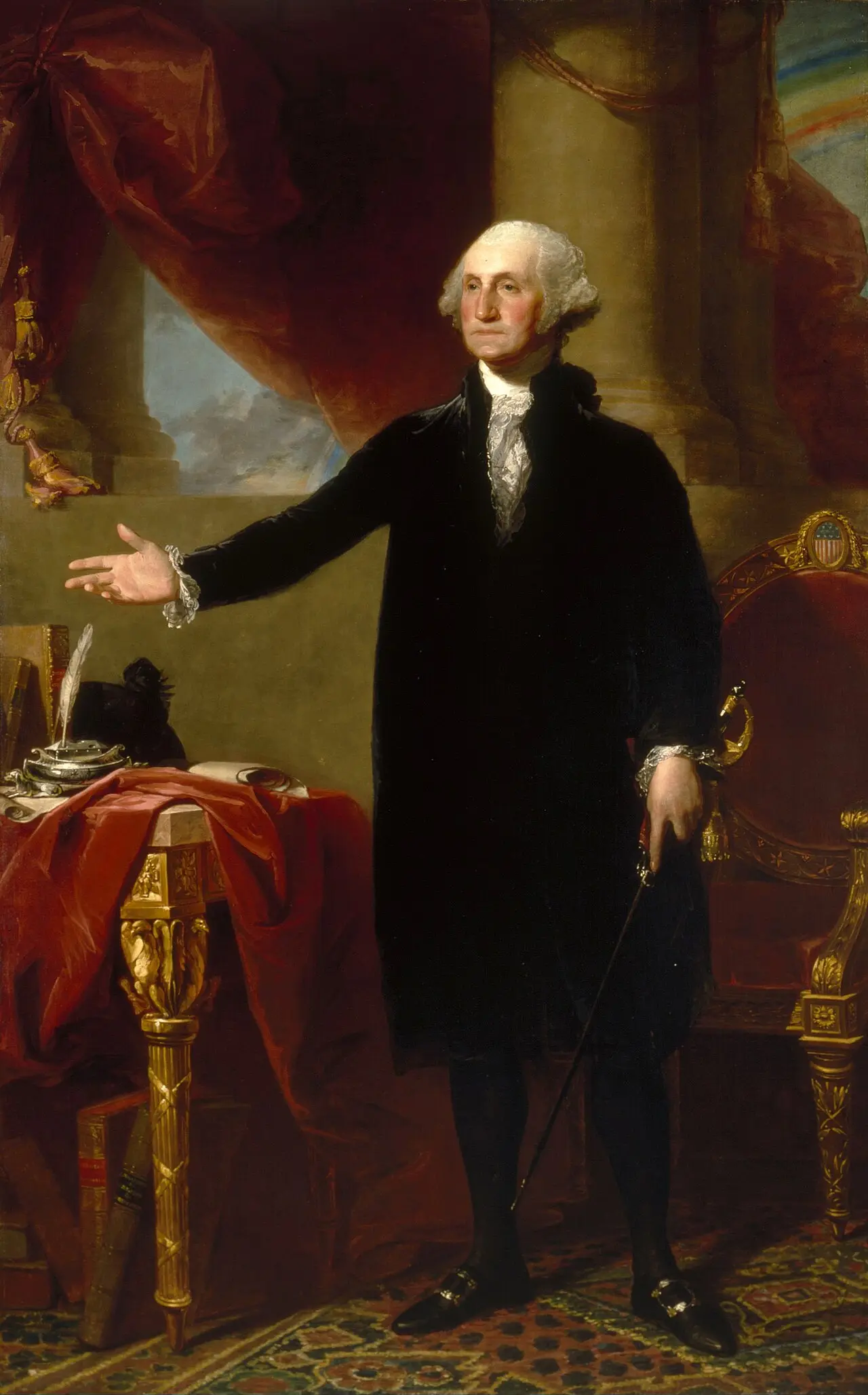
Photo: Gilbert Stuart's Lansdowne portrait of George Washington, painted in 1796, seven years after the election (public domain), via Wikimedia Commons.