All Available Boats: The Great 9/11 Boatlift
On September 11, 2001, with Manhattan's bridges and tunnels shut, an armada of ferries, tugs, and private boats evacuated roughly half a million people by water in about nine hours.
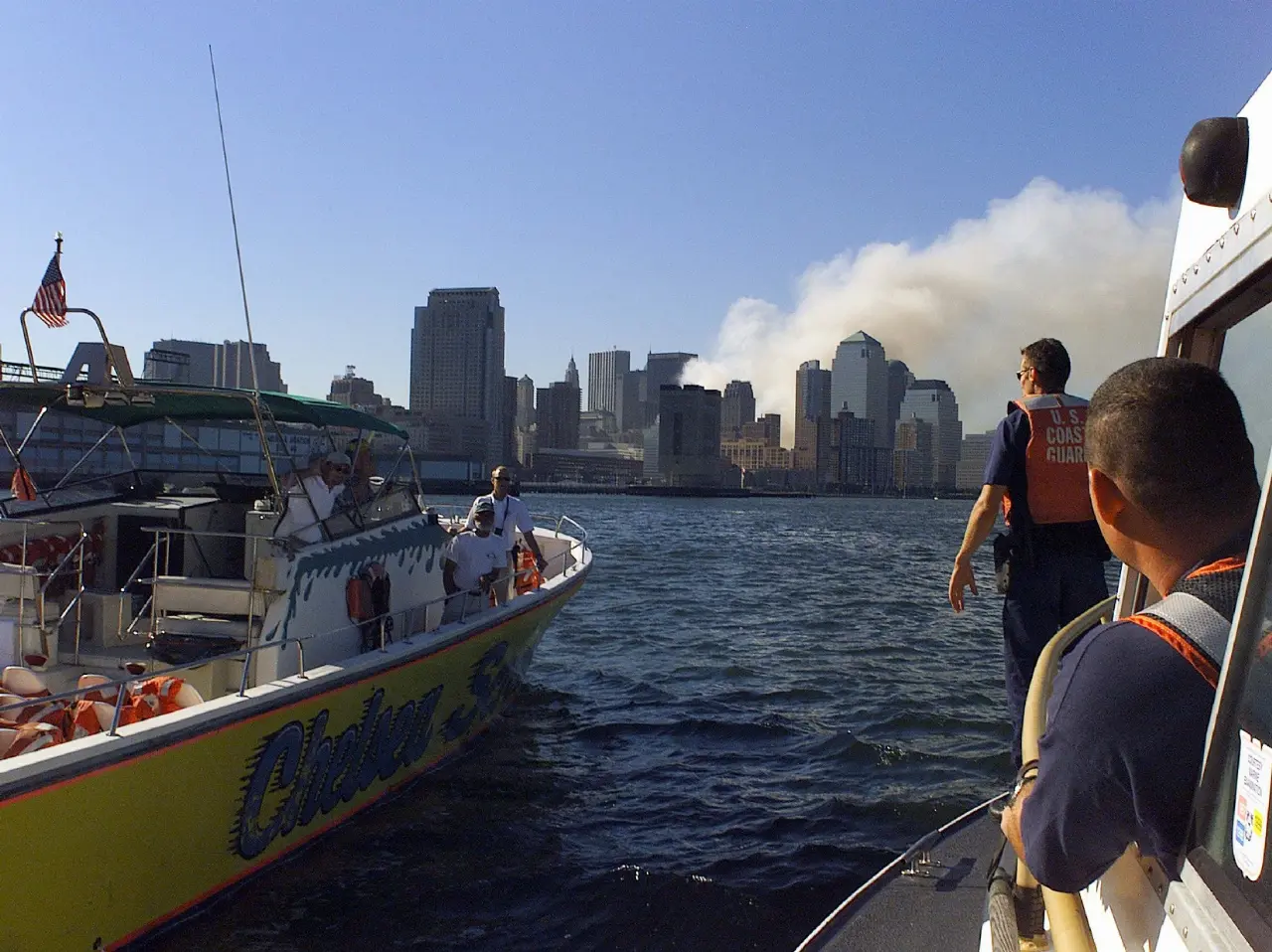
The call went out over marine radio on a morning of smoke and chaos: all available boats were needed at the southern tip of Manhattan. What answered was one of the greatest rescue fleets ever assembled — and almost none of it wore a uniform.
September 11, 2001, had stranded hundreds of thousands of people in lower Manhattan. With bridges, tunnels, and subways shut, the only way off the island's southern tip was across the water. Within minutes, fireboats were racing to the scene. Then the U.S. Coast Guard put out the call to every vessel in New York Harbor: come help get people out.
The officer who issued the call was a young Coast Guard lieutenant, Michael Day — and the harbor answered. The Staten Island Ferry, built to carry thousands, turned around and came back for more. Tugboats, dinner-cruise boats, fishing boats, and private yachts all pointed their bows toward the smoke. The Coast Guard tug Hawser was first on the scene and took charge of the chaos; the cutter Adak arrived an hour later and coordinated the evacuation for hours. Fireboats pumped harbor water to firefighters ashore when the city's water mains failed.
More than 150 vessels and some 600 mariners took part. The ferry company NY Waterway alone moved nearly 150,000 people. By day's end, roughly half a million people — the Coast Guard's own commandant put the number above 500,000, though some estimates run lower — had been ferried to New Jersey, Staten Island, and Brooklyn. It took about nine hours.
The comparison everyone reached for was Dunkirk. In 1940, the evacuation of Allied troops from France moved 338,226 soldiers over nine days. The boatlift of Manhattan moved more people than that in a single day. The former commandant, Admiral James Loy, later recalled the "unbelievable debarkation from Manhattan" directed by young Coast Guard officers. Transportation Secretary Norman Mineta called it the largest maritime evacuation in the history of the United States.
No one planned the boatlift. There was no fleet, no admiral, no rehearsal — just boat captains who heard the call and came. The story was later told in the documentary "Boatlift: An Untold Tale of 9/11 Resilience," narrated by Tom Hanks. On the darkest day in the city's modern history, the harbor filled with ordinary people doing an extraordinary thing: going back, again and again, to bring strangers home.
Photo: U.S. Coast Guard, public domain (via USNI News).