The Day America Got Its Money Man
On September 11, 1789, George Washington nominated Alexander Hamilton as America's first Treasury Secretary, and the Senate confirmed him the same day.
The United States was broke. Not the "we should skip the fancy coffee" kind of broke — the kind where the government's paper money was so worthless that people joked about wallpapering their parlors with it.
This was the situation in the summer of 1789. The Constitution was brand-new, George Washington had been president for only a few months, and the young nation was staggering under a mountain of war debt. Soldiers had been paid in promises. Foreign lenders were losing patience. If America could not get its finances in order, the whole experiment in self-government might collapse before it truly began.
Congress acted first, creating the Department of the Treasury on September 2, 1789. Then, on September 11, Washington sent the Senate his very first cabinet nomination: Alexander Hamilton — his former wartime aide-de-camp, now a brilliant New York lawyer — as Secretary of the Treasury. The Senate confirmed him the same day, filling the first cabinet post in American history. The speed of it tells you everything: the money crisis could not wait.
Hamilton did not waste a day. Eight days after taking office, he delivered his first report to Congress — the first report ever issued by any department of the new federal government. Then he unveiled a financial plan so bold that it still shapes your wallet today.
The heart of it was trust. The federal government would assume the states' war debts and repay every creditor in full — "the price of liberty," Hamilton called it. A national debt, he argued, "if it is not excessive, will be to us a national blessing," because honoring debts is what makes lenders believe in you. Around that principle he built an entire system: the First Bank of the United States, chartered in 1791; the U.S. Mint, so the country could coin its own money; a customs service whose tariffs would fund the government for the next century; a fleet of revenue cutters that became the Coast Guard; and America's first lighthouses. He even drafted a plan to jump-start American manufacturing.
Not everyone cheered. Thomas Jefferson and James Madison believed Hamilton was handing the federal government far too much power, and their feud with him helped give birth to America's first political parties. But the results spoke loudly: American credit, once a joke in European capitals, became rock solid. The dollar became trustworthy. Investment flowed, trade grew, and the economy found its footing.
Hamilton served until January of 1795, then returned to private life in New York. He died in a duel with Aaron Burr less than a decade later. But the machinery he built in those five years — a national bank, a mint, honored public debt, steady customs revenue — became the financial operating system of the United States. Every time you spend a dollar, you are using infrastructure designed by the man hired on September 11, 1789.
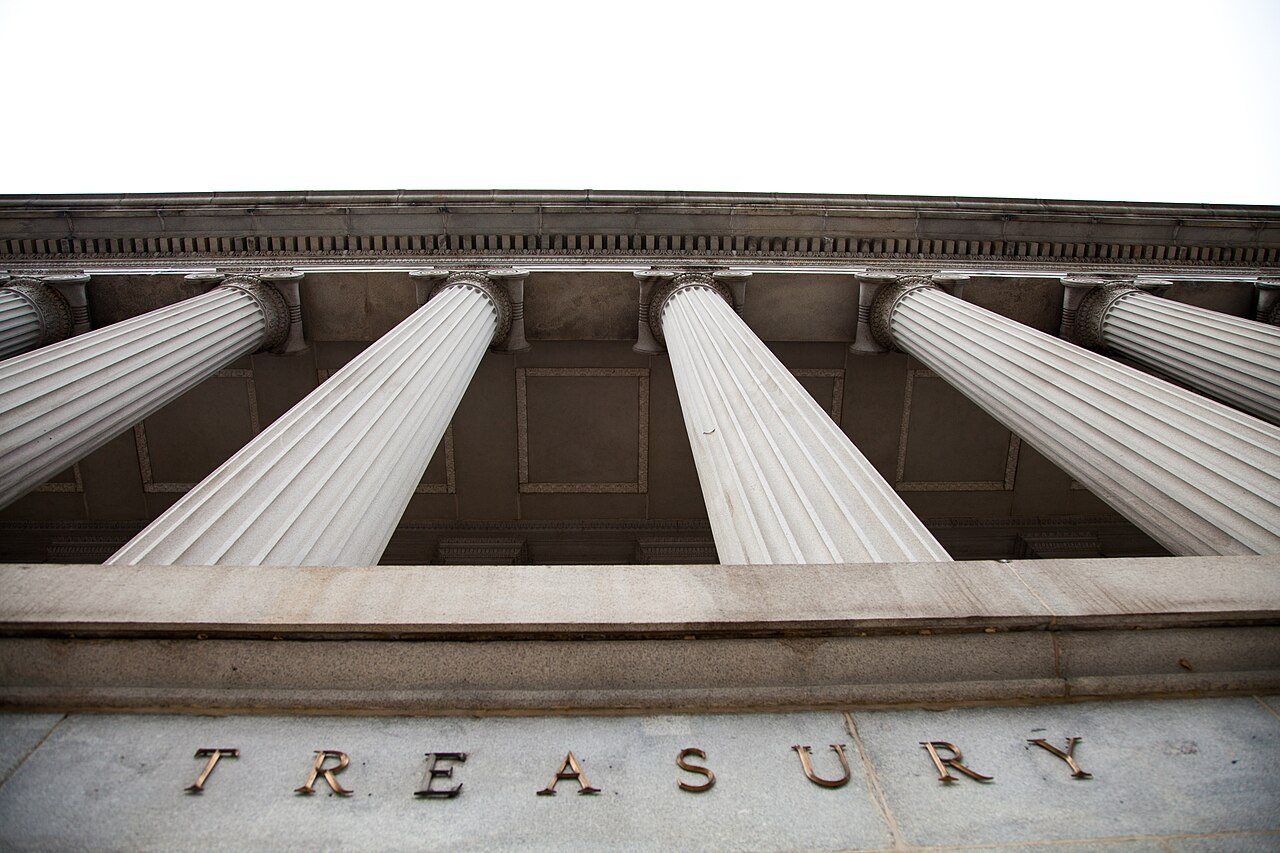
Photo: Almonroth, CC BY-SA 3.0 (via Wikimedia Commons).