
Able and Baker: Two Tiny Astronauts Survive Space
On May 28, 1959, two monkeys — Able and Baker — rode a Jupiter missile 360 miles up and came home alive, the first primates to survive spaceflight.
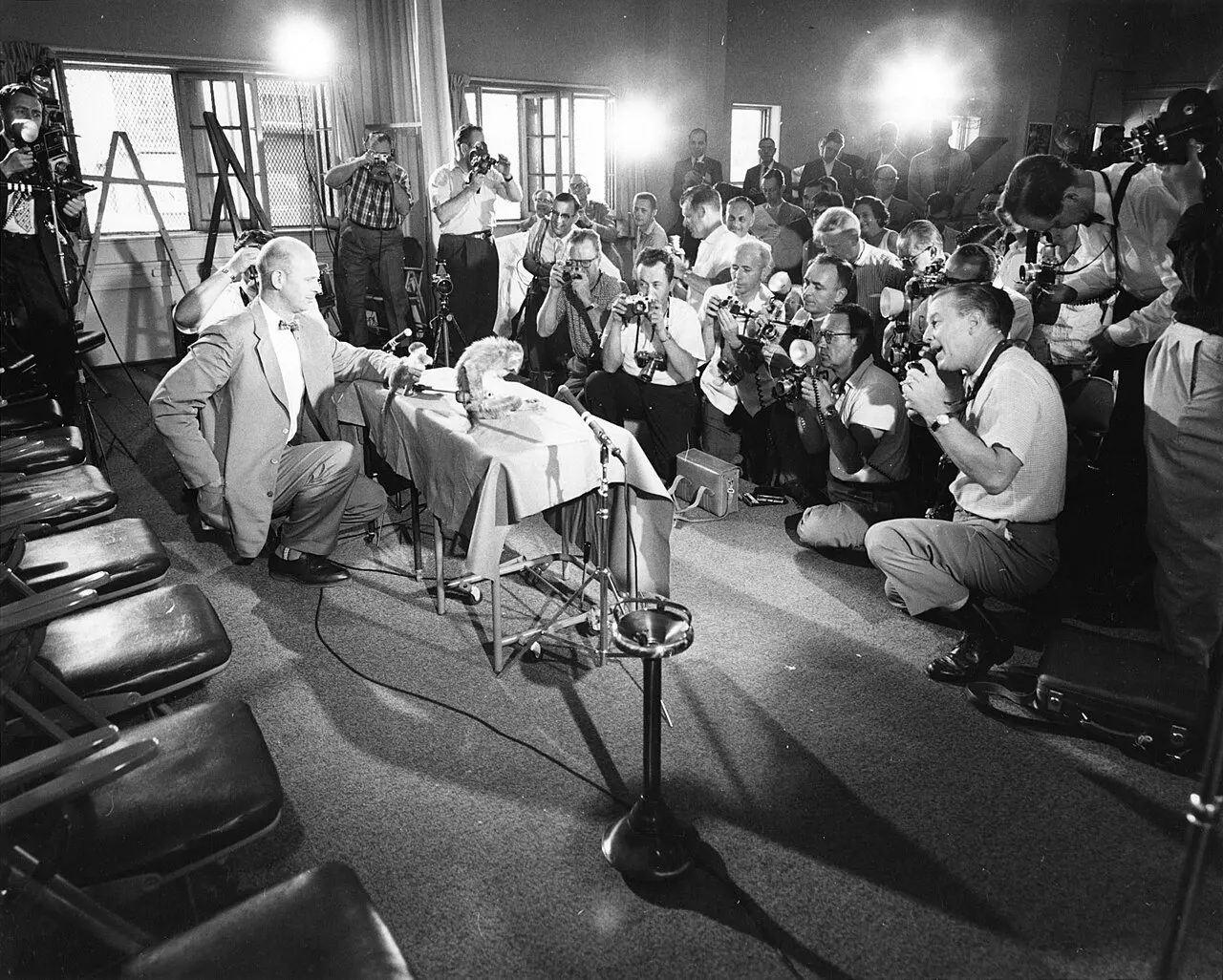
The two most famous passengers in the early Space Race weighed less than a bag of groceries between them. On the morning of May 28, 1959, Able — a seven-pound rhesus monkey born in Independence, Kansas — and Baker — an eleven-ounce squirrel monkey from Peru — were strapped into the nose cone of a U.S. Army Jupiter missile at Cape Canaveral, Florida. What happened next made history.
The stakes were enormous. Just over a year earlier, the Soviet Union had launched Laika the dog, who died in orbit. An earlier American monkey, Gordo, had survived his 1958 flight only to be lost when his capsule's parachute failed. No primate had ever gone to space and come home alive. Doctors honestly didn't know whether a living creature could survive the crushing forces of launch, the strangeness of weightlessness, or the searing plunge back through the atmosphere. Even the pair's names were a humble military shorthand, taken from the U.S. Army's phonetic alphabet of the era — Able and Baker were simply A and B.
The Jupiter AM-18 roared off Launch Complex 26 and carried the two monkeys more than 300 miles above the Earth — higher than the Hubble Space Telescope flies today — at speeds topping 10,000 miles per hour. For about nine minutes they floated weightless. Then the nose cone fell back to Earth, enduring forces 38 times stronger than gravity, and splashed down in the Atlantic after a 16-minute flight, where a U.S. Navy vessel was waiting to recover them.
When the recovery ship opened the capsule, both monkeys were alive and well — the first primates to survive a trip to space. The world fell in love: Baker appeared on the cover of Life magazine and reportedly received a hundred letters a day from schoolchildren.
The story has a bittersweet ending. Able died a few days later from a reaction to anesthesia during surgery to remove a medical electrode, and her preserved body is now displayed at the Smithsonian's National Air and Space Museum. Baker lived to the remarkable age of 27, dying in 1984 at the U.S. Space and Rocket Center in Huntsville, Alabama, where more than 300 mourners attended her funeral.
Why it matters: Able and Baker — named for the first two letters of the military phonetic alphabet — proved that a living body could endure spaceflight and return safely. Within two years, humans would follow them into the sky.
Photo: 1st Lt. Cecil W. Stoughton (U.S. Army), public domain (via Wikimedia Commons).