A Concert You Could See: Disney's Fantasia Premieres
On November 13, 1940, Walt Disney's Fantasia premiered in New York — an animated concert film in pioneering stereo sound that flopped first and became a classic.
The mouse was in trouble. By the late 1930s, Mickey Mouse — the character who had made Walt Disney a household name — was slipping in popularity. Disney's answer was The Sorcerer's Apprentice, an elaborate cartoon short designed as Mickey's big comeback. Then the budget for the short climbed past anything a short could ever earn back, and Disney made a daring decision: he would build an entire feature film around it.
That film premiered on the evening of November 13, 1940, at the Broadway Theatre in New York City — the same theater where Steamboat Willie had debuted twelve years earlier. It was Disney's third animated feature, and it looked and sounded like nothing before it.
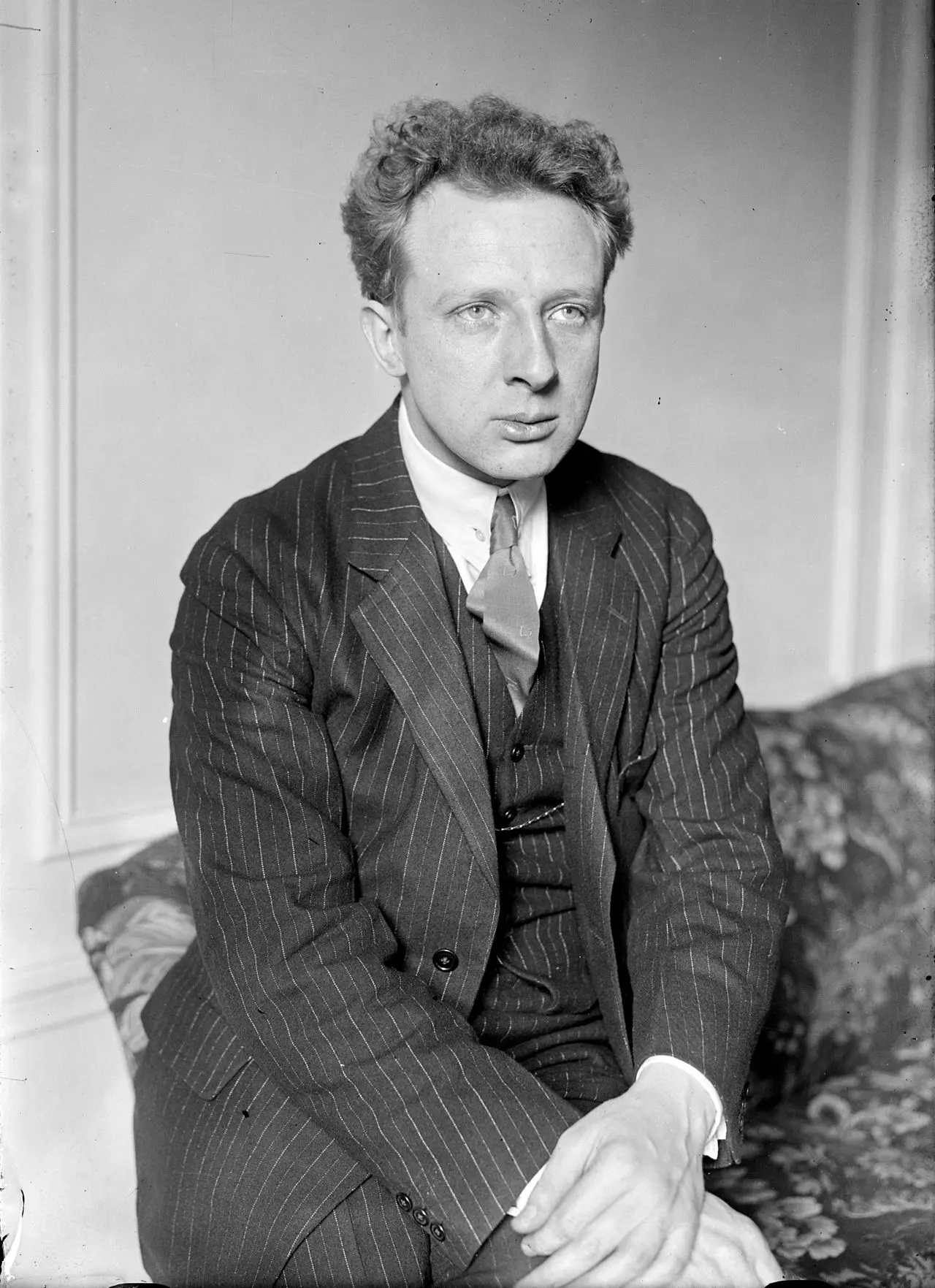
Fantasia was a concert you could watch. Instead of a single story, it offered eight animated segments set to pieces of classical music, conducted by Leopold Stokowski, with seven of the pieces performed by the Philadelphia Orchestra. Music critic and composer Deems Taylor appeared in live action as the master of ceremonies, introducing each piece to the audience.
The program ranged from the purely abstract — the opening Toccata and Fugue in D Minor by Bach, a dance of line and color with no story at all — to the playful Nutcracker Suite, to the famous Sorcerer's Apprentice, in which Mickey, apprentice to the sorcerer Yen Sid, loses control of an enchanted broom, to Stravinsky's Rite of Spring, which pictured the birth of the Earth and the age of the dinosaurs.
The sound was as revolutionary as the pictures. The music was recorded through dozens of microphones onto multiple audio channels and played back through Fantasound, a pioneering system developed by Disney engineers with RCA. Fantasia became the first commercial film ever presented in stereo — a direct ancestor of the surround sound in movie theaters today. Installing the equipment was so costly that the film could only play in specially wired theaters, touring as a roadshow through thirteen American cities.
Critics were dazzled, but the box office was not. The high production costs, the expense of the Fantasound installations and theater leases, and the loss of the European market to World War II meant Fantasia could not turn a profit on its first release. Beginning in 1942, Disney reissued the film in standard format again and again — and over the decades those re-releases proved enormously profitable. Adjusted for inflation, Fantasia ranks among the highest-grossing American films of all time.
Time has been kind to the gamble. In 1990 the Library of Congress selected Fantasia for preservation in the National Film Registry as "culturally, historically, or aesthetically significant." The American Film Institute ranked it the 58th greatest American film ever made and the fifth greatest animated film. A sequel, Fantasia 2000, followed in 1999 — but the original, born on a November night in 1940, remains the film that proved animation could be high art.
Photo: Bain News Service portrait of a young Leopold Stokowski, public domain via the Library of Congress (via Wikimedia Commons).