When the Lights Went Out for 50 Million People
On August 14, 2003, sagging power lines and a failed alarm in Ohio triggered a cascade that blacked out 50 million people across the Northeast and Ontario.
It started with a tree branch in Ohio.
On the hot afternoon of August 14, 2003, a high-voltage power line in northern Ohio sagged — softened by the heat of the current running through it — until it brushed against some overgrown trees and shut down. Normally that would have tripped an alarm in the control room of FirstEnergy, the local utility. But the alarm system had failed, and nobody noticed.
Over the next ninety minutes, three more lines sagged into trees and switched off, dumping their loads onto neighboring lines. Overtaxed, those lines cut out too. At 4:05 p.m. Eastern, the cascade broke loose: within minutes, power plants holding 61,800 megawatts of generating capacity tripped offline across eight states and the Canadian province of Ontario. Fifty million people lost power in the biggest blackout in North American history.
Investigators later called it a slow-motion catastrophe — about four hours from the first sagging line to continental collapse — and traced its roots to FirstEnergy of Ohio: untrimmed trees, a broken alarm system, and operators flying blind.
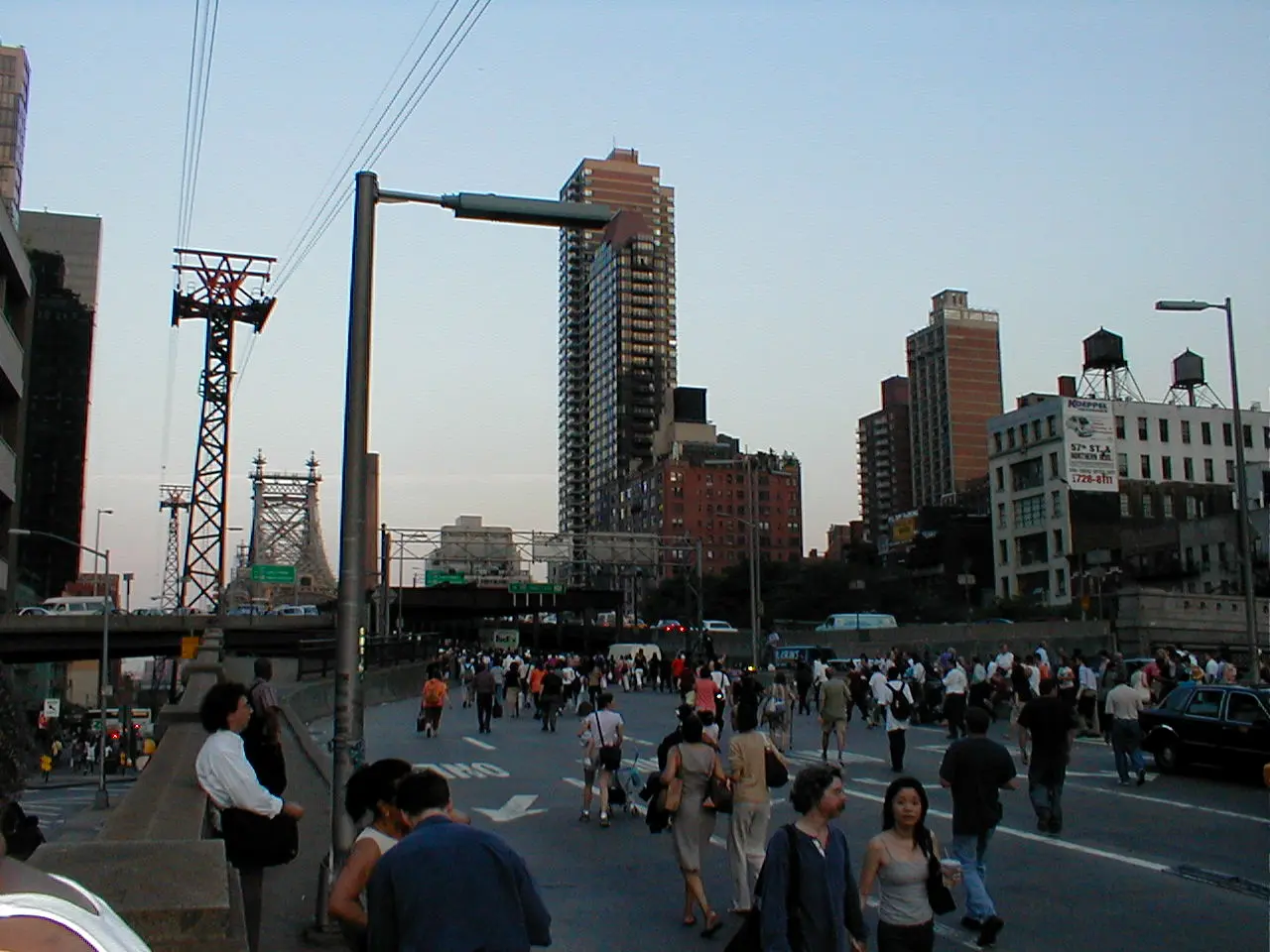
The scale of it was hard to grasp. Subways stopped between stations. Twelve airports closed. In northern Ohio, a million and a half people had no running water for two days. In New York, commuters walked home across the Brooklyn Bridge in the August heat as the skyline went dark. Traffic lights died, elevators froze, and cell networks clogged. Most people got power back within two days, but some areas waited four, and parts of Ontario endured rolling blackouts for more than a week.
The toll was real: at least 11 deaths were attributed to the blackout, and estimates of the economic damage ran from $4 billion to $10 billion. Canada's GDP dipped 0.7 percent that August; Ontario alone lost nearly 19 million work hours.
The next day, President George W. Bush and Prime Minister Jean Chrétien ordered a joint investigation, and its final report produced dozens of recommendations for hardening the grid against the next cascade.
The blackout's lesson endures: modern life runs on an invisible machine of almost unimaginable complexity — and on an August afternoon in 2003, North America learned what happens in the minutes after that machine stops.
The blackout's policy aftershock was lasting: the joint task force's recommendations led to mandatory, enforceable reliability standards for the North American grid, written into United States law with the Energy Policy Act of 2005, the first time the grid's keepers faced federal penalties for falling short.
Photo: Glitch010101, CC BY-SA 2.0 (via Wikimedia Commons).