Three Small Ships Against an Ocean: Columbus Sails from Palos
On the morning of August 3, 1492, Columbus sailed from Palos, Spain, with the Niña, the Pinta, and the Santa María on the voyage that would change the world.
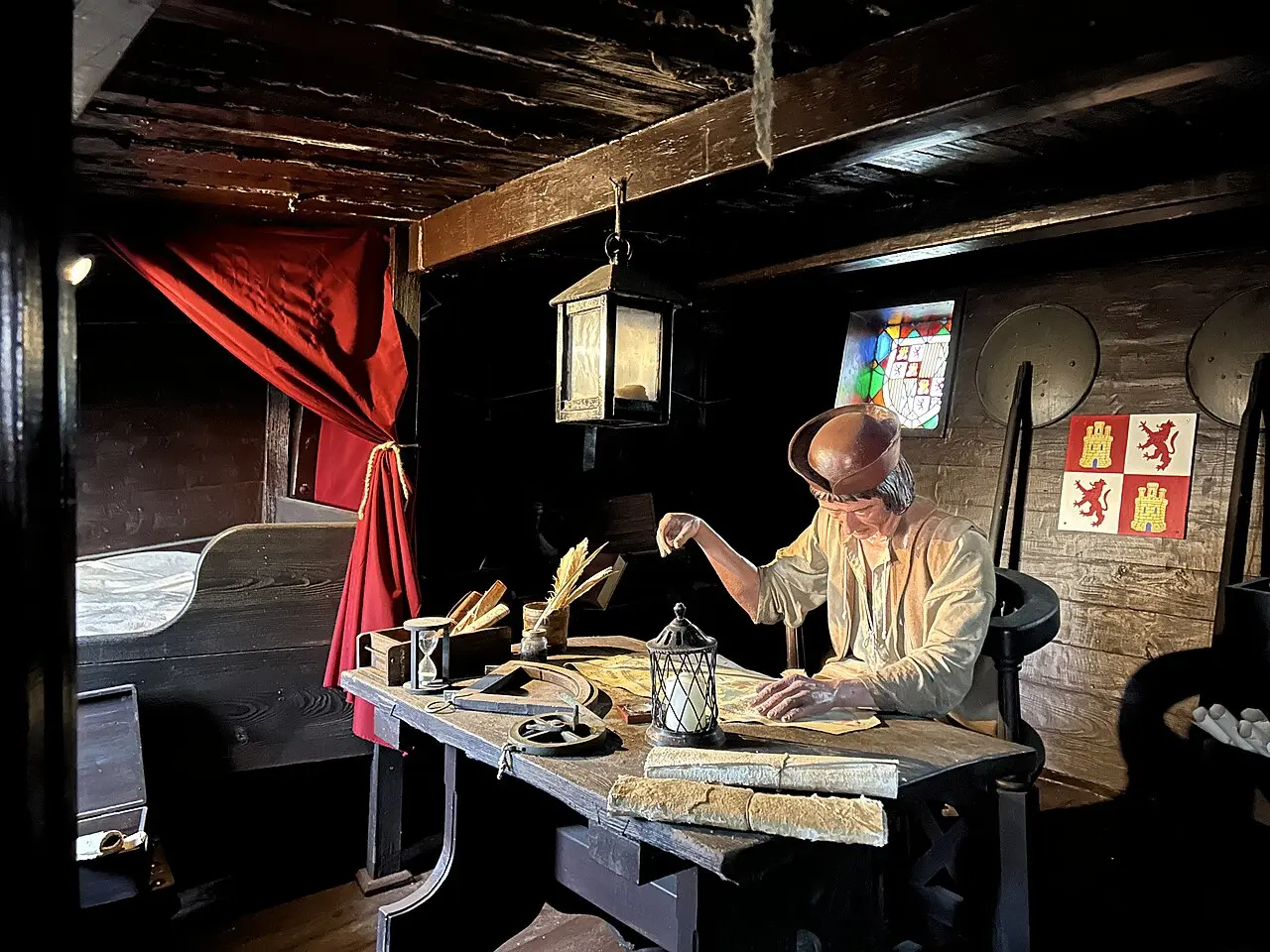
On the morning of August 3, 1492, three small ships slipped down the Rio Tinto from the Spanish port of Palos and turned their bows toward the open Atlantic. Aboard were roughly 90 men and boys, a Genoese captain with a magnificent obsession, and provisions for a voyage into waters no European had ever crossed with the intention of coming back.
The captain was Christopher Columbus, and his obsession was a shortcut. Europe craved the spices, silks, and gold of Asia, and the overland routes were long and costly. Columbus was convinced he could reach the East by sailing west — across an ocean whose true width he had drastically underestimated. After years of rejection, Spain's Ferdinand and Isabella had finally agreed, naming him Admiral of the Ocean Sea and promising him a tenth of all riches found.
His fleet was modest: the Santa María, the largest of the three, a sturdy carrack owned and captained by Juan de la Cosa that served as Columbus's flagship; and two nimble caravels, the Pinta and the Niña — the latter nicknamed for her owner, Juan Niño — commanded by the experienced Pinzón brothers, Martín Alonso and Vicente Yáñez.
The voyage nearly ended in its first week. On August 6 the Pinta's rudder broke — Martín Alonso Pinzón suspected the ship's owners had sabotaged it, so frightened were they of the journey — and the crew lashed it together with ropes until they limped into the Canary Islands on August 9. There the rudder was replaced, the Niña's sails were re-rigged, and fresh provisions were loaded. On September 6, from La Gomera, the three ships finally sailed west into the unknown.
Five weeks later, on October 12, a lookout sighted land — an island in the Bahamas. Columbus went ashore claiming it for Spain, convinced he had reached the outskirts of Asia. He had not, of course. But that morning's departure from Palos had set in motion the encounter between two worlds: the voyages that followed would make Spain the wealthiest power on earth, devastate the Americas' native peoples, and redraw every map ever made.
Columbus himself never found his western route to Asia. He made three more voyages and died in Spain in 1506. But everything — the triumph and the tragedy — began on August 3, 1492, when three small ships sailed down a Spanish river and did not turn back.
Photo: Blablabalooo, CC BY-SA 4.0 (via Wikimedia Commons).