
The Treaty That Made War a Little Less Cruel
On August 22, 1864, twelve nations signed the first Geneva Convention, the treaty that protects wounded soldiers and created the red cross emblem.
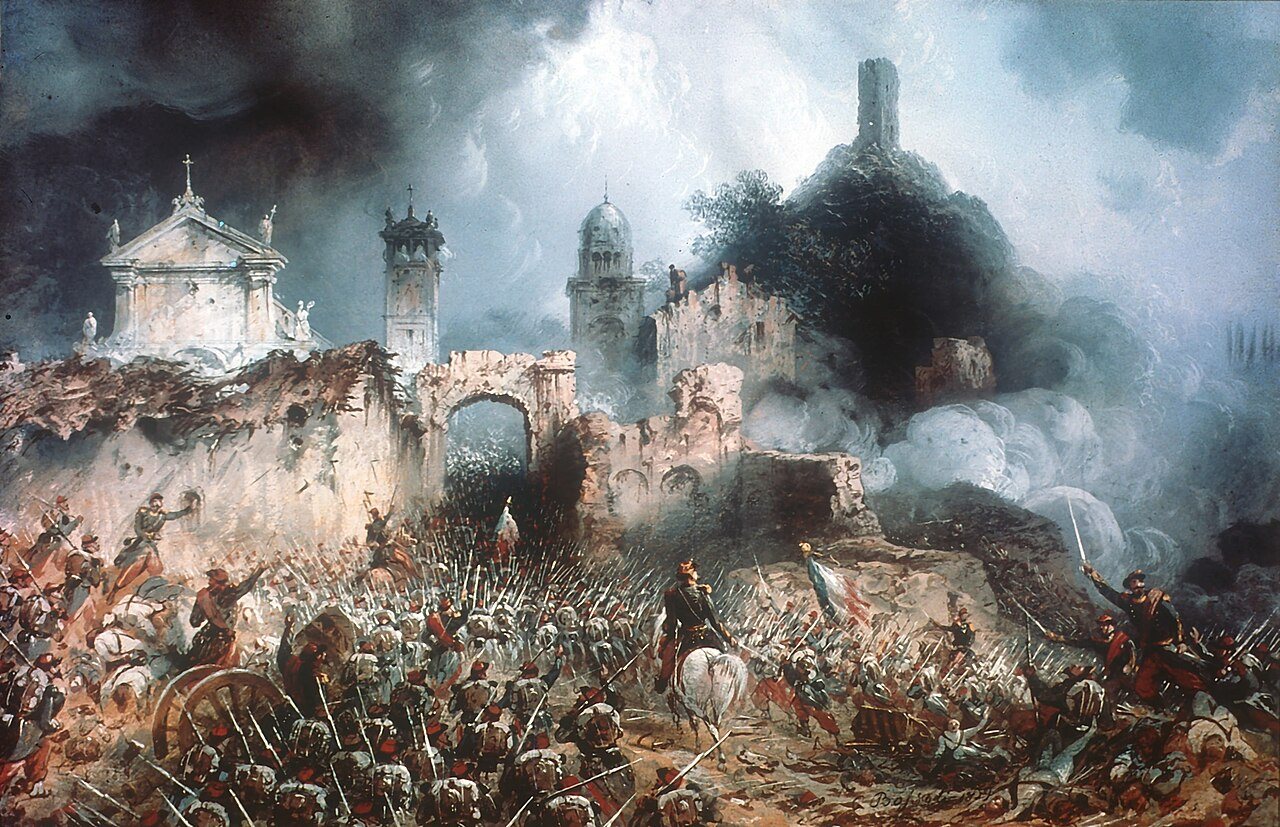
Five years earlier, a Swiss businessman named Henry Dunant had stood on the battlefield of Solferino in northern Italy, on June 24, 1859, and watched something that broke him. Tens of thousands of wounded soldiers lay untended after a day's slaughter — no ambulances, no surgeons, no one to carry them from the field. Dunant, who had come on business, dropped everything and organized villagers to help. What haunted him afterward was not just what he saw, but the question it left behind: why must war also mean abandonment?
Dunant went home to Geneva and wrote a book, A Memory of Solferino, published in 1862. It was a firsthand account of the suffering — and then, remarkably, a proposal. He urged nations to form volunteer relief societies in peacetime that could aid the wounded in wartime, and to sign an international treaty protecting medical workers and the wounded on the battlefield. In 1863 he helped found the International Committee of the Red Cross. The next year, the Swiss government invited the world to Geneva.
On August 22, 1864, in the city hall's Alabama Room, the conference adopted the first Geneva Convention "for the Amelioration of the Condition of the Wounded in Armies in the Field." Representatives of twelve states and kingdoms signed it that day — Switzerland, Baden, Belgium, Denmark, Spain, the French Empire, Hesse, Italy, the Netherlands, Portugal, Prussia, and Württemberg. The treaty required that wounded soldiers be collected and cared for regardless of which side they fought for, and declared medical personnel, ambulances, and hospitals neutral. To mark them, it gave the world a new symbol: a red cross on a white background.
The emblem was no accident: a red cross on white is the Swiss flag with its colors reversed, a quiet tribute to the neutral homeland of the movement's founders. Within a few years, national Red Cross societies sprang up across Europe, and the symbol appeared on real battlefields — its first wartime use came at Dybbøl, Denmark, in 1864.
But Dunant did not live to see his triumph as an insider. In 1867 his Algerian business ventures collapsed; he was declared bankrupt, charged with fraudulent bankruptcy, and — after a bitter feud with fellow founder Gustave Moynier — expelled from the very committee he had created. An arrest warrant forced him to flee Geneva, and he never returned. For nearly three decades he drifted through Europe in poverty and obscurity, until a journalist found him in 1895 in a hospice at Heiden, Switzerland. Rehabilitation came at last in 1901, when he received the first Nobel Peace Prize, shared with French pacifist Frédéric Passy. He died in 1910, nine years later.
Across the Atlantic, the treaty found its champion in Clara Barton, the "Angel of the Battlefield" of the American Civil War. She had seen the Red Cross at work during the Franco-Prussian War and, on May 21, 1881, founded the American Red Cross. After a five-year campaign, she persuaded President Chester A. Arthur to sign the Geneva Convention, which the Senate ratified in March 1882 — making the United States the treaty's thirty-second party. Barton's "American Amendment" also expanded the Red Cross mission beyond war, to natural disasters.
It was the first international treaty written to protect human life in war — the foundation of what we now call international humanitarian law. Expanded and strengthened after World War II into the four Geneva Conventions of 1949, its principles still govern armed conflict today. And it all began with one horrified businessman who believed that even on a battlefield, compassion could be organized.
Photo: Carlo Bossoli, public domain (via Wikimedia Commons).