The Table He Dreamed: Mendeleev Presents the Periodic Table
Too ill to attend, Dmitri Mendeleev had a colleague read his paper on March 6, 1869 — unveiling a table that could predict elements not yet discovered.
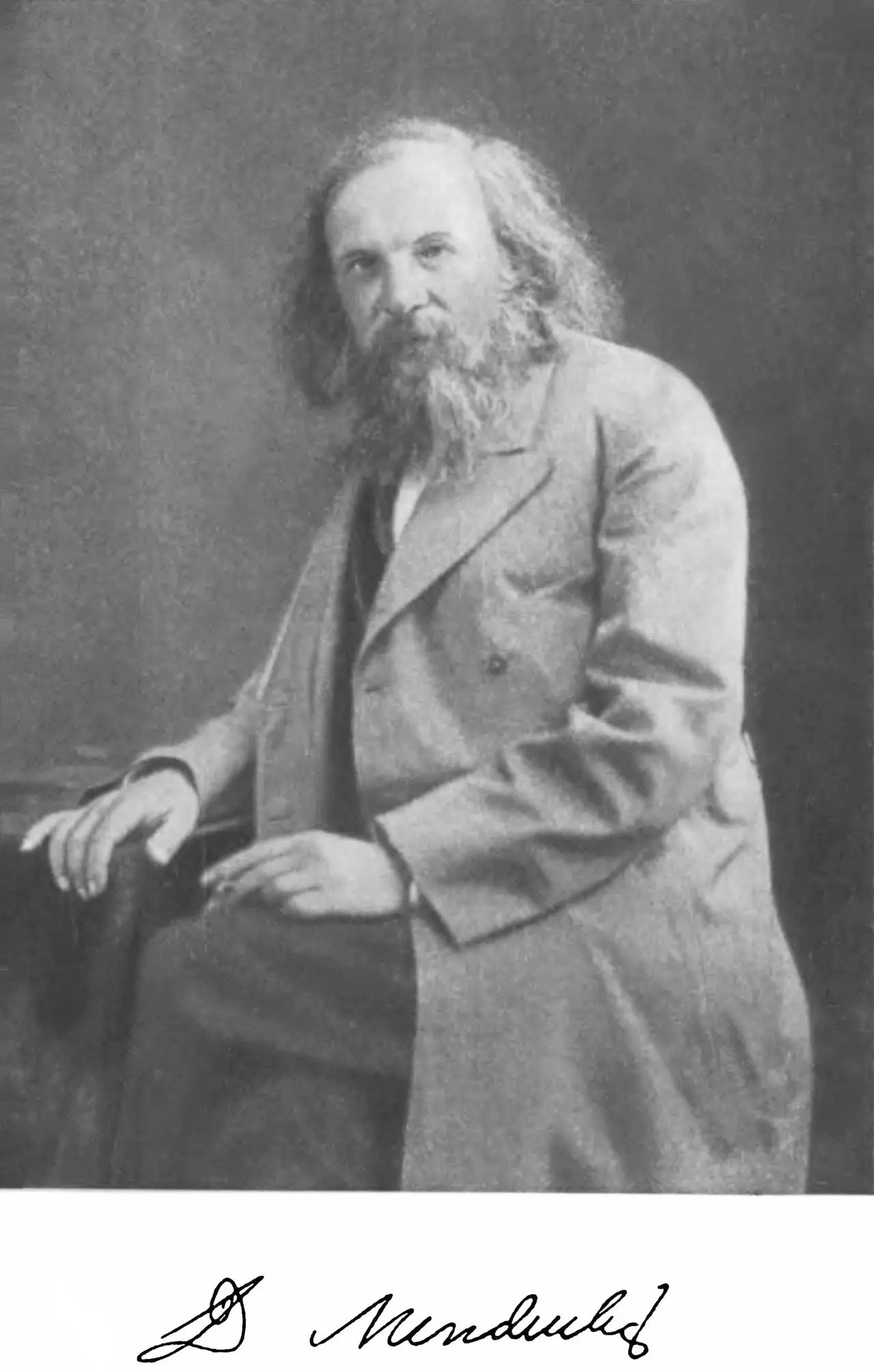
He was too sick to attend his own triumph.
On March 6, 1869, the Russian Chemical Society met in St. Petersburg, and the chemist Dmitri Mendeleev had something extraordinary to share. The trouble was that Mendeleev was ill that day — so he asked a colleague to read his paper aloud in his place. The paper was titled "The Dependence between the Properties of the Atomic Weights of the Elements," and it contained one of the boldest ideas in the history of science: that all the known chemical elements could be arranged in a single table, ordered by atomic weight, in which their properties repeated in regular patterns.
Mendeleev had been wrestling with the problem for some thirteen years. He was writing a chemistry textbook and needed a sensible way to organize the second volume — the known elements, then numbering around 63, were a jumble with no agreed order. According to legend, the answer came to him in a dream: he saw the elements falling into place like cards in a game of solitaire. Whether or not the dream really happened, what he woke up with was a system of genius.
The table's power wasn't just that it organized what was known — it was that it predicted what wasn't. Mendeleev deliberately left gaps in his table where elements should exist but hadn't yet been found, and he described their properties in detail. He called one "eka-aluminum" and said it would be a soft metal with a low melting point. In 1875, French chemists discovered gallium — and it matched his description almost exactly. The same happened with scandium and germanium. Each discovery converted skeptics. A table that could predict the future was no mere filing system; it was a law of nature.
Other chemists had noticed hints of periodicity before — John Newlands with his "law of octaves," Lothar Meyer with his own tables — but Mendeleev's covered every known element and had the courage to leave empty boxes. Later science would refine his work: we now know the true organizing principle is atomic number, the count of protons, not atomic weight, and a few of his placements needed correcting. But the framework held.
Mendeleev's table became the periodic table — the chart on every chemistry classroom wall, the map of all matter. It turned chemistry from an empirical catalog of substances into a predictive science, and it guided the discovery of new elements for more than a century. In time, element 101 was named mendelevium in his honor — a fitting tribute, since by then the table itself had predicted the element's existence. He was nominated for the Nobel Prize in 1906 but was passed over, reportedly for political reasons; the element named after him is the consolation that outlasted the prize committee.
All of it dates to a paper its author was too ill to deliver himself — read aloud by a colleague on March 6, 1869, in a St. Petersburg meeting room.
Photo: unknown photographer, public domain (portrait of Dmitri Mendeleev).