Born March 6, 1475: The Boy Who Became 'Il Divino'
Michelangelo was born in a tiny Tuscan town on March 6, 1475 — and grew up to carve David, paint the Sistine Chapel, and define the Renaissance.
He was born in a tiny Tuscan town, the son of a minor official, and he would become the most famous artist who ever lived.
Michelangelo di Lodovico Buonarroti Simoni was born on March 6, 1475, in Caprese, a hill town in what is now Tuscany, Italy. His father, Ludovico, was serving a six-month term as the town's magistrate — a modest post for a proud but poor Florentine gentleman. Within months the family returned to Florence, and the infant was put out to nurse in Settignano with the wife of a marble worker. Michelangelo would later joke that he had absorbed his love of stone along with his nurse's milk.
Florence in the 1470s and 1480s was the beating heart of the Renaissance, and the boy was determined to be an artist despite his father's objections — the Buonarroti considered manual work beneath their station. At thirteen, Michelangelo's stubbornness won out, and he was apprenticed to Domenico Ghirlandaio, Florence's leading painter. He learned fast, then moved on to sculpture, the art he would always consider his true calling.
Fame came early. In 1498, still in his early twenties, he was commissioned to carve a pietà — the Virgin Mary cradling the dead Christ — for St. Peter's Basilica in Rome. Carved from a single block of marble, the Pietà stunned Rome with its tenderness and technical perfection, and it made the young sculptor famous. Then came David. In 1501 Michelangelo began work on a colossal figure — 4.34 meters, over 14 feet tall — carved from a single flawed block of marble that other sculptors had rejected. Completed in 1504, the David was placed outside Florence's Palazzo Vecchio as a symbol of the republic's strength, and it remains one of the most recognizable sculptures on Earth.
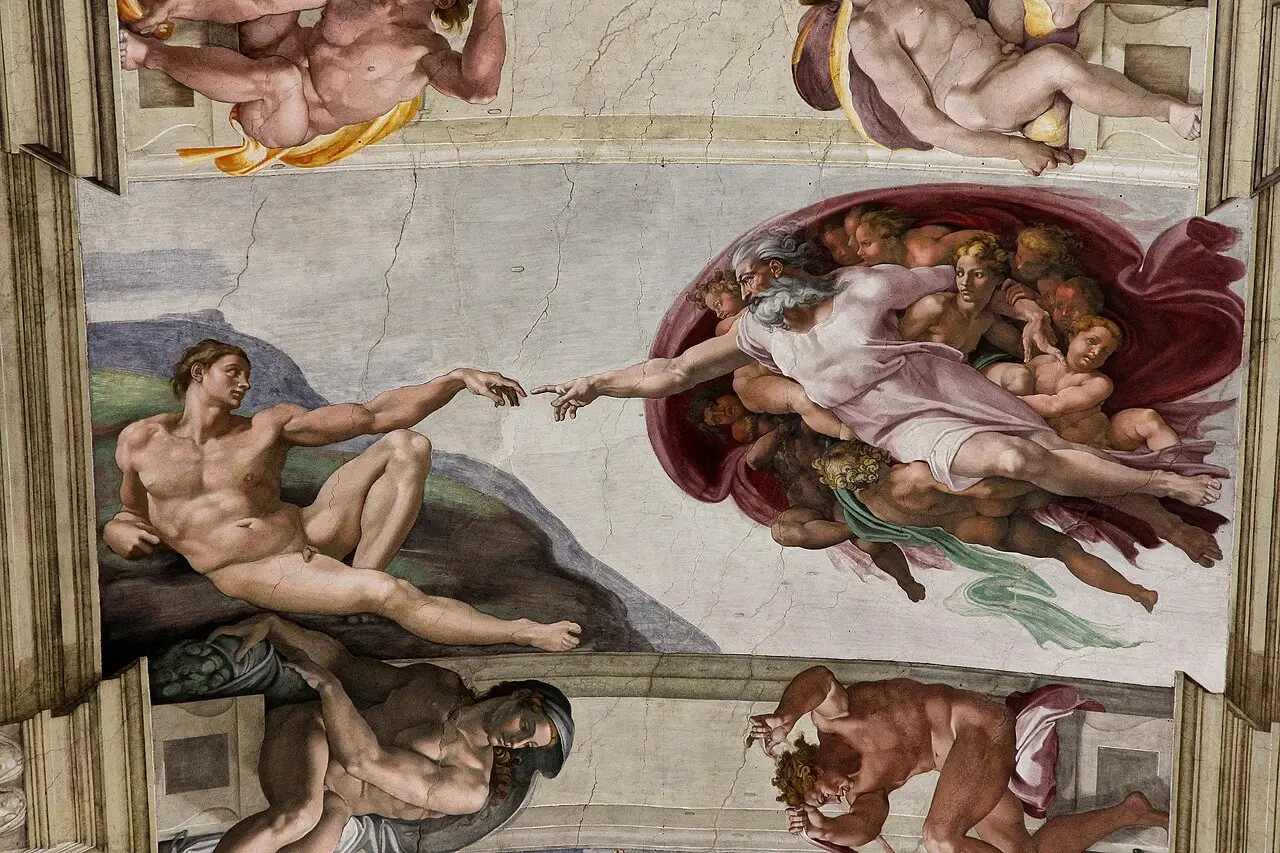
In 1508, Pope Julius II ordered him to paint the ceiling of the Sistine Chapel — a job Michelangelo protested, insisting he was a sculptor, not a painter. Working on scaffolding high above the chapel floor, he spent four years creating one of the supreme achievements of Western art: a vast vault crowded with prophets, sibyls, and scenes from Genesis, including the iconic Creation of Adam, where God's outstretched finger nearly touches Adam's. He later returned to paint The Last Judgment on the chapel's altar wall.
Michelangelo lived to 88 — an extraordinary age for the 16th century — and worked almost to the end, dying in Rome on February 18, 1564. In his lifetime he was called "Il Divino," the divine one. He was sculptor, painter, architect, and poet — the very model of the Renaissance ideal that a person could master everything. But it all began on March 6, 1475, in Caprese: a baby born to an obscure magistrate, in a town so small it is known today as Caprese Michelangelo, in his honor.
Photo: Michelangelo, public domain (The Creation of Adam, Sistine Chapel ceiling, 1508–1512).