
The Submarine That Never Came Home
On February 17, 1864, the Confederate submarine H.L. Hunley sank the USS Housatonic off Charleston — the first time in history a submarine destroyed a warship in combat.
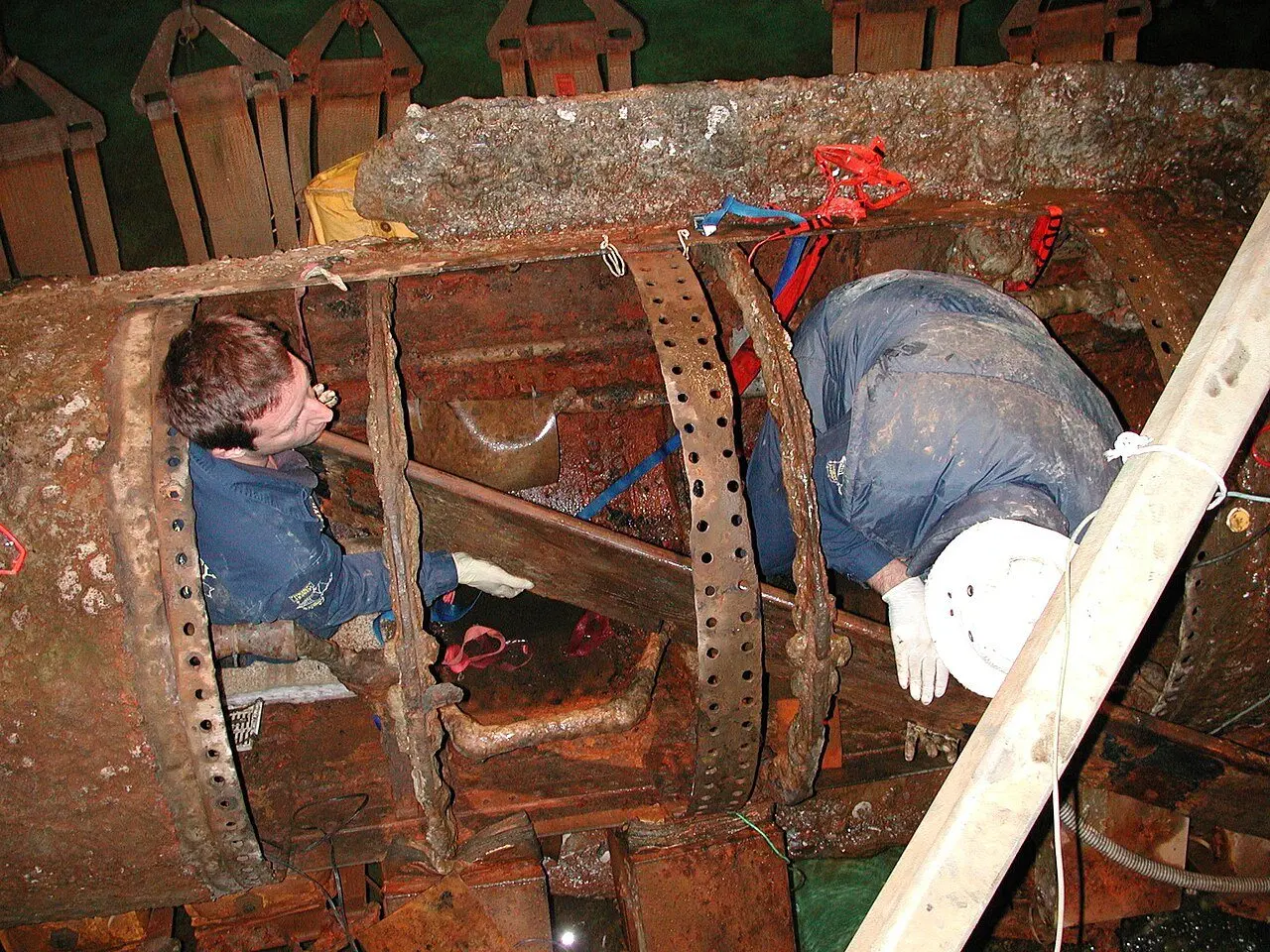
She was called the iron coffin, and almost everyone who climbed inside her died. But on a February night in 1864, she made history anyway.
The H. L. Hunley was a Confederate submarine barely forty feet long, built from a cylindrical iron boiler in Mobile, Alabama. There was no engine. Seven men sat on a bench and turned a hand crank that drove the propeller, while an eighth steered and worked the dive controls. Inside, the crew shared the air with the sweat, the rust, and the light of a single candle. On her bow, attached to a long iron spar, sat a copper container packed with 135 pounds of black powder — the torpedo of her day, meant to be rammed into an enemy hull.
By the winter of 1864, the Hunley had already sunk twice during training, killing thirteen men, including her own inventor, Horace Lawson Hunley. Plenty of people thought the boat should be scrapped. But Lieutenant George E. Dixon believed she could break the Union blockade choking Charleston, South Carolina, and he found seven volunteers willing to climb into the iron coffin one more time.
On the evening of February 17, the Hunley slipped out toward the Union sloop-of-war USS Housatonic, which sat at anchor about five miles off the coast. Just before 9 p.m., a sailor aboard the warship spotted something low in the water, moving toward them like a plank. The Housatonic's crew fired rifles and small arms, but it was too late. The Hunley drove her spar into the ship's starboard side, reversed away, and the torpedo detonated. The blast tore through the wooden hull, and the Housatonic went down in minutes. Five of her sailors were killed; most of the rest scrambled into the rigging or were picked up by boats.
It was the first time in history a submarine had destroyed an enemy warship in combat. The Hunley reportedly flashed a blue signal light toward shore — the prearranged sign of success. And then she vanished.
Nobody ever saw the Hunley again in her own century. For more than 130 years she lay on the harbor floor, lost but not forgotten. In 1995, an expedition funded by author Clive Cussler located the wreck, and in 2000 she was raised and brought ashore. Inside, archaeologists found all eight crewmen still seated at their stations, as if frozen mid-duty. For years no one could explain how they had died. Then, in 2017, researchers at Duke University concluded that the men were most likely killed within seconds by the shockwave of their own torpedo, detonated far too close to their thin iron hull.
Today the Hunley rests at the Warren Lasch Conservation Center in North Charleston, South Carolina, where scientists are still studying her. She sailed for a cause history judges harshly, but her crew's courage was real, and their invention — the idea that warships could be struck from below — changed naval warfare forever. Every submarine on the seas today is, in some small way, her descendant.
Photo: unknown photographer, public domain (via Wikimedia Commons).