The House Elects Thomas Jefferson President
On February 17, 1801, the House elected Thomas Jefferson president on the 36th ballot, ending a seven-day deadlock and delivering America's first peaceful transfer of power between parties.
Sixteen states, thirty-five deadlocked ballots, and the presidency of the United States hanging in the balance. On February 17, 1801, the House of Representatives finally broke the tie and elected Thomas Jefferson president.
The mess began with the election of 1800. Back then, the Constitution did not let electors vote separately for president and vice president. Each elector simply voted for two men, and the top vote-getter became president. Thomas Jefferson and his running mate, Aaron Burr — both Democratic-Republicans — each received 73 electoral votes. Incumbent John Adams got 65, and one stray vote even went to John Jay, who wasn't running.
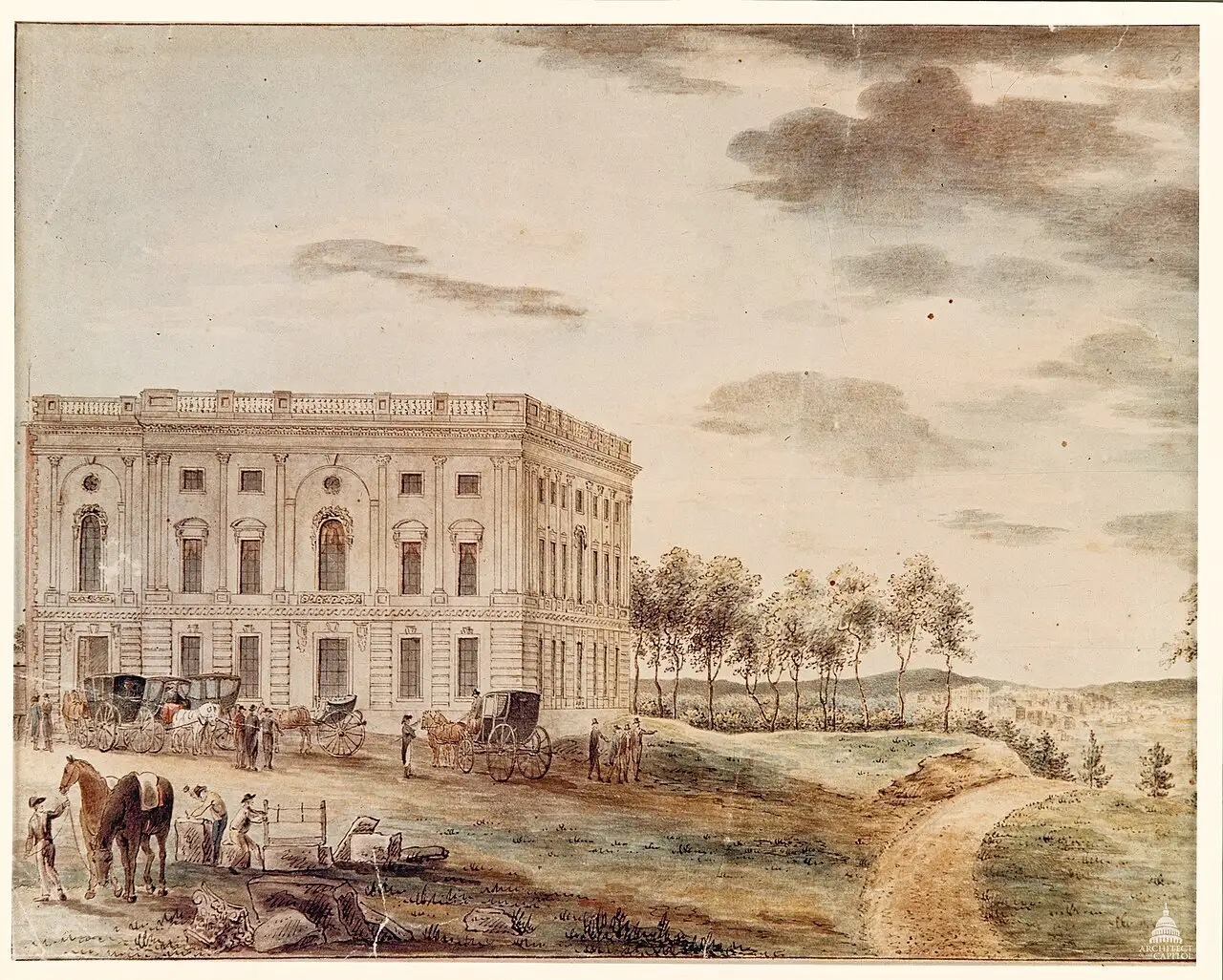
With Jefferson and Burr tied, the Constitution sent the decision to the House of Representatives, which would vote by state delegation. Sixteen states meant nine votes were needed to win. Voting began on February 11, 1801, in the unfinished Capitol in Washington. Through 35 ballots over seven days, Jefferson held exactly eight states — one short — while Burr held six.
The Federalists, who controlled the lame-duck House, backed Burr, hoping to deny Jefferson the prize. But Alexander Hamilton, the Federalist leader, despised Burr and considered him dangerously unprincipled. Hamilton fired off letters urging Federalists to accept Jefferson instead, writing to Harrison Gray Otis that Jefferson was "in every view less dangerous than Burr."
On February 17, on the 36th ballot, the dam broke. Federalist James Bayard of Delaware cast a blank ballot instead of voting for Burr, and his allies in Maryland and Vermont followed, flipping those states to Jefferson. Federalists from South Carolina abstained. Jefferson won ten states — and the presidency. Burr, the runner-up, became vice president.
The bitterness lingered. In his final weeks, Adams packed the courts with Federalist "midnight judges," and on the morning of Jefferson's inauguration he slipped out of Washington before dawn rather than greet his successor. Yet the transfer itself held: no troops, no riots, just a new president taking the oath.
The crisis exposed a glaring flaw in the electoral system, and Congress moved to fix it: the 12th Amendment, ratified in 1804, required electors to cast separate ballots for president and vice president. Jefferson later called his victory the "Revolution of 1800."
February 17, 1801 matters because it produced America's first peaceful transfer of power from one political party to another — the Federalists yielded to the Democratic-Republicans without violence — and it rewrote the rules of presidential elections for every contest since.
Photo: public domain watercolor of the U.S. Capitol as it looked in 1800, Architect of the Capitol (via Wikimedia Commons). The contingent election of 1801 took place inside this unfinished building.