The Rout at Solway Moss
On November 24, 1542, an English force of 3,000 routed a Scottish army of up to 18,000 at Solway Moss — a humiliation that hastened a king's death.
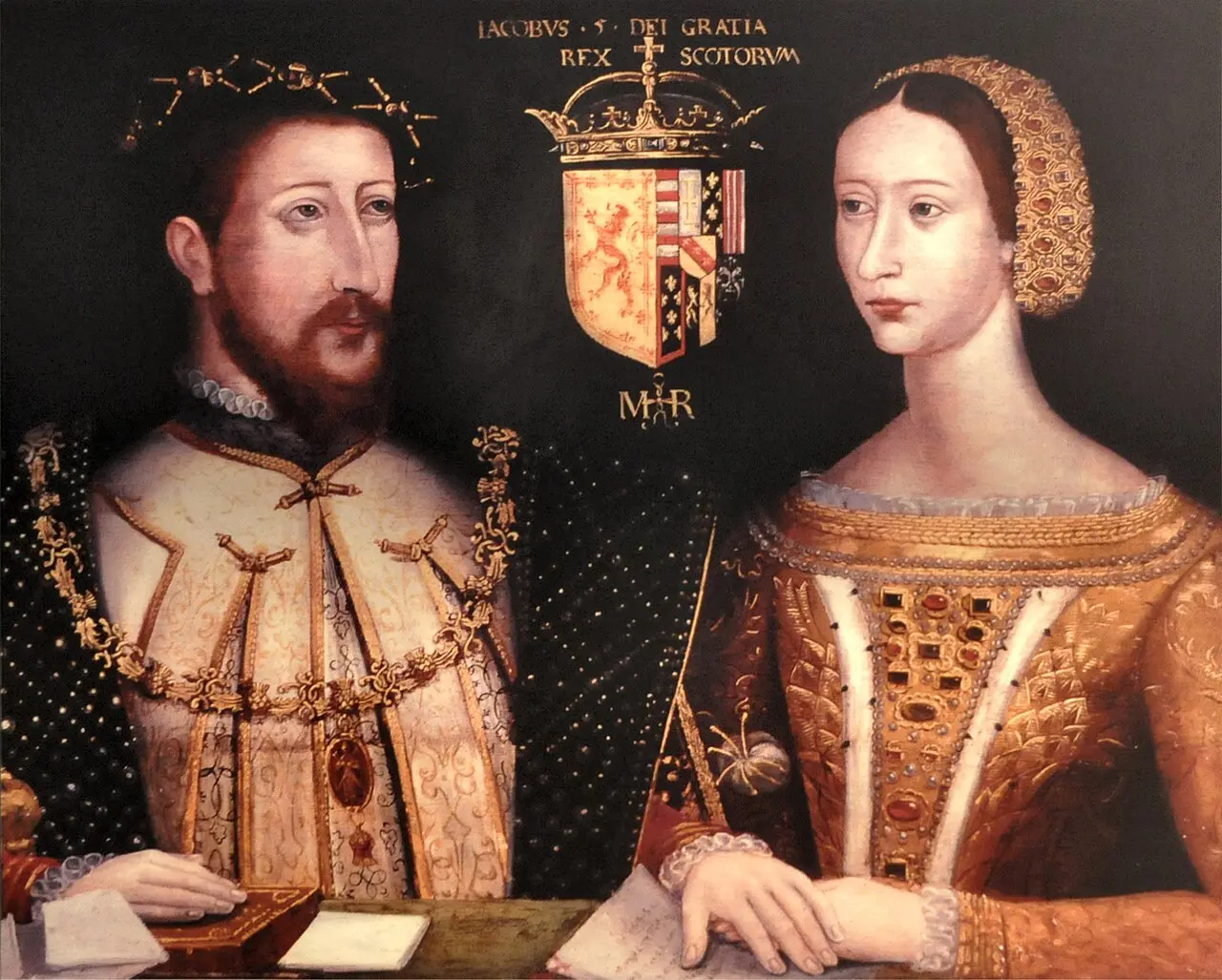
On November 24, 1542, near the River Esk on the English side of the border, a Scottish army of as many as 18,000 men faced an English force of barely 3,000 — and collapsed in humiliating disarray. The Battle of Solway Moss was less a battle than a rout, and it broke the heart of a king.
The trouble began with religion and family pride. Henry VIII of England had broken with the Roman Catholic Church and demanded that his nephew, James V of Scotland, do the same. James refused — and then insulted his uncle by declining even to meet him at York. Henry answered by sending an army into Scotland, which burned the border towns of Roxburgh and Kelso that October.
James struck back that November, sending a great host south under Lord Maxwell. But the Scottish command was a shambles. Maxwell had never been formally given command, and the king's favorite, Oliver Sinclair, proclaimed himself the army's leader — a claim the other Scottish lords refused to accept. With no one truly in charge, the army marched into England leaderless.
On the 24th, the Scots found Sir Thomas Wharton's little English force drawn up on a hill above them. Fearing the handful of banners was the vanguard of a much larger army, the Scots hesitated — and the English cavalry charged. The Scottish ranks broke and ran, only to find themselves trapped between the River Esk and the peat bogs of Solway Moss. Hundreds drowned trying to cross the river or flee across the marshes. Only about twenty Scots were killed in the actual fighting, against seven Englishmen — but some 1,200 Scots were taken prisoner, nobles and common soldiers alike.
James V had watched the campaign from the safety of Lochmaben. Humiliated and already ill, he withdrew to Falkland Palace, where he died of fever on December 14 — just six days after his wife gave birth to a daughter. The news of Solway Moss is believed to have hastened his death. He was only thirty. According to legend, when told his heir was a girl, the dying king murmured, "It cam wi' a lass, it will gang wi' a lass" — it came with a lass, and it will go with a lass.
The infant was Mary, Queen of Scots, whose dramatic reign would shape Britain for the next half-century. The battle that orphaned her crown remains one of the most lopsided routs in the long, bloody history of the Anglo-Scottish wars.
Photo: unidentified painter (period portrait), public domain (via Wikimedia Commons).