The Rainbow Nation Takes Its Oath
On May 10, 1994, Nelson Mandela was sworn in as South Africa's first Black president before dignitaries from more than 140 countries, ending apartheid's political order.
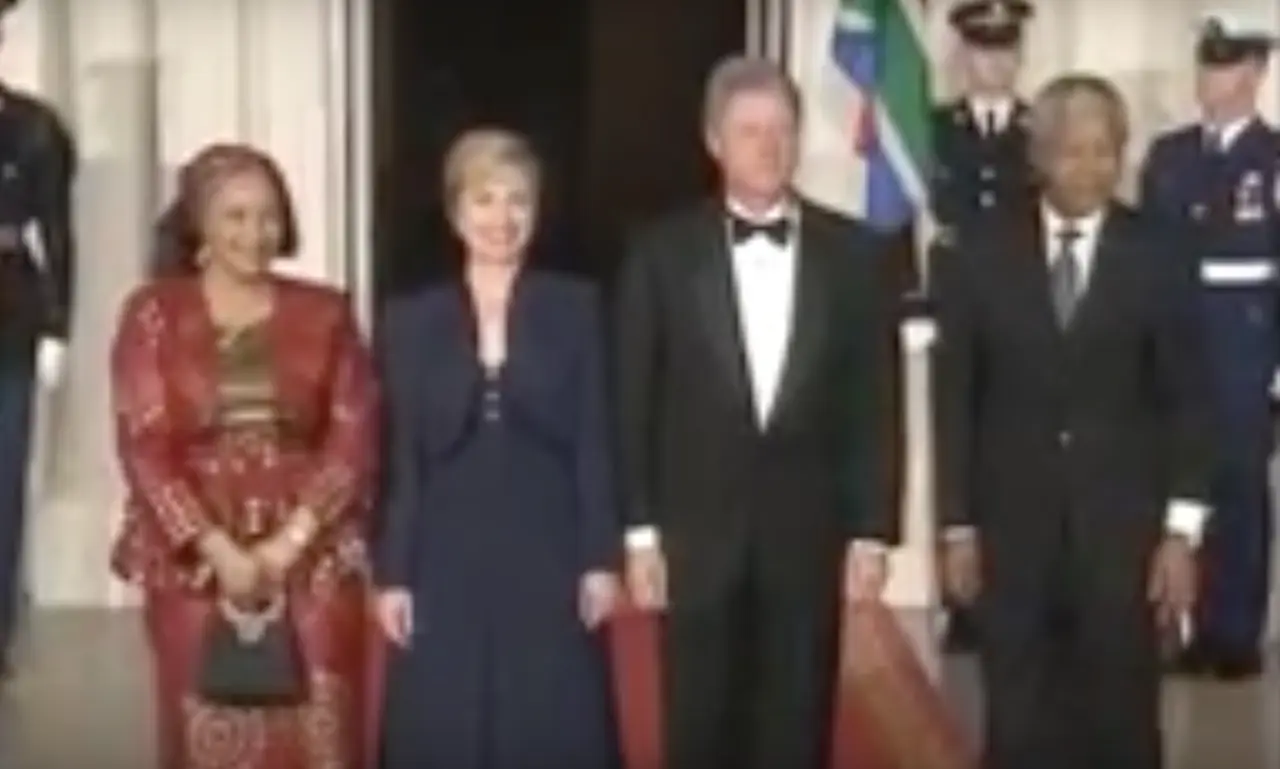
Four years earlier, he had walked out of prison a free man. On the morning of May 10, 1994, Nelson Mandela walked into the sandstone amphitheater of the Union Buildings in Pretoria to take the oath of office as president of South Africa — the country's first Black president, and the man who would bury apartheid.
The ceremony was a gathering the world had come to witness. Dignitaries and leaders from more than 140 countries filled the amphitheater, and jubilant crowds of South Africans — Black and white together — sang and danced in the streets of Pretoria. Mandela pledged to obey the Constitution and dedicate himself to the well-being of the nation. Flanking him were his two deputy presidents: Thabo Mbeki of the African National Congress, and F.W. de Klerk, the last president of the apartheid era — a tableau of reconciliation made flesh.
The road to that morning had been brutally long. Mandela had spent 27 years in prison for his resistance to apartheid, 18 of them in a tiny cell on Robben Island. Released on February 11, 1990, he led the ANC through years of tense negotiations — the CODESA talks, the interim constitution of 1993 — toward South Africa's first national election on the basis of universal adult suffrage, held in April 1994. The day after the results were announced, parliament elected him president unanimously; the inauguration made it real.
In his inaugural address, Mandela called apartheid "an extraordinary human disaster" and the election "a glorious human achievement." Then came the lines the world would remember: "Never, never and never again shall it be that this beautiful land will again experience the oppression of one by another." He closed with a promise that became the anthem of the new nation: "Let freedom reign."
There was a moment of quiet theater that captured the transformation. Military aircraft roared overhead in salute — planes of the same armed forces that had once enforced apartheid. Mandela later noted the irony: the generals saluting him that day were men who might once have arrested him.
Mandela served a single five-year term and stepped down in 1999, refusing to cling to power — itself a revolutionary act on a continent of presidents-for-life. The problems he inherited — poverty, unequal schools, deep mistrust — did not vanish. But May 10, 1994 proved that a country could tear itself apart and then, through negotiation and forgiveness, put itself back together. The rainbow nation was born not in battle, but in an oath.
Photo: White House, public domain (via Wikimedia Commons).