The Night Opera Flew Over the Airwaves
On January 12, 1910, inventor Lee de Forest transmitted the world’s first live opera broadcast — Acts II and III of Tosca — from the stage of New York’s Metropolitan Opera House.
Imagine sitting in your home in 1910, slipping on a pair of earphones — and hearing a live opera, sung on a stage miles away, crackling through the air into your ears. For a handful of New Yorkers, that impossible moment arrived on January 12, 1910.
Inventor Lee de Forest had persuaded the Metropolitan Opera to let him set up his experimental wireless telephone backstage. Microphones hung above the stage and in the wings, wired to a transmitter, with an antenna stretched between two masts on the opera house roof. That evening the company performed Acts II and III of Puccini’s Tosca, with baritone Antonio Scotti singing the villainous Scarpia — and their voices rode invisible waves out across New York City. It was the first time opera had ever been broadcast live over the airwaves.
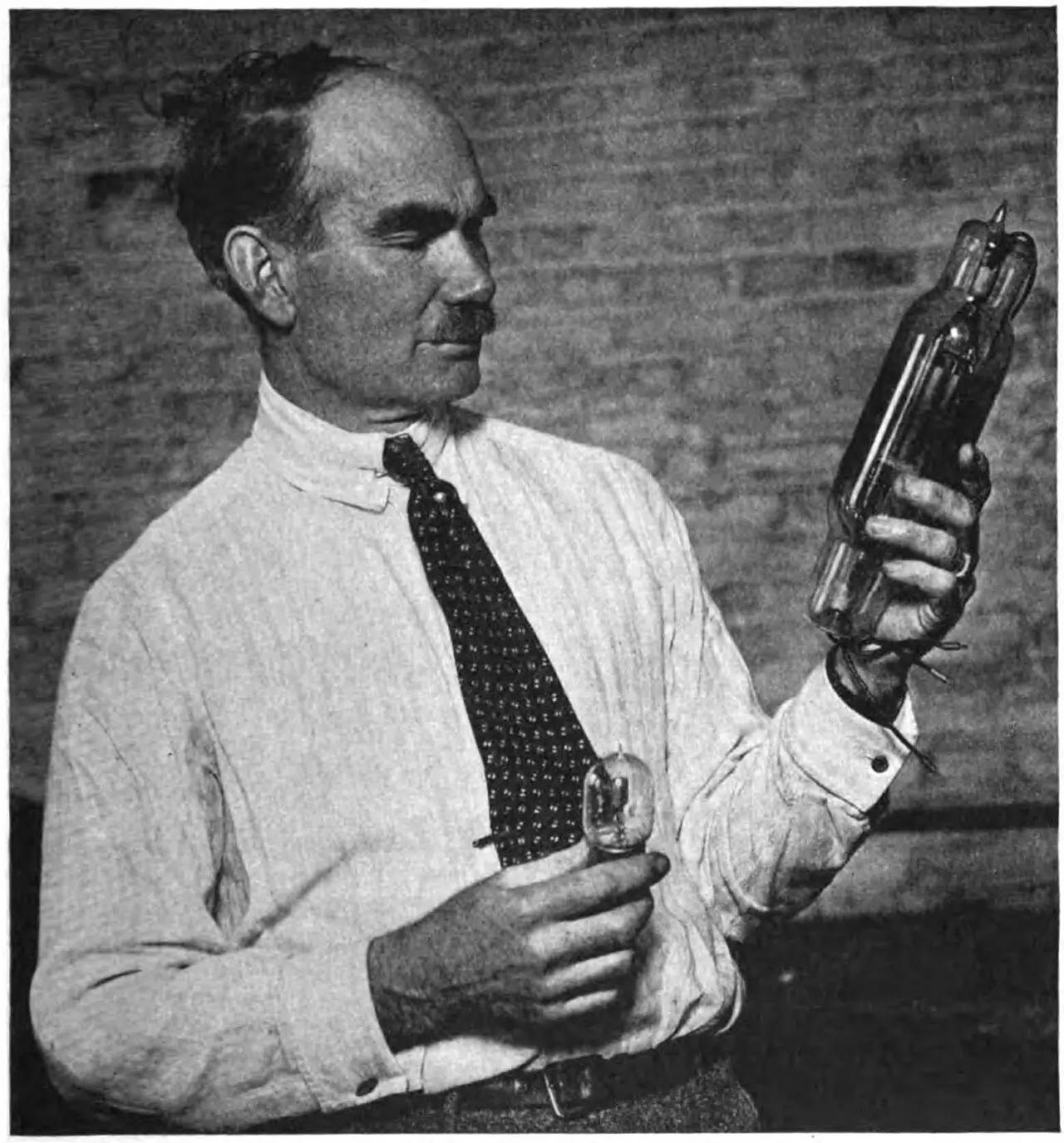
The signal was rough, flickering in and out, but it traveled. Reports said the music could be heard as far away as Newark, New Jersey, and the New York Times covered the experiment two days later. De Forest’s secret was a glass bulb of his own invention called the Audion — a three-part vacuum tube that could amplify faint electrical signals. Without it, wireless voices would have stayed a laboratory curiosity; with it, music could travel.
De Forest had been dreaming of this night for years. Back in 1907, his company’s prospectus had promised: “It will soon be possible to distribute grand opera music from transmitters placed on the stage of the Metropolitan Opera House … to almost any dwelling in Greater New York and vicinity.” The 1910 broadcasts were him making good on that promise, piece by piece. Public listening posts were set up in well-advertised spots around the city — at his radio laboratory, aboard ships in New York Harbor, and in Times Square hotels — where curious New Yorkers gathered around receivers and listened through earphones.
Getting the Met to agree had taken some doing. General manager Giulio Gatti-Casazza only said yes when de Forest pointed out that a stage microphone would let the manager listen in on performances from his own office. De Forest got his experiment; the manager got an office intercom.
The very next evening, January 13, de Forest tried again with excerpts from Pagliacci, starring the great tenor Enrico Caruso — a night many historians call the first true public radio broadcast. But it was the Tosca night that proved the idea first.
Before that week, wireless meant dots and dashes — telegraphy without wires. De Forest showed it could carry music, voices, and culture. Radio broadcasting took another decade to catch on, but the idea born on the Met’s roof would eventually fill millions of living rooms with music, news, and stories — the great-great-grandparent of every podcast and livestream we enjoy today.
Photo: inventor Lee de Forest holding Audion vacuum tubes — public domain image via Wikimedia Commons.