
The Night New York Went Dark
On July 13, 1977, lightning struck a power station north of New York City — and within an hour, nine million people were without electricity for 25 hours.
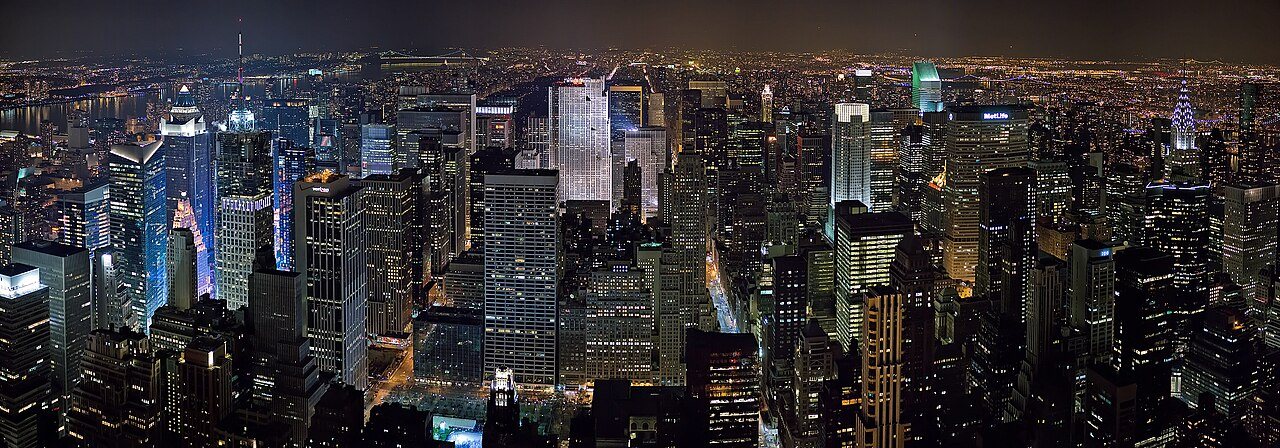
The summer of 1977 was already a tense one for New York City. The city was deep in a financial crisis, a serial killer called the Son of Sam was terrorizing the streets, and a brutal heat wave had settled over the East Coast. Then, on the evening of July 13, nature struck a blow no one saw coming. At 8:34 p.m., a bolt of lightning hit the Buchanan South substation on the Hudson River, some 24 miles north of the city.
What followed was a textbook cascade. A second lightning strike knocked out transmission lines from the Indian Point nuclear plant; a third, at 8:55 p.m. in Yonkers, took out two more critical lines. Con Edison operators fought frantically to keep the system alive — firing up backup generators, cutting voltage, shedding load — but one by one the connections to the outside world tripped. At Shea Stadium, the lights died in the bottom of the sixth inning with the Mets trailing the Cubs. Then, at 9:37 p.m., almost exactly an hour after the first bolt, the entire Con Edison system shut down. New York City went dark.
For 25 hours, the city improvised. Four thousand people had to be evacuated from stalled subway trains. Airports closed and television stations fell silent. But this blackout was nothing like the orderly blackout of 1965, when neighbors had shared flashlights and New Yorkers joked about it afterward. In neighborhoods like Bushwick, Bedford-Stuyvesant, Crown Heights, Harlem and the South Bronx, the darkness unleashed chaos. Looters smashed storefronts, some tearing protective metal grates off with ropes tied to cars. Along Brooklyn's Broadway, mannequins were stripped from store displays; a Bronx car dealership lost 50 new Pontiacs in a single night.
The toll was staggering: 1,616 stores damaged across 31 neighborhoods; 1,037 fires answered by the Fire Department, including 14 multiple-alarm blazes; along one 35-block stretch of Brooklyn's Broadway, 134 stores were looted and 45 of them torched. Police arrested 3,776 people — the largest mass arrest in the city's history — and 550 officers were injured. A congressional study later estimated the damage at more than $300 million in 1977 dollars, and four people died. Mayor Abe Beame charged that Con Edison was guilty of "gross negligence"; the utility called the blackout an "act of God." Time magazine dubbed it "The Night of Terror."
Power did not return in full until 10:39 p.m. on July 14. The blackout became a symbol of New York at its lowest ebb — and, in hindsight, the bottom of a long climb back. Con Edison developed detailed restoration procedures from the disaster that are still used to train operators today. And the city's comeback — its confidence, its energy, its gleaming skyline — can be traced, in part, to the night the lights went out and New Yorkers decided they weren't going to live in the dark.
Photo: Diliff, CC BY-SA 3.0 (via Wikimedia Commons).