Live Aid: The Day Music Tried to Feed the World
On July 13, 1985, two concerts on two continents played to nearly 40 percent of humanity, all to fight famine in Ethiopia.
Imagine you could turn on your television and see a single concert playing to four out of every ten people on Earth. On July 13, 1985, that is almost exactly what happened.
The story started with a television report. In October 1984, the BBC's Michael Buerk broadcast images of the famine then devastating Ethiopia, and millions of Britons watched in horror. One of them was Bob Geldof, the lead singer of the Boomtown Rats. He called his friend Midge Ure of Ultravox, and within days the two had written and recorded "Do They Know It's Christmas?" with a supergroup of British and Irish stars called Band Aid. The single stayed at number one for five weeks and raised millions.
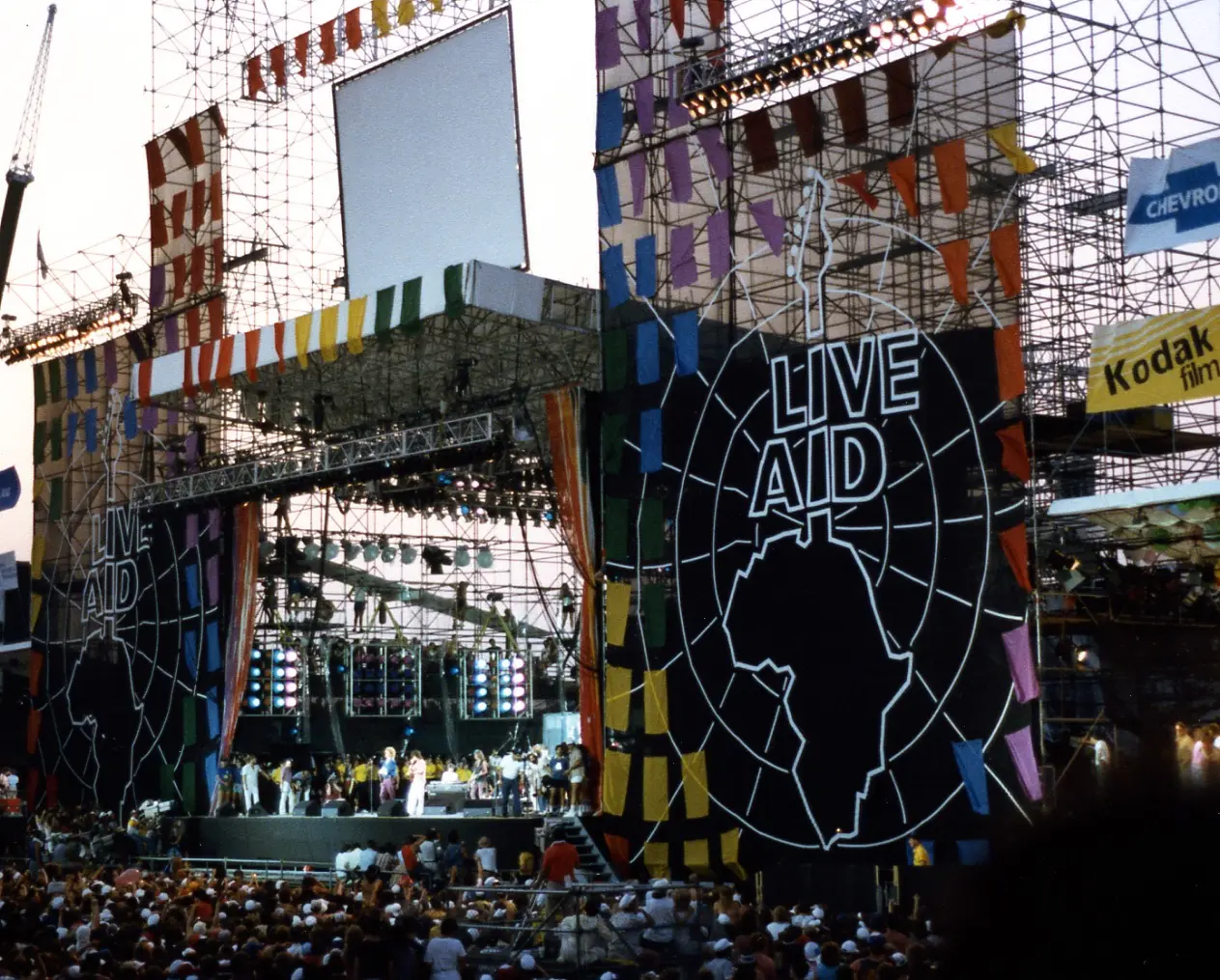
But Geldof wanted something bigger. Working with promoter Harvey Goldsmith, he planned a pair of concerts on the same day, on opposite sides of the Atlantic, linked by satellite. The result was billed as the "global jukebox": London's Wembley Stadium and Philadelphia's John F. Kennedy Stadium, broadcasting live for 16 hours.
The logistics were staggering. Thirteen satellites and 22 transponders carried the signal. More than 70 of the world's biggest acts played, including Queen, David Bowie, U2, Elton John, Paul McCartney, Madonna, Bob Dylan, Led Zeppelin, and Black Sabbath. Phil Collins performed in London, then boarded the Concorde and performed in Philadelphia the same day. Queen's 20-minute set at Wembley became legendary, a masterclass in commanding a stadium crowd.
About 72,000 people packed Wembley and nearly 90,000 filled JFK Stadium. But the real audience was at home: an estimated 1.9 billion viewers in 150 nations watched, the most ambitious international satellite broadcast ever attempted.
The concert raised more than $100 million for Ethiopian famine relief. Its legacy has been debated honestly ever since, with serious questions raised about where some funds went and whether the model of celebrity-driven aid was the right one. Yet Live Aid permanently changed the rules of the game. It proved that popular culture could put a humanitarian crisis at the center of foreign policy conversation, and it became the template for everything from Farm Aid to Live 8.
Why it matters: Before Live Aid, a charity single felt like a grand gesture. After it, the whole planet could be the audience, and music could act like a world government for a day.
Photo: Squelle via Wikimedia Commons, CC BY-SA 3.0. The photo shows the Live Aid stage at JFK Stadium in Philadelphia, 1985.