The Morning Michelangelo Attacked a Giant
On September 13, 1501, a 26-year-old Michelangelo picked up his chisel and began carving his statue of David from a marble block two other sculptors had abandoned.
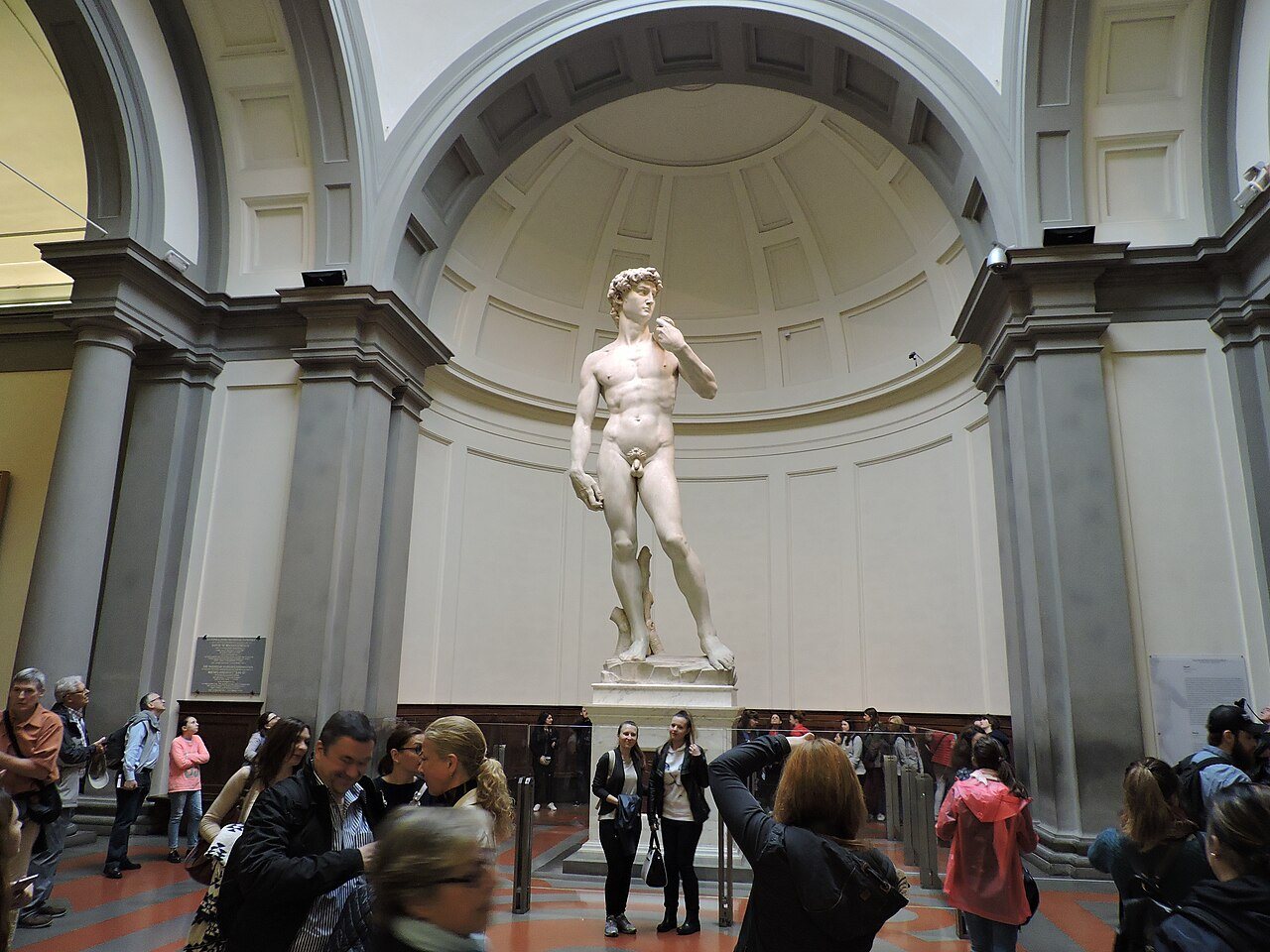
For a quarter of a century, it sat in a Florence courtyard: tons of expensive marble, half-carved, weather-stained, and officially given up on. Two sculptors had tried to tame it. Both had walked away.
The block had been quarried at Carrara for the Opera del Duomo, the board in charge of Florence Cathedral. Back in 1464, the board had commissioned a giant statue of the biblical David — one of a series of prophets meant to stand high on the cathedral's roofline. Agostino di Duccio roughed out the legs and torso, then quit around 1466. A decade later Antonio Rossellino took it on and gave up too. By 1500, the cathedral's own inventory described the stone bluntly: a figure of David, "badly blocked out and supine." The board called it "il gigante" — the giant — and nobody wanted it.
Then came Michelangelo Buonarroti: 26 years old, already famous for the Pietà he had carved in Rome, and absolutely certain he could do what two masters could not. Leonardo da Vinci was among the artists consulted, but it was Michelangelo who convinced the board. On August 16, 1501, they handed him the contract: two years to turn the ruined block into a finished David.
He began carving early in the morning on September 13, 1501.
What followed was more than two years of near-total seclusion, the young sculptor refusing to let anyone see the work until it was done. He had to carve around the damage the earlier sculptors had left — the block was tall but narrow, and one wrong blow could split it apart. Out of that ruined stone he freed a 17-foot youth: David not after his victory, as earlier artists had shown him, but before it — sling over his shoulder, brow furrowed, eyes locked on an enemy only he can see.
When the statue was finished in 1504, it was far too magnificent — and far too heavy — for a cathedral rooftop. Instead, Florence placed it in the Piazza della Signoria, in front of the seat of government, where it became something more than art: a symbol of the Florentine Republic itself. Here was a small, fierce city daring to stand up to the giants around it, from the Medici to the Pope in Rome — and David's warning glare, the story goes, was aimed straight at Rome.
In 1873, after nearly 370 years outdoors, the original was moved inside the Galleria dell'Accademia for protection, where millions of visitors stand before it today. A full-size replica keeps watch in the square where the real David once guarded Florence.
Why does it matter? David is the ultimate second-chance story. Everyone agreed the marble was ruined; Michelangelo saw the figure trapped inside it. It is often said that he believed the statue was already waiting in the stone, and that the sculptor's only job was to set it free. On a September morning in 1501, he picked up his chisel — and proved it.
Photo: Dimitris Kamaras, CC BY-SA 2.0 (via Wikimedia Commons).