The Miracle on the Hudson
On January 15, 2009, US Airways Flight 1549 lost both engines to a bird strike and ditched in the Hudson River — and all 155 people aboard survived.
At about 3:30 on the afternoon of January 15, 2009, an Airbus A320 climbing out of New York’s LaGuardia Airport flew into a flock of Canada geese — and both of its engines went quiet. What happened over the next four minutes became the most famous water landing in aviation history.
US Airways Flight 1549, bound for Charlotte, North Carolina, was carrying 150 passengers and five crew members. Captain Chesley “Sully” Sullenberger, a former Air Force fighter pilot with decades of experience, and First Officer Jeffrey Skiles had been airborne barely two minutes when the birds struck at roughly 2,900 feet, knocking out thrust in both engines.
Controllers offered LaGuardia and nearby Teterboro Airport as options, but the jet was losing altitude too fast to reach any runway. Sullenberger made the call: the Hudson River. At about 3:31 p.m., he glided the powerless airliner onto the frigid water near Midtown Manhattan in a controlled ditching — the only choice that kept a crippled jet away from the crowded city below.
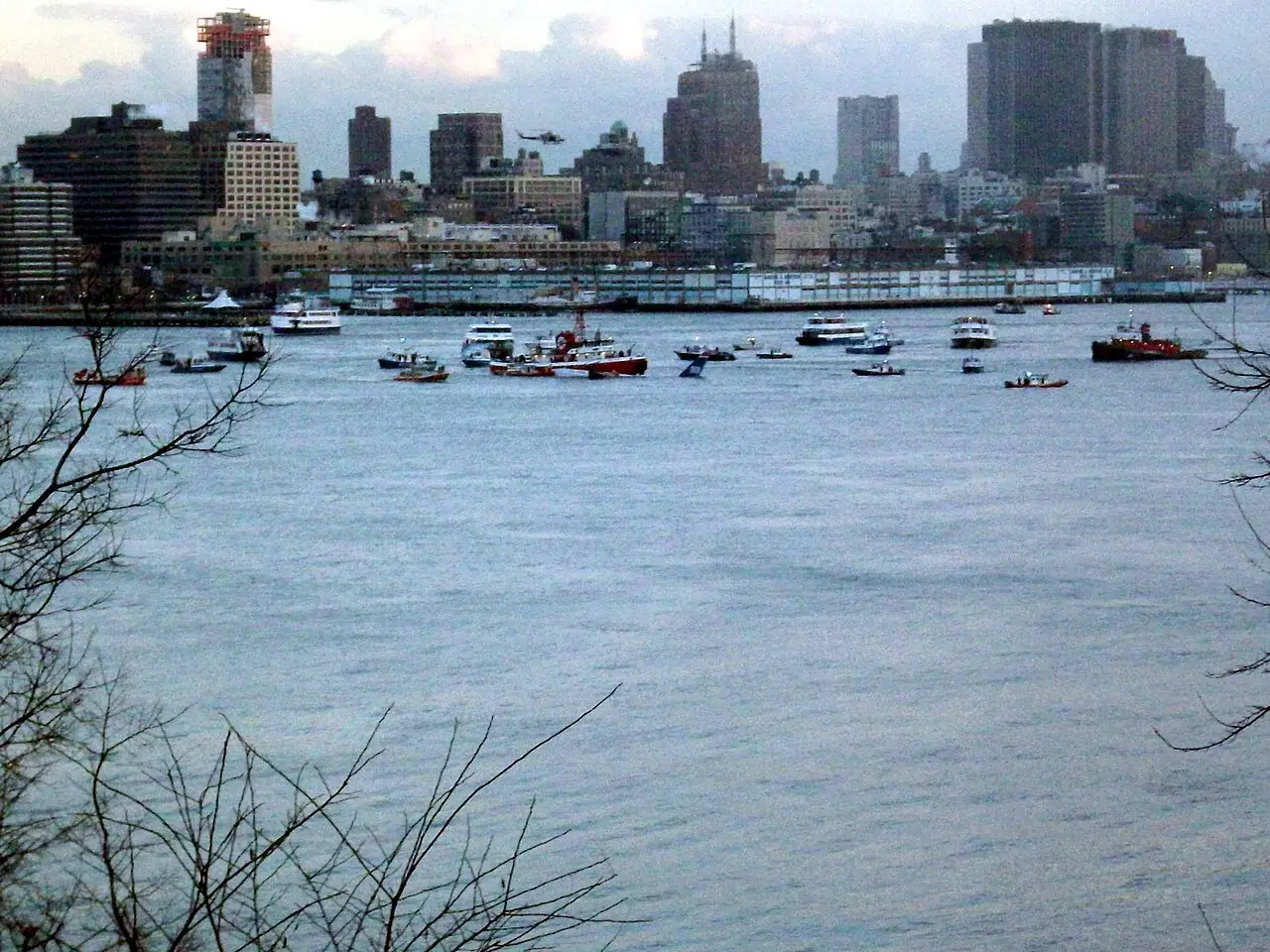
The airplane stayed intact and afloat. Passengers evacuated onto the wings and into life rafts as ferries and commuter boats — the Hudson’s everyday workhorses — converged within minutes to pull people from the icy water. All 155 people aboard survived; about 100 were injured, five of them seriously. Sullenberger was reportedly among the last off, walking the sinking cabin twice to make sure no one was left behind.
New York’s governor called it the “Miracle on the Hudson,” and the label stuck. The National Transportation Safety Board later described the ditching as the most successful in aviation history. Its investigation found that while computer simulations suggested a return to LaGuardia might have been possible with an instant turn, real-world reaction times made the river the choice with the highest probability of survival — vindicating the crew’s judgment.
Flight 1549 endures because it was the rare disaster that became a triumph: two pilots, a well-drilled crew, and a flotilla of ordinary New York boat operators turning four minutes of terror into a rescue with no fatalities. Seventeen years later, Sullenberger was inducted into the National Aviation Hall of Fame — a fitting capstone to a career defined, above all, by that one cold January afternoon. It remains the gold standard for what calm expertise can accomplish when everything goes wrong.
Photo: Izno, CC BY-SA 3.0 (via Wikimedia Commons). Contemporaneous: rescue boats converge around the tail of Flight 1549 in the Hudson River, photographed from the New Jersey shore on the day of the ditching.