The Milwaukee Schoolteacher Who Became Israel's Prime Minister
On March 17, 1969, Golda Meir — a former Milwaukee schoolteacher — was sworn in as Israel's fourth prime minister, the first woman to lead the country.
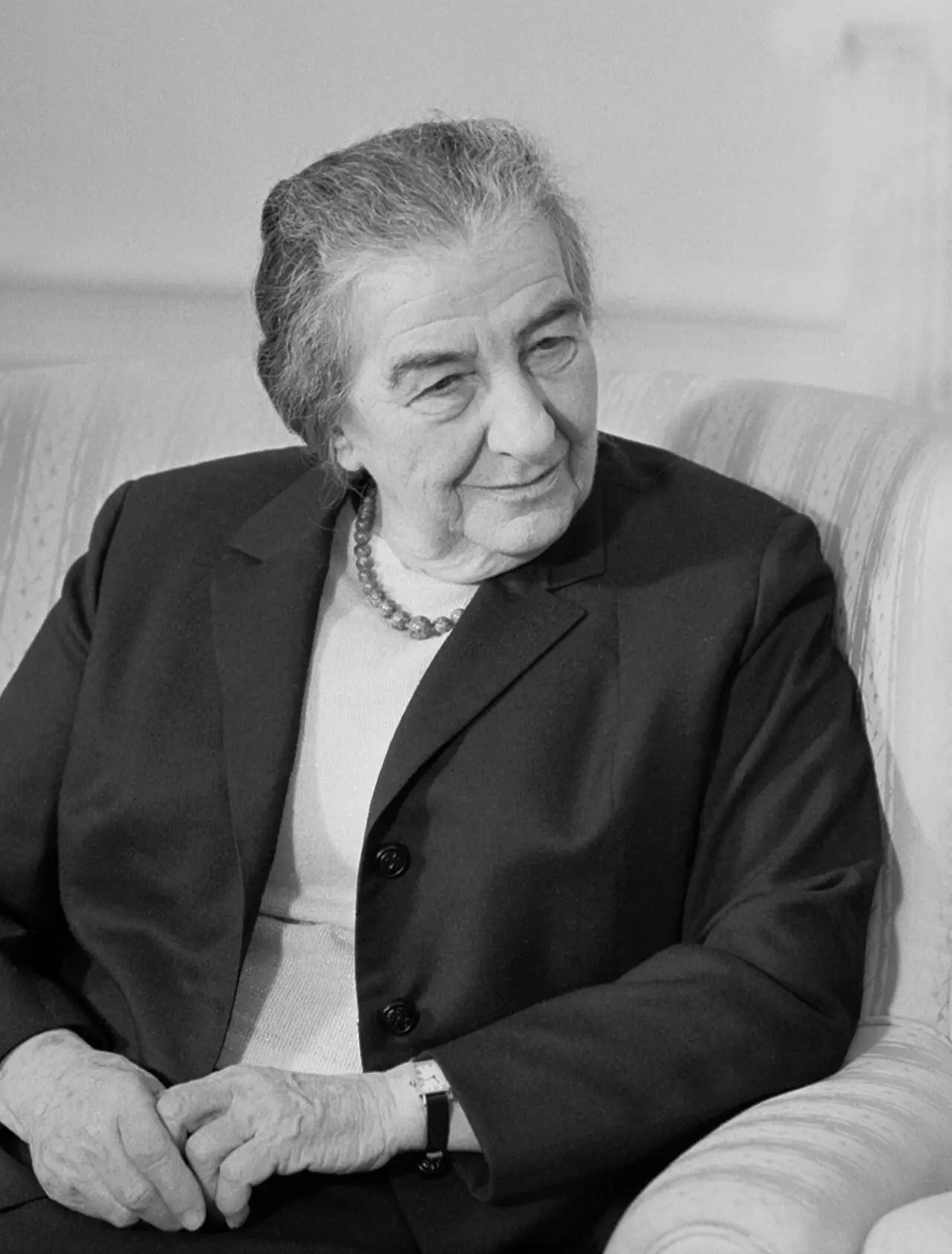
She had already retired twice, and at seventy she was tired and ill. But when Israel's ruling party came calling in the spring of 1969, Golda Meir said yes one last time.
Golda Meir had not been born to power. She was born Golda Mabovitch in Kyiv in 1898, and her family fled the pogroms of the Russian Empire for Milwaukee, Wisconsin, when she was eight. She grew up over her mother's grocery store, became a schoolteacher, and in 1921 sailed for Palestine with her husband, Morris Myerson, to join a kibbutz. She milked cows, washed laundry, and learned to lead — first the kibbutz, then the labor movement, then the nation itself.
By the 1950s she was one of the founders' inner circle. David Ben-Gurion, Israel's founding prime minister, made her foreign minister in 1956 — calling her, famously, 'the best man' in his cabinet — and she reluctantly Hebraized her surname to Meir. She served a decade, then retired in 1966, exhausted. She was back within months as secretary-general of the Labor Party.
Then, on February 26, 1969, Prime Minister Levi Eshkol died suddenly of a heart attack. The Labor Party, desperate to avoid a divisive succession fight, turned to the one figure everyone respected. On March 7 the party chose her; on March 17, 1969, she was sworn in as prime minister at the head of Israel's fourteenth government. She was the country's fourth prime minister — and its first woman in the job, and one of the first women anywhere to lead a modern nation.
Her years in office were among the most turbulent in Israel's history. She led the Alignment to a record 56 seats in the October 1969 election, steered the country through the War of Attrition with Egypt, and after Palestinian militants murdered eleven Israeli athletes at the 1972 Munich Olympics, she ordered Israel's intelligence service to hunt down those responsible. But the defining crisis came on October 6, 1973, when Egypt and Syria attacked on Yom Kippur. Caught by surprise, Israel fought its way back at terrible cost — and Meir, blamed for the intelligence failure, never politically recovered. She resigned on April 11, 1974, and was succeeded by Yitzhak Rabin. She died in Jerusalem in 1978.
Meir's legacy is fiercely debated in Israel, but her place in history is secure for one reason: she proved, a generation before it was common anywhere, that a woman could run a country through war and crisis. The chain-smoking grandmother from Milwaukee who once taught fourth grade had become the 'Iron Lady' of Israeli politics — a nickname she carried years before Margaret Thatcher made it famous — and opened a door that Thatcher, Indira Gandhi, and countless others would walk through after her.
Photo: Marion S. Trikosko, public domain.