
The Midnight Ride of Paul Revere
On the night of April 18, 1775, Paul Revere rode out of Boston to warn the countryside that British troops were marching.
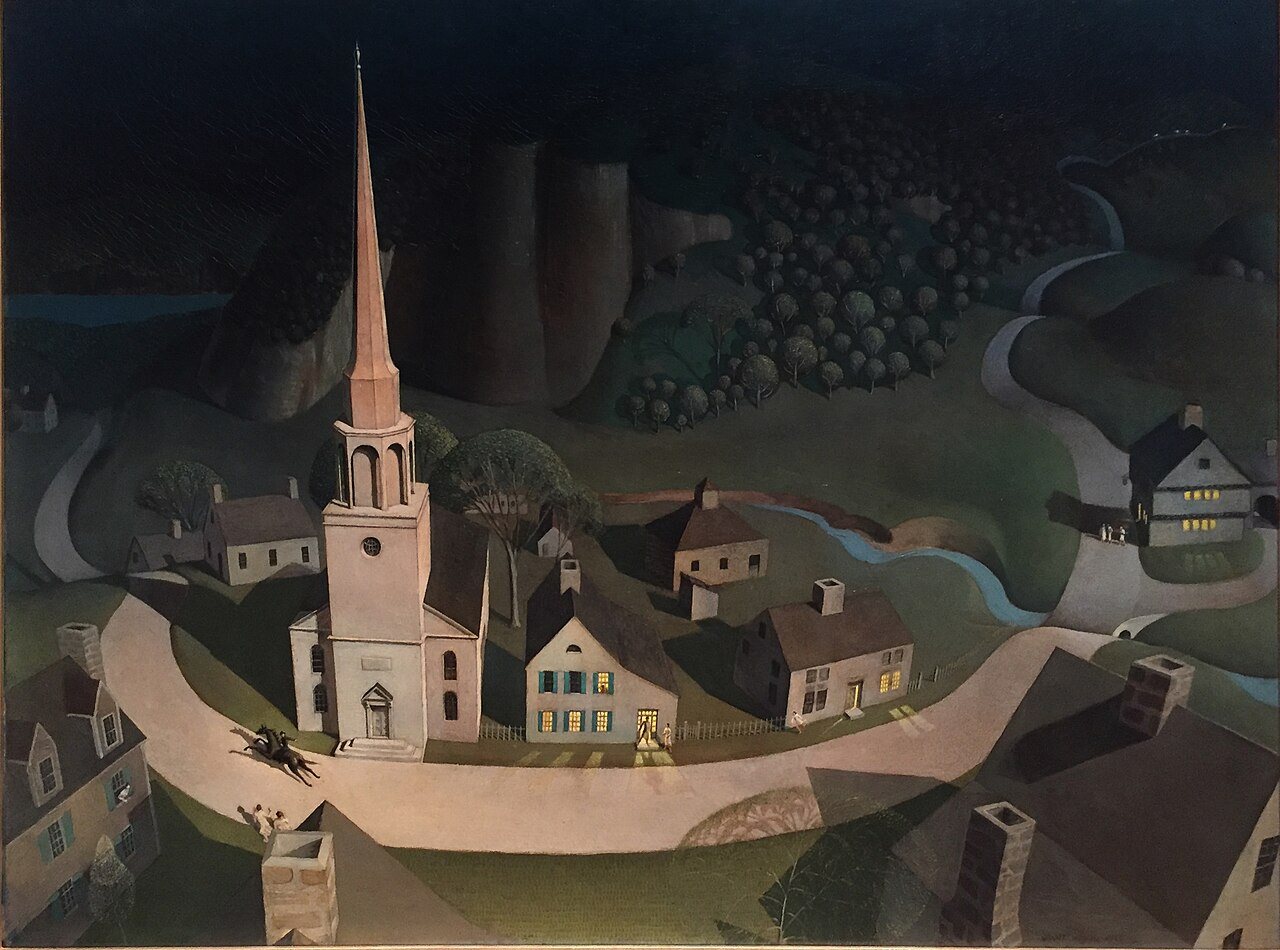
"One if by land, and two if by sea."
On the evening of April 18, 1775, Boston was a city holding its breath. British troops had been massing, and the Sons of Liberty had learned that the King's soldiers planned to march on the towns of Lexington and Concord — to arrest patriot leaders and seize the colonists' stockpiled weapons. Dr. Joseph Warren, a patriot leader, sent for a 40-year-old silversmith named Paul Revere with an urgent mission: ride to Lexington and warn Samuel Adams and John Hancock that the troops were coming.
Revere had prepared for exactly this night. He had arranged a signal with Robert Newman, the sexton of Boston's Old North Church: lanterns hung in the church steeple would tell watchers across the Charles River how the British were moving — one lantern if by land, two if by sea. That evening the signal went up: two lanterns. The troops were crossing the river by boat.
Revere himself rowed across the Charles to Charlestown, borrowed a horse, and set off into the dark. He didn't ride alone for long. Another rider, William Dawes, had left Boston by a different route with the same warning, and the two soon joined forces, joined later by a young doctor named Samuel Prescott. As they rode through the countryside — through Medford and on toward Lexington — they stopped at house after house, rousing families and setting the region's alarm system in motion. By night's end, as many as 40 other riders were carrying the warning outward.
In the town of Lincoln, the ride nearly ended in disaster. A British patrol intercepted the three men. Prescott and Dawes escaped into the night, but Revere was captured, questioned, and marched back toward Lexington at gunpoint before being released. He never made it to Concord — it was Prescott who carried the final warning there.
Here's what the legend usually gets wrong: Revere probably never shouted "The British are coming!" As a British subject himself, warning other British subjects, that phrase would have made little sense. By his own later account, his warning was "The Regulars are coming out!" And he was one rider among many — Dawes, Prescott, and dozens of unnamed messengers all rode that night. Henry Wadsworth Longfellow's famous 1861 poem, "Paul Revere's Ride," turned one man into the whole story, and Americans have remembered it that way ever since.
But the ride did exactly what it was meant to do. When British troops reached Lexington Green at dawn the next morning, the minutemen were waiting for them — muskets in hand, warned and ready. Without that night's ride, the arsenal at Concord might have been seized quietly, and history might have taken a very different turn.
Photo: Grant Wood, public domain (via Wikimedia Commons).