San Francisco, 5:12 A.M.: The Quake and the Fire
At 5:12 on the morning of April 18, 1906, a magnitude 7.9 earthquake shattered San Francisco — and the fires that followed nearly finished the job.
At 5:12 on a Wednesday morning, San Francisco woke up to the end of the world.
The first shock came just after 5 a.m. on April 18, 1906 — a warning rattle. Then the main quake hit: a magnitude 7.9 rupture along the San Andreas Fault, lasting nearly a minute, felt from Oregon to Los Angeles. Chimneys toppled, brick buildings crumbled, streets split open, and the city's water mains shattered.
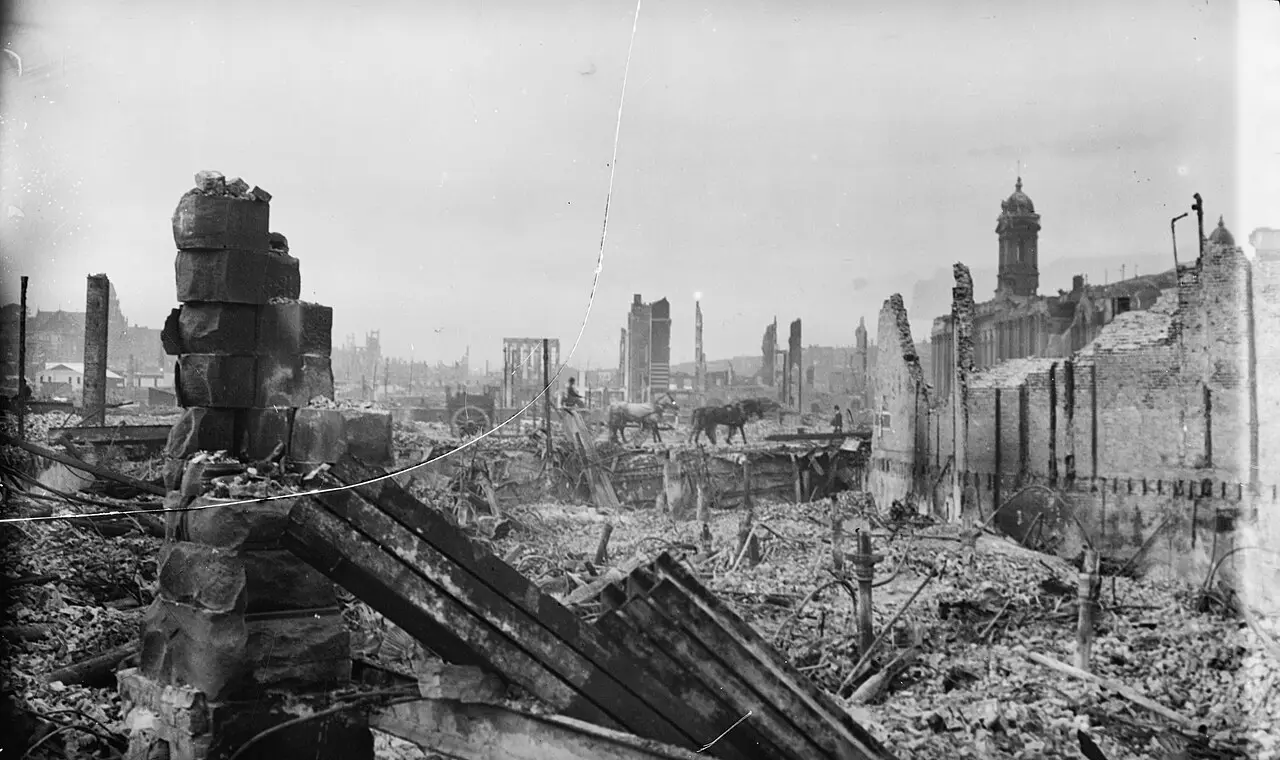
But the earthquake, terrible as it was, was only the beginning. Within half an hour, more than fifty fires were burning across the city — sparked by broken gas lines, toppled stoves, and fallen power wires. With the water mains broken, firefighters could do almost nothing. For three days the inferno raged through downtown, Chinatown, and Nob Hill, consuming some 500 city blocks and 28,000 buildings. Soldiers dynamited whole rows of mansions to create firebreaks, sometimes spreading the flames instead of stopping them.
When it was over, more than 80 percent of San Francisco lay in ruins. The official death toll was put at around 700 — a figure historians now believe was deliberately lowballed to protect the city's image. Modern estimates put the true number above 3,000, making it the deadliest earthquake in American history and California's worst natural disaster. As many as 300,000 people — three-quarters of the city's 400,000 residents — were homeless, camping in tents in the city's parks and cooking in the streets.
The stories from those days are the stuff of legend. The great opera tenor Enrico Caruso, in town to perform, was thrown from his bed at the Palace Hotel and fled the city vowing never to return — a vow he kept. Army troops patrolled streets under orders to shoot looters. And on April 20, the cruiser USS Chicago ferried 20,000 refugees across the bay in one of the largest sea evacuations in history.
Yet what followed the disaster was almost as remarkable. Aid poured in from around the world. San Franciscans, famously, refused to mourn: within days, the cry went up to rebuild, and rebuild they did — grander than before, and this time with an eye toward the fault line beneath their feet. The quake also revolutionized science: studies of the ruptured fault gave geologists the first clear evidence for the elastic-rebound theory of earthquakes, the foundation of modern seismology.
San Francisco still marks every April 18, when the city gathers at Lotta's Fountain to remember the hour the earth moved. The city that refused to die became, in its own phrase, the city that knows how.
Photo: Arnold Genthe, public domain (via Wikimedia Commons).