The 'Dumb Doll' Who Ruled India: Indira Gandhi Takes Power
On January 19, 1966, Indira Gandhi won a secret ballot to lead India, becoming the first woman to govern the world's largest democracy.
They called her the "dumb doll." On January 19, 1966, the men who ran India's ruling party chose Indira Gandhi as their leader, confident she would be a figurehead they could control. She proved them wrong so completely that she became one of the most powerful and controversial leaders of the twentieth century.
The opening had come suddenly. Prime Minister Lal Bahadur Shastri had died of a heart attack in Tashkent just days earlier, hours after signing a peace declaration ending India's war with Pakistan. The Congress Party's old guard, a group of powerful regional bosses known as the Syndicate, needed a successor, and they settled on Shastri's 48-year-old information minister: the only child of Jawaharlal Nehru, India's first prime minister.
She was not, the bosses believed, a threat. She was a woman in a deeply patriarchal political world, soft-spoken, with little independent base of her own. In the corridors of New Delhi she was dismissively nicknamed "goongi gudiya," the dumb doll. The Syndicate expected gratitude and obedience.
On January 19, the Congress Party's members of Parliament voted in a secret ballot, the first contested leadership election of its kind. Gandhi defeated the veteran Morarji Desai by 355 votes to 169. Five days later, on January 24, President Sarvepalli Radhakrishnan swore her in at the presidential palace. India had its third prime minister, and its first woman head of government, a milestone for democracy anywhere in the world. (Her famous surname, incidentally, came from her husband Feroze Gandhi; she was no relation to Mahatma Gandhi.)
The "dumb doll" did not stay quiet for long. Within a few years she had outmaneuvered the Syndicate, split the party, and built her own power base. She nationalized India's banks, championed the Green Revolution that lifted millions from hunger, and in 1971 led India to a swift victory over Pakistan in the war that created the independent nation of Bangladesh, a triumph that made her a national hero. India also joined the nuclear club with its first atomic test in 1974.
Her rule had a dark chapter, too. In 1975, after a court found her guilty of election malpractice, she declared a national Emergency, suspending civil liberties and jailing opponents for nearly two years, a period Indians still debate fiercely. Voters threw her out in 1977, then swept her back in 1980. She was assassinated by her own Sikh bodyguards on October 31, 1984.
Why does it matter? On this day in 1966, the world's largest democracy handed its government to a woman for the first time, and she held the center of Indian life for most of the next two decades. The underestimated daughter of Nehru bent history around her will, for better and for worse, and proved that the bosses' judgment had been the real miscalculation.
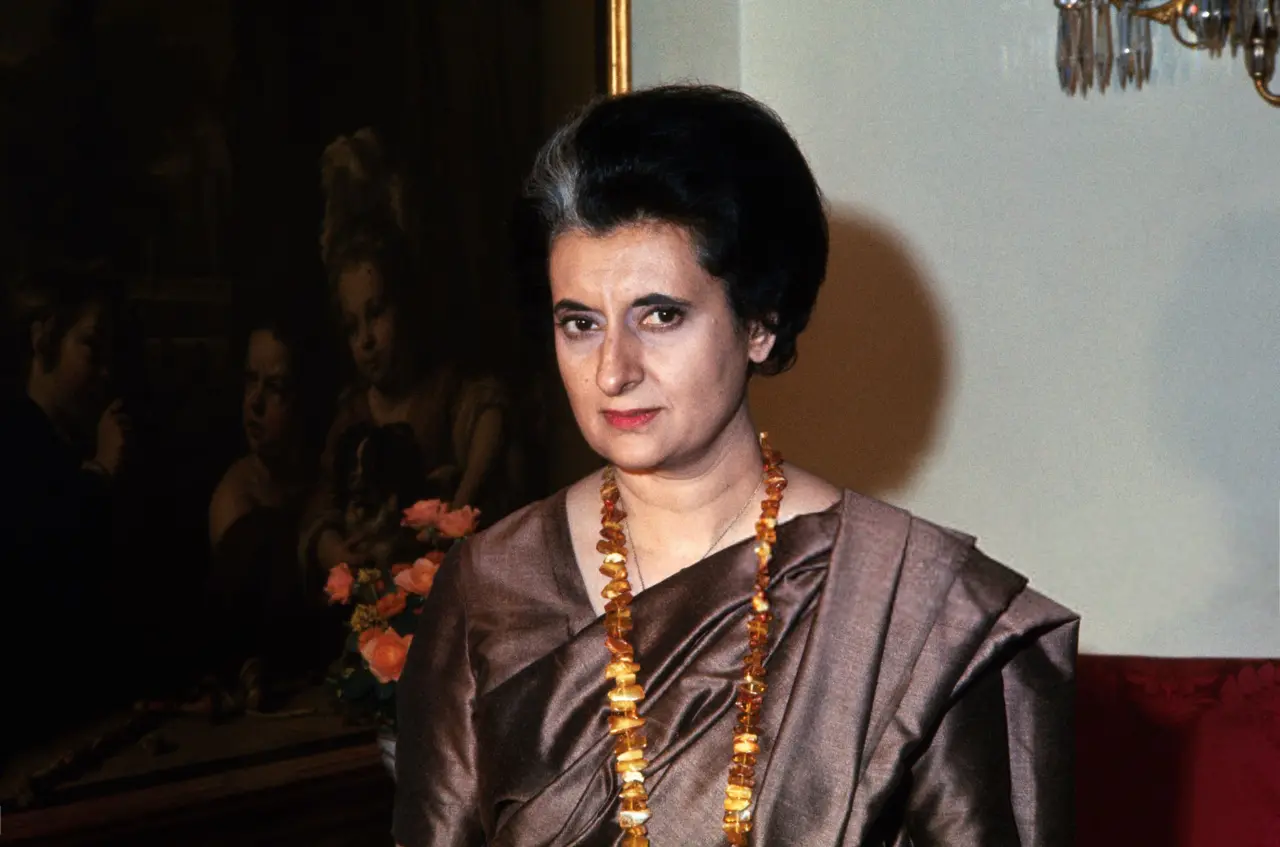
Photo: unknown photographer, public domain (published in the United States without a copyright notice; via Wikimedia Commons) — Prime Minister Indira Gandhi at the Carlyle Hotel in New York City, March 1966, months after taking office.