The Boy Who Powered the World: James Watt Is Born
James Watt, born January 19, 1736, in Greenock, Scotland, perfected the steam engine and helped power the Industrial Revolution.
The unit that measures the power of every light bulb, engine, and solar panel on Earth is named for a sickly Scottish boy born on January 19, 1736. His name was James Watt — and he gave the world the engine that changed everything.
Watt was born in Greenock, a seaport on Scotland's Firth of Clyde. His father was a shipwright, ship owner, and contractor who served as the town's chief magistrate; his mother, Agnes Muirhead, came from a distinguished family and was unusually well educated. Frail health kept young James out of school for long stretches, so his mother taught him at home — and he showed an early gift for mathematics and a fascination with the machines in his father's workshop. His grandfather Thomas had taught mathematics and navigation, so precision ran in the blood.
Watt trained as a mathematical instrument maker in London, then tried to set up shop in Glasgow — only to be blocked by the city's Guild of Hammermen, which refused him a license. His rescue came from the University of Glasgow, which offered him a workshop in 1757. There he fell in with brilliant company: the chemist Joseph Black and the economist Adam Smith became his friends.
In 1764 the university asked Watt to repair a model of Thomas Newcomen's steam engine, the clumsy pump then used to drain mines. Watt saw at once how wasteful it was — it reheated and recooled its whole cylinder with every stroke, throwing away most of its fuel. By his own account, the answer struck him during a Sunday walk on Glasgow Green: condense the steam in a separate chamber, and the cylinder stays hot. The separate condenser was born. He patented the idea in 1769, in a patent titled "A Method of Lessening the Consumption of Steam in Steam Engines."
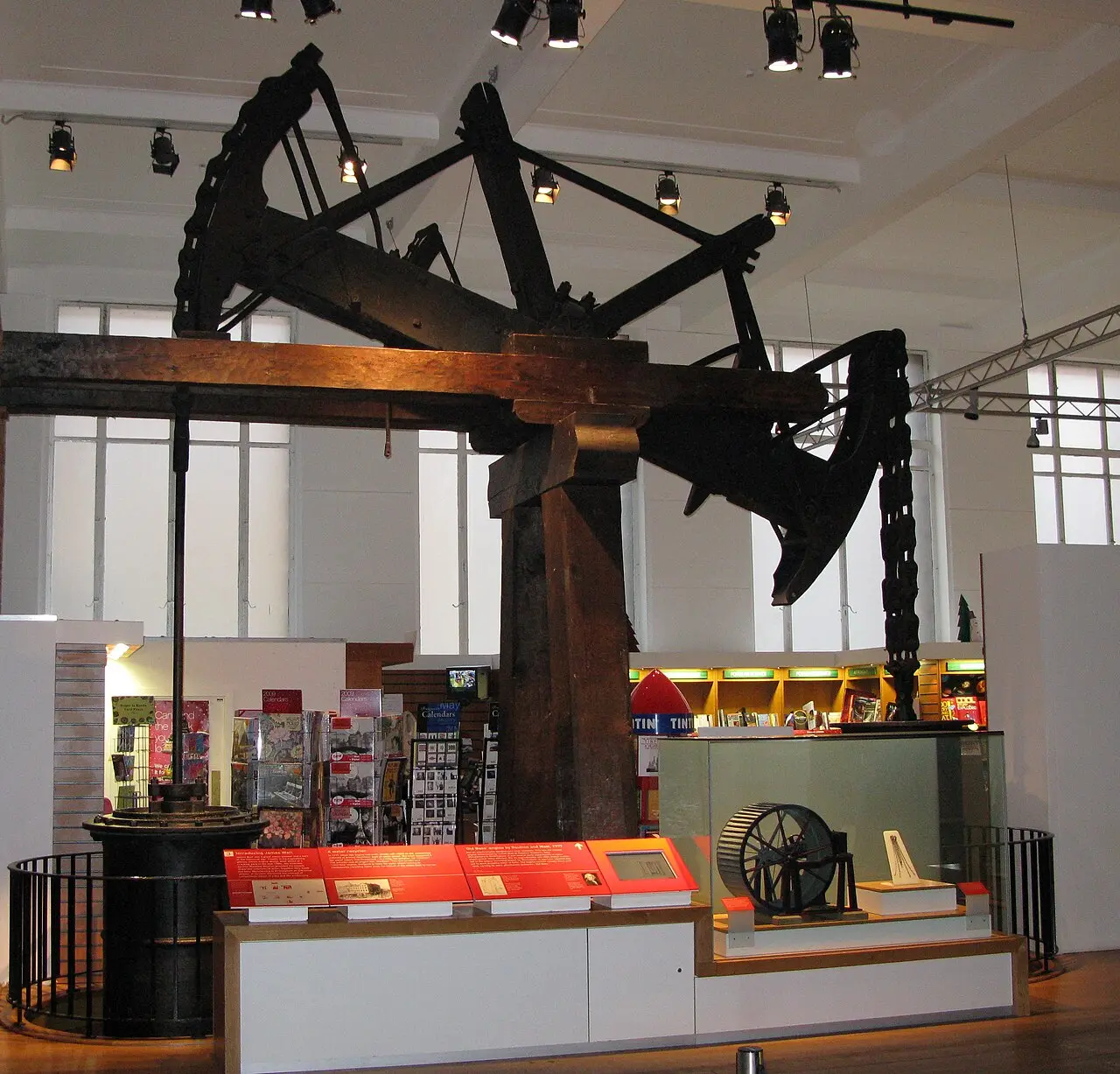
Turning the idea into working engines took money and muscle. Watt's first backer, John Roebuck, went bankrupt — but the Birmingham manufacturer Matthew Boulton bought into the patent, and in 1775 the two formed Boulton & Watt. Parliament extended Watt's patent to 1800, and the firm's engines spread through mines, mills, distilleries, and factories across Britain and beyond. Watt went on to develop the concept of horsepower, and in time the scientific unit of power — the watt — was named in his honor. He died in 1819, having watched his engine become the muscle of the Industrial Revolution.
Watt didn't invent the steam engine — but he made it efficient enough to matter. Cheap, reliable steam power drove the factories, mines, and eventually the railways and ships of the modern age. The world economy still runs on his insight: waste less energy, get more work.
Photo: Old Bess, the oldest surviving Boulton & Watt beam engine, built in 1777 and preserved at the Science Museum, London — photograph by Wikimedia user geni, licensed CC BY-SA 4.0.