
The Duel That Killed a Founding Father
On July 11, 1804, Vice President Aaron Burr and former Treasury Secretary Alexander Hamilton met at dawn in Weehawken, New Jersey — and only one of them walked away.
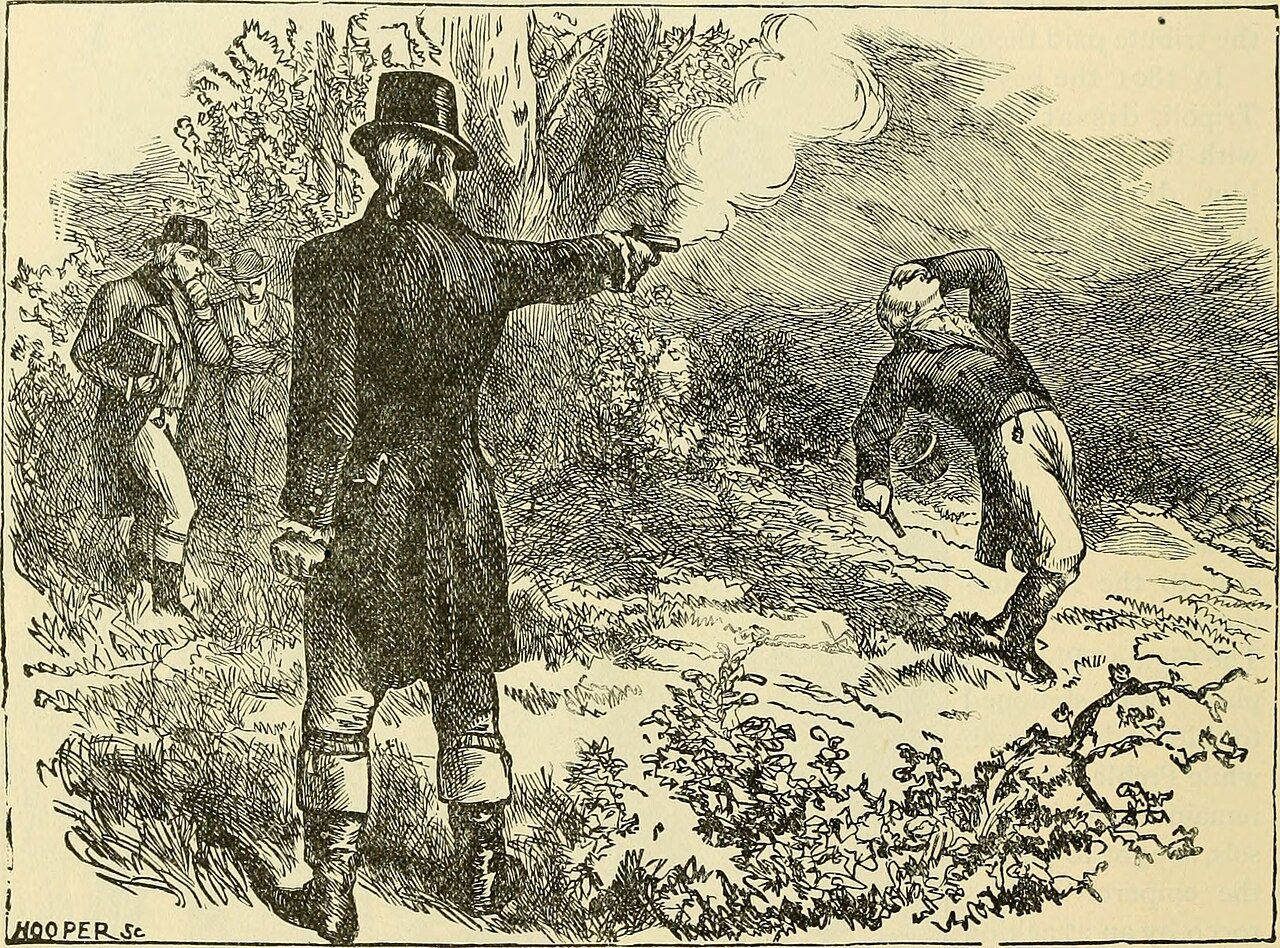
At dawn on July 11, 1804, two of the most famous men in America rowed across the Hudson River to a wooded ledge in Weehawken, New Jersey, each carrying a loaded pistol. One was the sitting Vice President of the United States. The other had been the nation's first Secretary of the Treasury and the architect of its financial system. When the smoke cleared, Alexander Hamilton lay bleeding — and American politics would never be the same.
Aaron Burr and Alexander Hamilton had been circling each other for years. Both were political leaders in New York: Burr a leading figure in Thomas Jefferson's Democratic-Republican party, Hamilton the founder and chief voice of the rival Federalists. In the disputed presidential election of 1800, Burr had nearly become president himself, and Hamilton's behind-the-scenes maneuvering helped make sure Jefferson won instead. Then in 1804, Hamilton threw his weight against Burr's bid to become governor of New York, and Burr lost narrowly. When Burr learned that Hamilton had allegedly maligned his character in private conversation, he demanded satisfaction — and Hamilton, bound by the strict code of gentlemen's honor, accepted the challenge.
The duel followed the formal etiquette of an "affair of honor." Shortly before 7 a.m., Hamilton arrived with his second, Nathaniel Pendleton; Burr was already there with his second, William P. Van Ness. What happened next has been argued about for more than two centuries. Hamilton's supporters said he believed the duel was morally wrong and deliberately threw away his shot, firing into the air — his bullet struck a tree branch above and behind Burr's head. Burr's supporters insisted Hamilton had aimed at Burr and missed. On one thing everyone agreed: Burr then took careful aim and fired. His bullet struck Hamilton in the abdomen and lodged near his spine.
Hamilton was ferried back across the Hudson to Manhattan, where he lingered for more than a day before dying on July 12. The tragedy carried an awful symmetry: the duel took place on the same dueling ground where Hamilton's eldest son, Philip, had been mortally wounded in a duel a few years earlier. Burr escaped unharmed physically, but the killing destroyed him politically. Charged with murder, he fled New York and returned to Washington, where — still vice president — he finished out his term immune from prosecution. Years later he was arrested and tried for treason over an alleged plot to carve an empire out of the West; he was acquitted, but his public life was over.
The duel remains the most famous in American history, and it helped mark the beginning of the end of dueling itself: a practice once sanctioned by law and custom declined across the Northern states in the years that followed. Hamilton's death permanently weakened the Federalist Party he had built, while sealing his legend as a brilliant founder cut down in his prime. Two political enemies, one sunrise, two shots — and a young republic that never forgot.
Engraving: Internet Archive Book Images, public domain (via Wikimedia Commons).