Mongolia Wins Its Freedom: The People's Revolution of 1921
On July 11, 1921, revolutionaries proclaimed a new people's government in Mongolia, ending foreign occupation — the day Mongolians still celebrate as their national day.
On July 11, 1921, in the dusty capital the Mongols called Urga, a new government was proclaimed — and a nation's long fight for freedom was won. Mongolians still celebrate July 11 as their national day, more than a century later.
The road there had been brutal. Mongolia had declared independence from China's Qing dynasty in 1911, but by 1919 Chinese troops had reoccupied the country. Then came Baron von Ungern-Sternberg, a renegade White Russian warlord whose Asiatic Cavalry Division swept in during the chaos of the Russian Civil War — trading one occupation for a crueler one.
The answer came from a young soldier named Damdin Sükhbaatar — his name means Ax Hero — and a handful of fellow revolutionaries. They formed the Mongolian People's Party, slipped into Soviet Russia for training and support, and returned in 1921 at the head of a Mongolian-Soviet force. From March to July they fought their way across the country: first defeating the Chinese garrison at Kyakhta in March, then driving Ungern-Sternberg's forces out of Urga by early July.
On July 11, the victory was made official. A people's government was proclaimed, with Dogsomyn Bodoo named premier and Sükhbaatar — not yet thirty — as commander-in-chief and minister of war. The Bogd Khan, Mongolia's Buddhist spiritual leader and former monarch, was kept as a figurehead with only symbolic powers. The revolution had ended both the Chinese occupation and the White Russian presence, and Mongolia was free again.
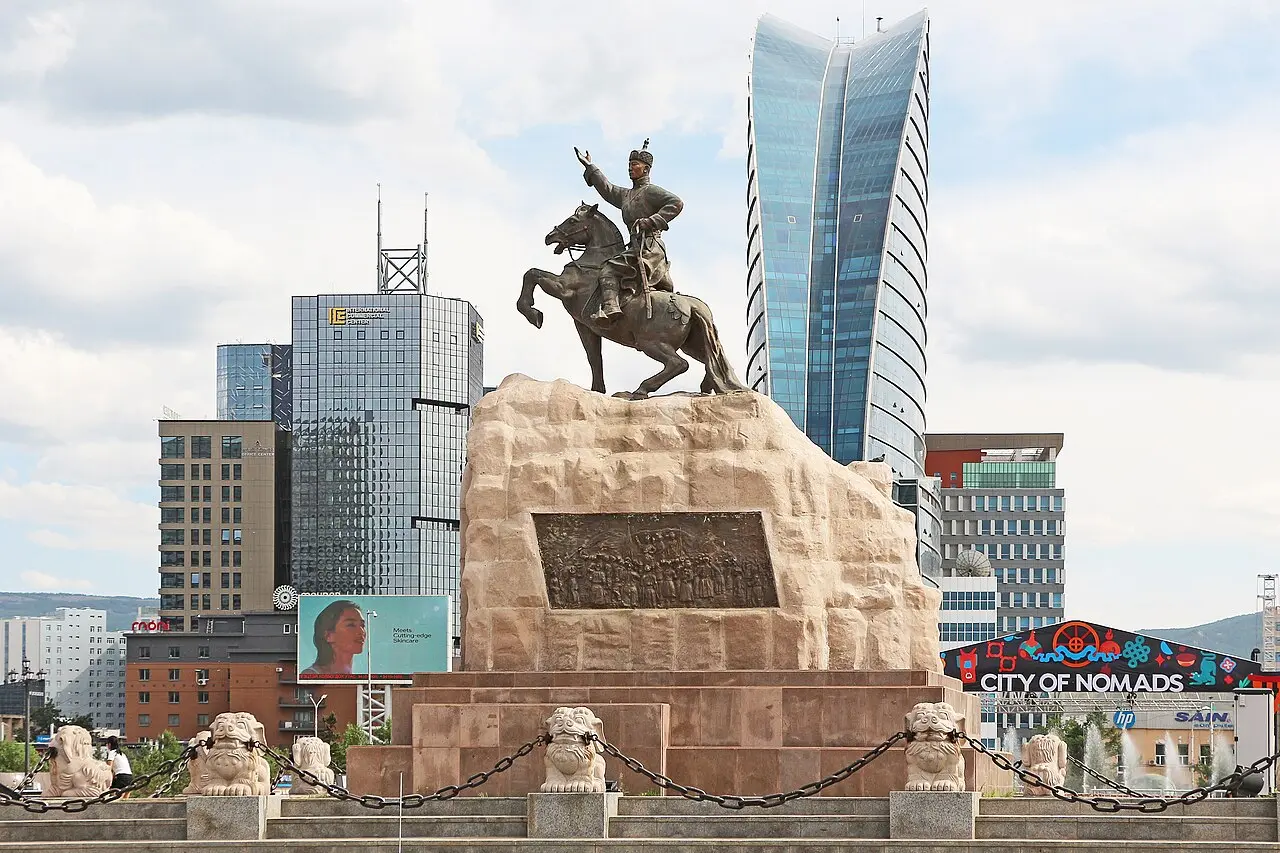
Freedom came with strings: the new state leaned heavily on Soviet support, and in 1924, after the Bogd Khan's death, it became the Mongolian People's Republic — a Soviet satellite until the democratic revolution of 1990. Sükhbaatar himself died in 1923, just two years after his triumph; the capital was renamed Ulaanbaatar, Red Hero, in his honor, and his statue still rides at the center of the city's great square.
Why it matters: July 11 is Mongolia's Fourth of July — the anchor of national identity for a country of vast steppes and three million people, squeezed between two giants. The revolution's legacy is complicated, but the date endures because the achievement was real: on that day, after years of occupation, Mongolia belonged to Mongolians again.
Photo: Bernard Gagnon, via Wikimedia Commons, CC0 (public domain).